Blog Series: Lighting Education

    Tech Talk: How to Setup F-Series Ground Support 2 Kit & Curve Kit X2

    Join CHAUVET Professional Product Managers on Facebook LIVE every Thursday at 2 p.m. (EST) for tutorials, training, and live Q&As. This week, CHAUVET Professional Product Manager Anthony Chiappone provides in-depth tutorials on how to setup the CHAUVET Professional F-Series Ground Support 2 Kit, plus gives the rundown on how to apply different curve angles with the DRB-Curve Kit X2. In this episode, learn how to ensure stability and safety during fast and easy setup for dynamic video wall design. Keep training with Tech Talk on the CHAUVET Professional website.

    Keeping it all Fun

    One of the reasons we chose this business, is because it seemed like it would always be fun.  I mean think about it, the idea that we would never be chained to a 9 to 5 desk and have to wear a jacket to work has to be fun, right?  For the most part, all of this is true.  I can only think of two designers who wear jackets to work (you know who you are).  Working in this industry can be a blast, but it is totally what you make of it.  Depending on the exact field you have chosen, you can find yourself at resorts, on cruises, or in nightclubs.  Sometimes it’s a beautiful theatre, and other times it’s a festival.  All of these can be really fun environments to find yourself in and most likely, you will remember some aspect of it for the rest of your life.  Then a touch of reality sets in…..

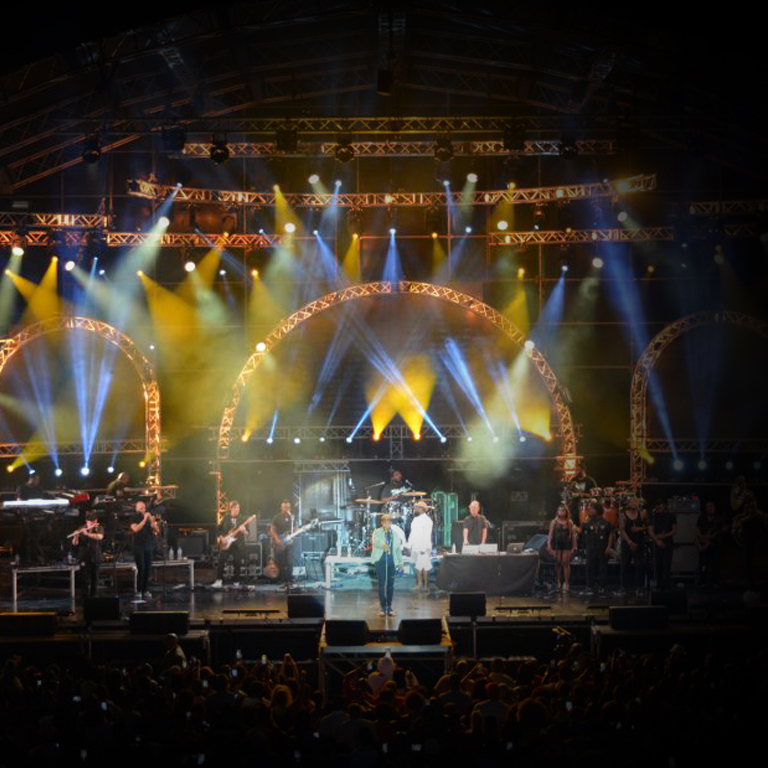
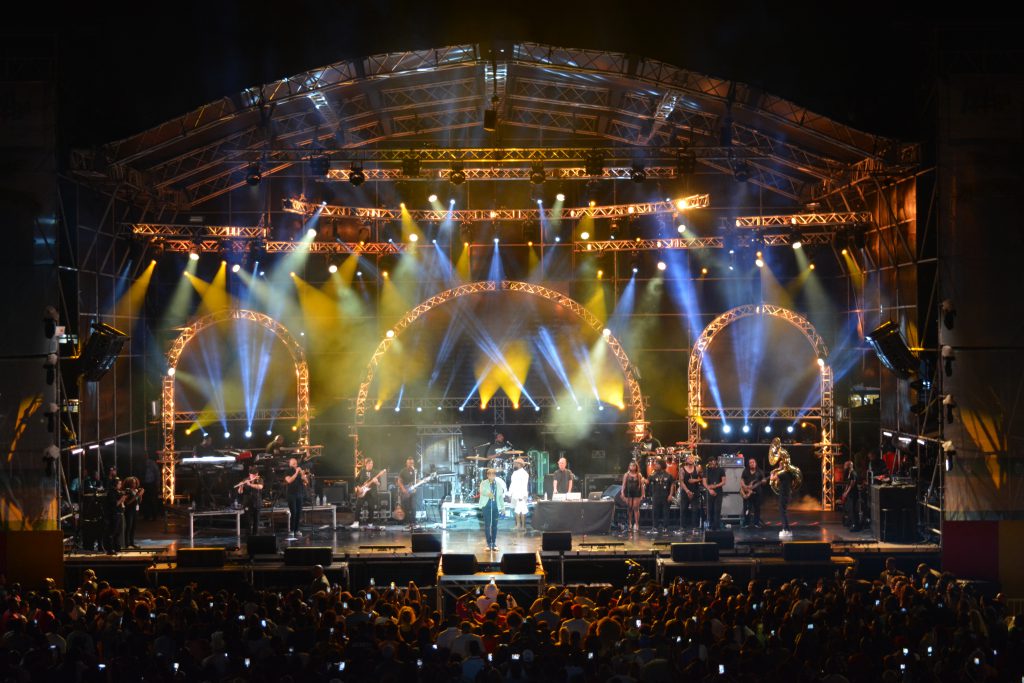
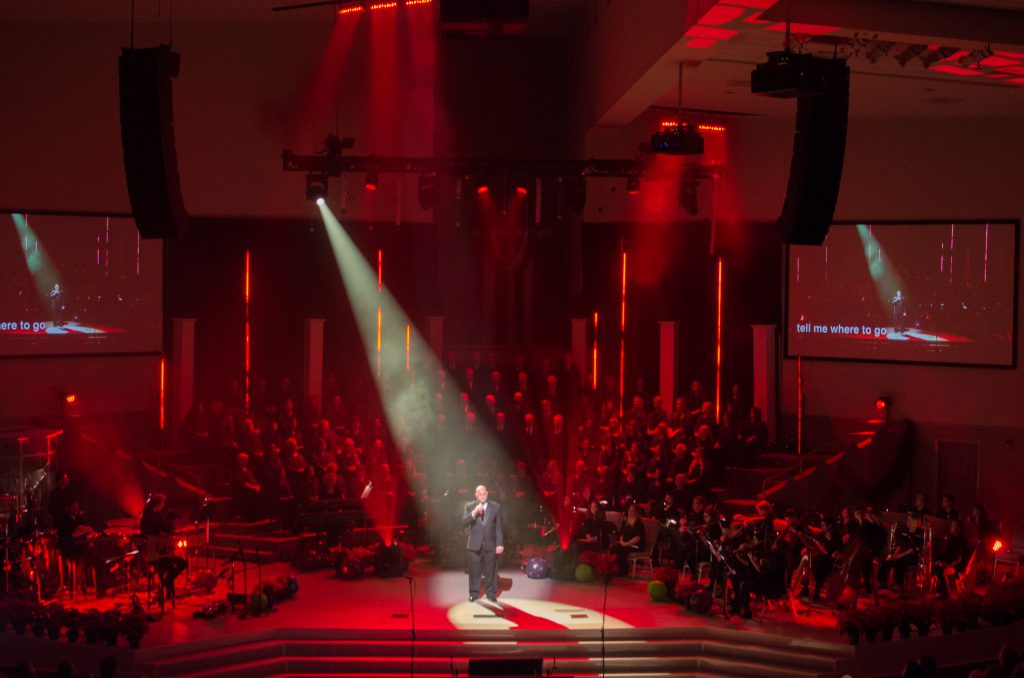
    Shows like this can be a blast, especially when the atmosphere is good.

    Every show has its challenges and no matter how cool your surroundings are, you are going to have to deal with those challenges.  There is nothing like coming in the morning after you programmed all night only to hit locate on the console and nothing happens.  We’ve all been there, and it sucks.  All of a sudden your amazing surroundings just turned into the worst place on the planet and your first emotional response includes a cold drip of sweat down the back of your neck.  Troubleshooting is a bear, but when you figure out what the problem was, it’s all good again, right?  If you just traced down the problem and fixed it, sure.  If you went about it screaming obscenities the entire time, not so much.  Don’t forget that you’re not the only one in the room and if just made a complete spectacle of yourself in front of your team and everyone else, it can be hard to recover from that.   Keep your problems to yourself and only include people who need to know.  This keeps the stress to a minimum and the drama on the stage.

    If you are in a place where they let you enjoy the amenities, I highly recommend it.  Take advantage of every perk you can.  Take lots of pictures and enjoy the moments.  Make lots of friends and build up your contacts.  If you can keep it all fun, or as much fun as possible, you will have a much better chance of picking up the next gig.

    The Most Important Show You Will Ever Do

    Truth in Lighting

    Every show you do is important to someone, so it better be important to you.

    Let’s be honest.  The truth is that you will not necessarily enjoy every show you are running. I would be willing to bet that everyone who reads this at some point has uttered the words “I have messed up way more important shows than this!” All of us have had to sit through everything from insurance conventions to dance recitals and everything in between.  Some of these shows are real dogs to sit through or operate, but every show that you will light is really important to someone, or they would not be paying you to be there.  In these cases, you really need to be able to put yourself into that other person’s situation.  The person speaking at that insurance convention is trying their best to convey an idea to their audience. Chances are really good that they have put a ton of work into the Power Point presentation they are showing and are really passionate about it.  That dance recital that you are lighting is some kid’s big day out in front of their family.  And that family, as a parent, I can tell you that the pride of seeing your child onstage doing their thing is huge.  As a different analogy, Imagine you are watching your favorite sport and it looks like the star on your team is just phoning it in today.  The next words out of your mouth will be “for the money he/she is getting paid, they should play their best every time.”  And you would be absolutely correct.  While we don’t make sports star money, most of the time, we are getting paid to think up looks and push buttons to make them happen.

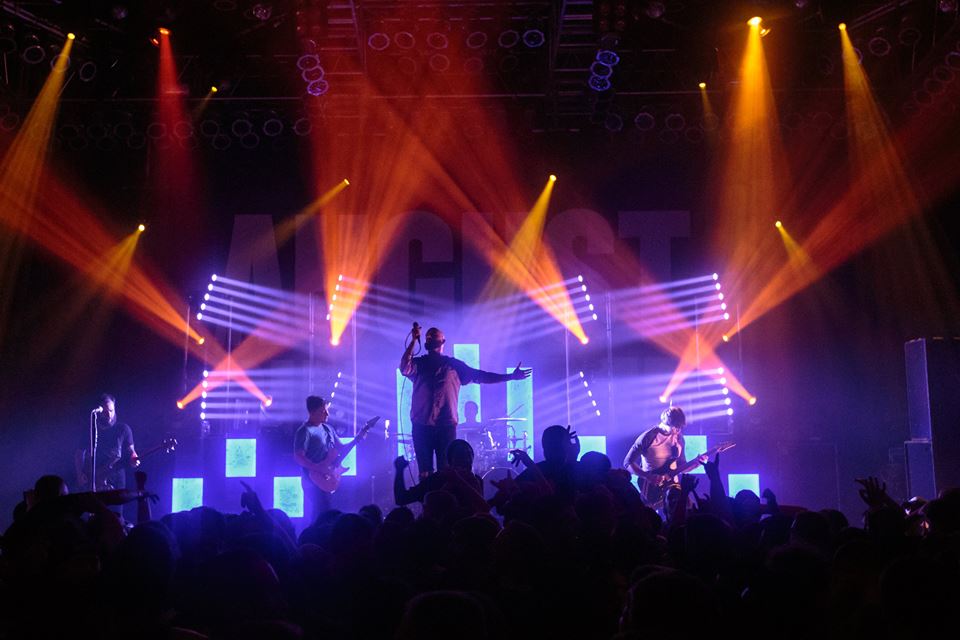
    august-burns-red-2

    Not every show is going to be as complex or captivating as this one, but they are all important

    It’s easy as a lighting person to look at a seemingly basic show and not put forth your best effort, but that insurance guy, and that kid, and those parents deserve your best efforts every time.  Think about how you would feel in their place if the show was not as good as it could have been because the lighting person didn’t care enough to give their all.  You would feel slighted for sure.  I know that I have sat through enough shows as an audience member and have known that the show could have been better if the lighting person had just cared a little more.  Then again, I know that I have lit shows I could have put a little more effort into.  I am not saying that you need to build a 10,000 cue show for every event that you do, but I am saying that you need to put in the appropriate cues and looks for the show you are doing.


    Truth is that as the show’s photon slinger, it is your job to always do the best you can to make the show as good as it possibly could be.  It is an unwritten contract between you and the show you are lighting and the audience you are lighting it for to give your all, and for the talent on stage to give their all, and for the audience to applaud like mad at the end of it.  You all owe it to each other to do these things.  This is how our industry ultimately survives.  The best way for us to uphold our end of the bargain is to walk in with the attitude that “this is the most important show I have ever done!” Sounds completely unrealistic, but the fact is that this is the best way to make sure you give your all on every look and cue you write.

    So the next time you have to do that white light only show, make it the best white light show they have ever seen!

    Are We Artists?

    A few weeks ago, I was at an event where the focus was on some very impressive sculptures.  I got there early enough to watch the lighting designer try to light the artwork in such a way as to make the event organizer happy.  Her job was to light the sculptures to make them look dynamic at night.  This was especially challenging since one piece was gold and reflective, the other was chrome and reflective.  From the outside looking in, I could tell she was getting frustrated with the event organizer because no matter how she lit the artwork, the organizer kept saying that they looked different during the daytime and wanted a daytime look.  The Lighting Designer was trying to explain that no matter what she did, she could not replicate what the sun does during the daytime.  It was like watching a never ending logic equation unravel.  When the LD was done, the sculptures looked great and the event went on flawlessly.

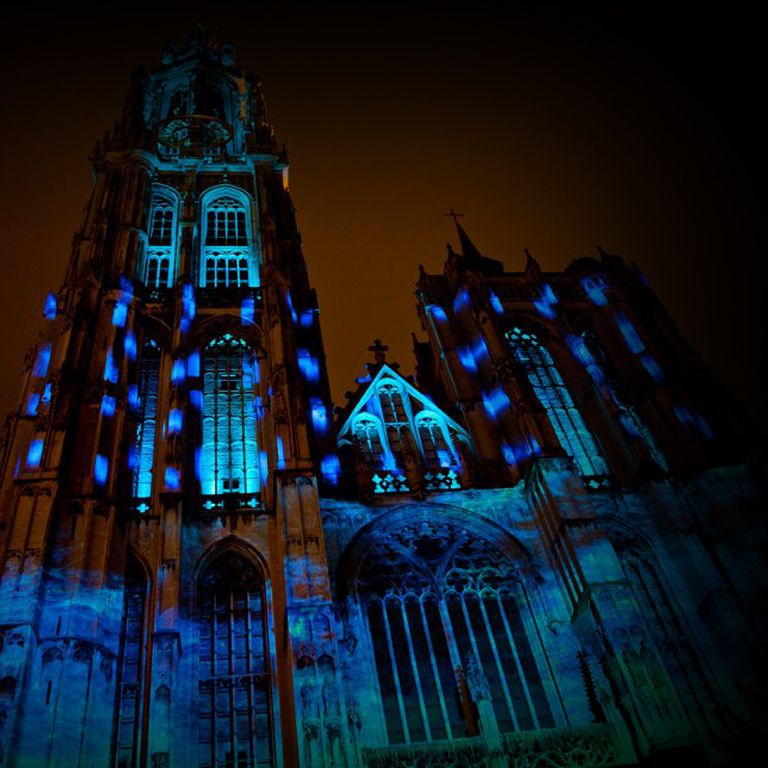
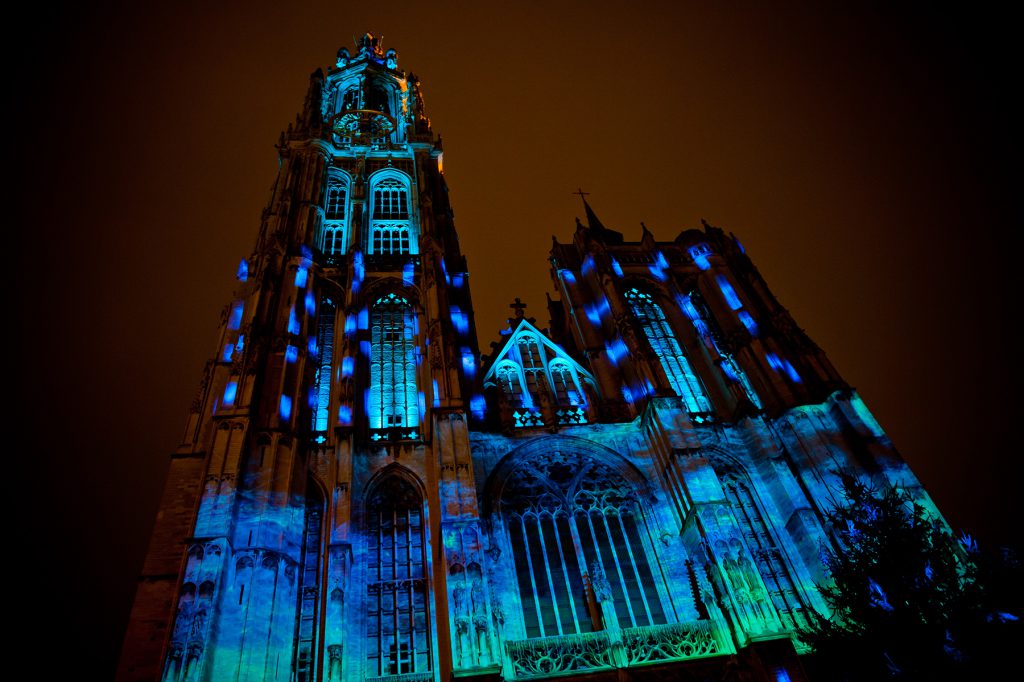
    Winter In Antwerpen 2016-2017

    Is the building the art, or the lighting accenting it? 

    When she was done setting up, I had a chance to talk to the LD.  She told me that she was trying really hard to make the organizer happy, but the he just didn’t understand how light works and why the lights she was using to illuminate the sculptures could not replace the sun.   While she was absolutely correct, it made me think about how we visualize art, and what art is.

    In this case, the event organizer was not the artist who designed and built the sculptures.  He was, however, the person in charge of making the sculptures look how the artist intended them to look.  In this case the artist had a very particular series of thoughts behind how they would reflect the world around them.  And they did just that.  They reflected the beams of light that the lighting fixtures shot at them, which was completely different to the sunlight that the event organizer had in mind.  But since the event was at night, what can you do?  The artist wasn’t on site to ask, so the LD had to improvise. Which raises the question, is the light that is being cast onto the sculpture art in of itself?  Deep thought indeed.

    hillcrest-christmas-201611__30972773434_o

    The visual impact provided by a single shaft of white light is art.

    nelsons-rock-4

    This whole image is art, but pulling the rock from the silhouette is effective and very artistic.

    In my opinion, lighting design is in of itself art.  The Lighting Designer in this case is at the very least adding their art on top of someone else’s art.  The LD had to create a palate of colors and figure out angles to best light these giant mirrors to make them look a particular way.  So I ask you, how is that different than an artist working with pigment on fabric trying to figure out what shade to paint a masterpiece? I don’t think it is.  For us, the object we are lighting is the canvas.  We are the painters.  Our medium is light.  We are artists.

    It’s easy to fall into the trap when you are working with a team of people who are creating a theatrical experience or a rock show to feel like your job is to accent the objects you are lighting, but that is only part of the deal. Your contribution is critical to the success of the show and your contribution is art.

    Managed Expectations

    I recently made a trip that I have been putting off for far too long.  I went to visit a school of higher learning to visit the instructors and see their facility set up and to get some insight as to what their program teaching methods were all about.  I was pretty impressed with the setup and wished that I had something as nice when I was a student 20something years ago.

    We got into the discussion of expectations, of which there are many.  There are the expectations of the students when they come to the program, the expectations of the students by the instructors, and finally, the expectations of the graduates by the industry.

    So, let’s start at the beginning.  18-20 year old’s tend to feel like they own the world.  Why not?  They have graduated from high school and have been pumped full of “you can do it”.  When they hit the college level, their heads are spinning and they feel like they own the world.  They come with (what they think is) a ton of knowledge, but no experience of which to apply it to.  After all, true intelligence comes from a combination of knowledge and experience.  Students expect that their pre-conceived notions will be totally fulfilled instantly upon reaching college.  Sadly, this is rarely the case, and if it does happen, then their hopes and dreams may not have been big enough.  Once they get past this first realization, their expectations change to trying to learn as much as possible from their instructors so that they can go out into the world and find work as designers.
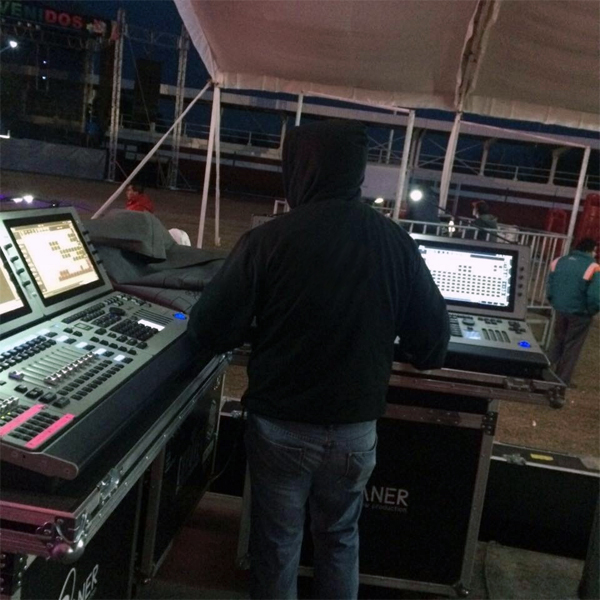
    aturoguevara4 This is the goal, not the start.

    Then there are the instructors.  They expect their students to be sponges.  Absorb as much information as possible in the time allotted for instruction, then go study and memorize every aspect of an industry that is changing and evolving on a daily basis.  Instructors expect their students to pick up what is being laid down on a daily basis.  They expect that their students will learn all that they can, but also develop their natural abilities as designers, programmers, or whatever they want to specialize in so that when they leave the confines of the program, they can function in the world in some position that relates to the industry. Lastly, there are the expectations of the industry itself.  The industry expects these recent college graduates to be able to sit down, shut up, and do what they are asked to do the first time for as little money as possible.  This is just the reality of starting out in a specialized filed like the entertainment technology world.
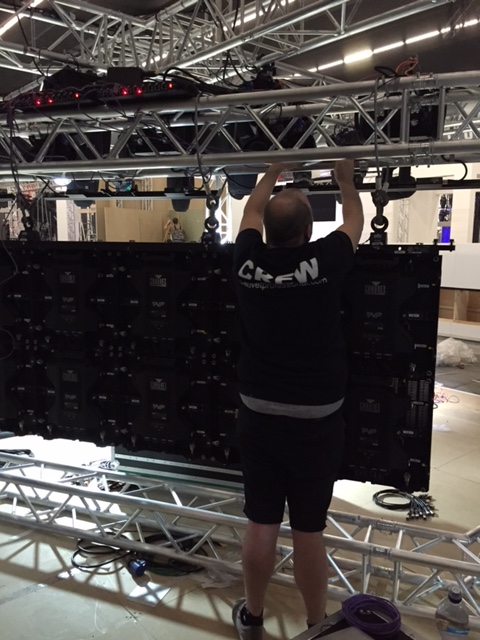
    IMG_2928 More rigging, less programming until you prove yourself.

    Here is the thing.  None of these expectations are based in fact.  They are what we all expect along the way and for the most part, these expectations are unrealistic.  Take students.  They expect that they will learn everything that they need to know in school.  It takes time to figure out that’s not possible.  Students don’t have that kind of time.  Instructors expect students to pick it up as they go.  For some students with natural talent, this is possible, but let’s face it, no student has a full sized lighting control board at home to practice on and learning these things takes time.  As for the industry, the sit down and shut up mentality is a nightmare waiting to happen.
    102315-LAS-LDI2015-28-200x300 Shared knowledge is the key to keeping the industry going.

    The key is managing expectations along the way from all sides.  On the industry side, it would be awesome if there were some kind of halfway house for recent college grads to learn how the industry really is as opposed to how it was explained to them back in the institution.  Someone has to tell these people that their first gig out from school is not going to be designing.  It’s going to be setting gear up and humping cable.  That is just how it is.  You have to pay your dues with every new gig.  It’s not fair, but then again, it’s totally the right way to learn.  My first gig out of college was running stage automation on a cruise ship, at least that is what my job description was.  My actual job was running stage automation during rehearsals and shows that needed it.  On the shows that didn’t need it, I ran video or followspots.  Then during the time when I wasn’t running shows, I was setting up microphones, shooting video, running cable, fixing gear,  putting up scenery, and trying to learn everyone else’s jobs for cross training.  I found out pretty quick that the learning never ended.  And that is the point right there. LEARNING NEVER ENDS, but you only get to go to school once.

    So to the students who read this, programming and design are cool, but learn how to swing a hammer, run cable, fix lights.  There are a lot more stage hand types than programmer types working at any given moment.

    To the instructors, be honest with your students about the industry.  Tell them the highs and the lows.  It can be rough out there and the sooner they realize it the better.  Without new blood and new ideas, our world will become stagnant and if these kids come out and become disillusioned and bitter, we are going to lose some amazing talent.

    To the industry, lighten up. Keep hold of your first experiences and help the next generation up.  WE NEED THEM!  Help them to combine their knowledge with experience.  It is up to us to mold the future of our crafts.  Encourage the youth to work hard, work smart, and work safe.

    Knocking Curve Balls out of the Park


    Its world series time, so lets throw some baseball terms into the mix!

    Planning and preparation are major keys to success in our industry.  Everything from having your paperwork in order, to making sure that your cable cases are labeled and packed properly, to pre addressing your fixtures is supposed to make our lives easier on show site.  However, no matter how much you plan for every eventuality, there are always going to be curve balls.  From the most simplistic to the largest of shows there is always something that comes out of left field right at you.  Here are seven tips on getting around them because ignoring them is not an option.

    curve-ball

    1. Coolest head prevails – Every situation has a solution.  Taking a step back and removing yourself from the equation will often times help that solution present itself. This is when that moment of Zen will hit you.


    1. Avoid complexity – Since almost every curve ball comes in at the most in-opportune time, a complex and over engineered solution is out of the question. This is the exact time to think small.  In shooting, it’s called aim small, miss small.  Narrow in on the exact problem and solve it.


    1. Build up your bag of tricks – Experience counts. I love working shows with people who have more experience than I do, especially when it comes to rigging.  Rigging is all about geometry, algebra, and experience and always has curve balls thrown in.  I love watching these guys figure out complex rigging situations, especially when it comes with a story, which is almost always does, about some show they did 15 years ago with a similar situation.  When a curve ball comes up you need to dive into a bag of tricks to solve it.  Sometimes it’s your bag, sometimes it’s not.  But when it does come from someone else’s bag, you better make it part of yours as well.


    1. Treat it as a learning experience – Like I said in the last point, build up your bag of tricks. Don’t let the curve ball get you down.  First off, you didn’t plan for it to happen, and secondly, you need to get past it.  Gain from it and try to only go to school once.  Someone really smart tells me that all the time.


    1. Look a few steps ahead – During your pre-production meetings, talk over the design, the expectations, and deliverables. A lot of the potential curve balls will come up right there.  Sometimes you can stop or lessen them right there.


    1. Be transparent – When the curve ball comes up, discuss it with your team immediately. Like I said in the beginning, they never just go away on their own.  Most likely, the issue does not affect you alone.  These things have a way of cascading pretty quickly if you don’t deal with it upfront and in the open.


    1. Be assertive – Curve balls mean that a change to plan is coming. Sometimes it can really cramp someone else’s style and they may push back on a solution.  If you are a crew chief in this situation, you have to have the end goals and result in mind at all times.  Make the call and stick with it.  In production, the end often times justifies the means, but be prepared to deal with the consequences.


    Knocking a curve ball out of the park is extremely satisfying, and I think that is why many of us do what we do in this industry.  The daily challenge of problem solving is a big part of production and the source of almost every war story I have ever heard.  It seems like they always end with “….and the show went on as RE-planned.”

    Welcome Freshmen! A few tips on upping your game

    To all of the freshmen starting out on their Theatrical Technology (or other professional entertainment technology program with an emphasis on lighting) degrees, Welcome!

    So you decided to go against everyone’s advice and start down the path of making lights flash pretty colors.  Good for you!  Soon you will be proving everyone wrong and working in your chosen field…hopefully.  Anyway, here are some suggestions we’d like to share to help get you off on the right foot.

    1 – Be early for classes.  Welcome to the theatre and entertainment world.  Time management is critical.  Shows start on schedule and it is your job to be ready.  Start the habit by getting to class early.  As a rule, 15 minutes early is on time, on time is late.

    2 – Read a lot.  Reading helps you to develop your visualization skills.  When we read, we have to visualize the characters, places, sounds, smells, and every other environmental element.  These are the same skills you will need to successfully create a lighting script, pick colors, and create moods on stage.

    3 – Listen to music with your eyes closed.  I mean really listen to it.  Not just the lyrics, but the entire band.  Develop your ability to pick out a specific instrument. Isolate that in your head and assign it a color.  Assign each instrument a color.  This will help your ability to blend looks.  As you get good at this, when you listen to music, you will see color.  The songs start to design themselves. This is really helpful when you have to program concerts quickly.  Here is a track that is really good for listening skills development:

    4 – Listen to more music.  Same song, different artist.  This is one of my favorite things to do.  Listening to how different artists preform a song will give you a different perspective on that song as well.  It’s not uncommon to do the same show with different directors over the course of your career.  The interpretation might be completely different and knowing how to prepare for that is a great skill to have. Here are three cuts of “All Along the Watchtower” done by three different artists. Same lyrics, but totally different feel.

    5 – Observe Naturally occurrences of light. Take close notice of how shadows fall in nature depending on the time of day or weather changes. Those changes might help to tell a story. When a story starts out with “It was a dark and rainy night…” you need to know how to sell that feeling. Lighting sets the tone and the mood. You have to help propel the show. Knowing how lighting should look in nature will greatly help to achieve that feeling.


    160 meters of murals were used in the production

    120 Ovation E-910FC fixtures delivered realistic colors and bold whites

    6 – Volunteer.  Volunteering is a great way to get backstage for shows.  If you have a community theatre in your area, contact them. Offer up your skills.  They are not going to say no and you will have a chance to practice what you are learning in class.  It is also a great place to experiment with new ideas.

    7 – Complete your projects with great detail.  Seems straight forward enough, but there are a lot of demands on you and you need to schedule time to get stuff done.

    8 – Collaborate with your classmates.  This is a collaborative business and developing a network early is a great way to make sure you are working right out of school.

    9 – Free Time = Scene shop.  Spend as much time in the scene shop as possible. Learn how to build sets and paint them.  Test paints and fabrics under light to see how they react.  Keep all off your fingers intact and you will be sure to impress someone.

    10 – Work every position.  So, you want to be a famous lighting designer.  Great, now go do props.  Having a working understanding of every position in the theatre will pay you back 100 times over.  It will give you compassion for everyone’s situation and make you much more valuable member of the theatre family.

    11 – Take a look at number 1.


    We here at CHAUVET Professional are glad that you decided to take your maverick mentality and rogue personality and become a photon flinger!  We know you will be amazing and can’t wait to meet you.

    Bridging the Visual Divide

    So, there I was, presenting new gear to a group of industry experts when something that has never happened before to me, well, happened.  I was showing off one of our new video drivers and explaining how it worked and what it could do for lighting designers, when I hear the most dreaded words ever; “This is going to put me out of a job.”

    After the demo was over, I got a chance to speak with the gentleman who made the statement.  As we spoke, I got a better feeling of what he was saying.  He is a video designer by trade and thought that by making it easier for lighting designers to set up and throw content to video walls, it would make him a little less useful in the event market.  Once I explained to him that was not our intention and that the creation of a new driver, no matter how cool it was would not put him out of a gig, we got to the bottom of the real issue, the visual divide.

    Since the beginning of amplified audio and flashy lights, there has been a divide between audio engineers (noise boys) and lighting technicians (sparkys) have had a rivalry in the booth.  There are many reasons for this rivalry and it has gone on forever, but now there is a new player in the booth – Video designer (Vidiots).   Sorry, I don’t make up the names here.  I leave that to the Urban Dictionary.  Adding in the video designers into the mix has left the force with no balance.  The Jedi have the Sith, the Autobots have the Decepticons, Pepsi has Coke.  Where does the Video designer fit in?   This is a problem indeed.

    So, how does a FOH position meant for two fit three?  CONVERGENCE!!!  Allowing video and lighting to play together is the key.  The perfect example of this is pixel mapping.  With pixel mapping combined with video effects, the video designer can really add some amazing layers of texture and content to the lighting rig.  Not only that, it means that the lighting designer and video designer have to work together to formulate how cues will look and what structural direction the show will go.  OK, easy to say, but how does this happen?  Again, it’s all about layers and convergence.

    gal_rogue_r1_fxb_7

    Here is my example of the perfect world of lighting and video living in photonic harmony;  So the rig is made up of a combination of video wall, pixel products, and moving heads.  The lighting designer has control of all of the movement and dimming of the lights including pixel products as well as the colors and gobos coming out of the spots over ArtNet or sACN.  The video designer has control of all of the pixel products and video panel playback.  In this way, the lighting designer can still control the overall output of all of the lights and the video designer can still work his content in the way that the client or artist on stage wants.  Happy world!

    Eurovision Song Contest stage

    With a fixture like the Maverick MK2 Wash, and Rogue R1 FX-B the convergence is easy.  These fixtures allows you to operate it on two levels.  Actually, they allow you to operate it as two different devices at once from two control sources.  This allows me to run the function stuff (pan, tilt, dimmer, strobe) from a lighting console and then run all of the pixel stuff from a media server totally separate from the lighting controller.  This gives both designers the ability to have the control they are looking for.

    So, people of the video world, we welcome you with open arms!  It’s all about converging the visual arts.

    Visual Artists Come to CHAUVET Professional

    June 23 and 24th were two amazing days at CHAUVET Professional.  We hosted lighting and scenic designer Christian Choi and Martha Vasquez here at our offices in Sunrise, Florida.  Along with Christian and Martha, we also invited several other designers into our offices to meet and share ideas.  John Dickson of LD Systems, Brett Angstadt of Round Peg Productions, Max Koehler & Ryan Warffuel of Antic Studios,  and Tristan Rudat were also invited down to participate.  Over the two days, the designers participated in several product demonstrations, collaborative discussions, and facility tours culminating in Christians’ seminar on scenic element design and fabrication.

    Christian Choi blog


    Christian Choi and Martha Vasquez


    Doing sessions like this at CHAUVET Professional is a way for us to get a good understanding of how designers use products in their daily lives whether it be lighting, video, or pixel products.  It also gives designers a chance to discuss their ideas particular topics with each other in an open environment. With this many designers and each one bringing something different to the table, all of the discussions were very lively,  really interesting, and extremely informative.

    IMG_3367

    Mike Graham discussing the high points of the Maverick series

    IMG_3371

    Ben Dickmann showing off the new Ovation B 2805FC


    IMG_3368

    Anthony Chiappone talking EPIX Tour

    IMG_3373

    Ford Sellers showing off the punch of the new COLORado 3 Solo


    This event was a lot of fun for everyone involved and we want to thank Joe Fucini for setting this whole thing up.  We’re sure that trying to organize this many artists into one spot must be like herding kittens.

    Launching your Lighting Career on the Right Foot

    graduation images

    This is dedicated to all of the young minds that are graduating from a higher learning institute this spring, or this month, depending on the school you have chosen. Also, these are the suggestions and opinions of a person who started out on this path many years ago as a bright eyed young lad who thought he knew a lot more than he actually did.

    The road to your future is yours to explore and navigate any way you see fit. The key here is making the right decisions and forming good habits right away. Hopefully you chose good mentors during your primarily educational portion of your career. I say primarily educational portion because the education never ends. Here are a few habits that you should adopt immediately no matter where you choose to start working;

    1. This is the number one rule to live by in this industry. This rule should never be broken! Always try to be friendly, humble and open to ideas. Sound easy, but it’s not. There are tons of different personalities and backgrounds in the industry, and you have to find common ground with all of them. When you are making the break from the educational world to the professional world, it is a huge change. Think about it this way, there are some amazing quarterbacks in college football who have huge numbers and are great prospects for the NFL, but then when they get to the big dance, they either ride the pine for a few years, or fail all together. You are going to have to pay your dues for a while in your pro gig. It does not matter if you were the best lighting person that your school ever saw, you still have to prove yourself again. The best way to start is to be friendly, humble, and open to new ideas.


    1. Leave your school shirts at home. I know you have a closet full of show t-shirts from your school. I know you are dying to wear one to work. Don’t do it! Here is why – Let’s say you wear your lucky “Into the Woods” shirt you got in your freshman year with your school’s name on it and it happens to be a rival school that your crew chief attended. Welcome to a rough show run. Oh, and here is the other reason why – Nothing says NEW GUY like a school shirt. Until you get some show cred or get some swag from your gig, stick with a black shirt. Don’t worry, once you attend a few tradeshows, you will have more manufacturer shirts than you know what to do with.

    drama shirtTrade this shirt up for something like this one –

    rogue shirt

    1. Show up with the right tools, but take the tags off. Again, you are the new person on the gig, but you don’t need to look like it. I love shiny new chrome, but you need to take the tags off before your get to work. In fact, I would suggest picking up hand tools at a flea market if possible. They are broken in and cheap. Kline tools are great, but they are expensive and grow legs really easily. Don’t take them to work! Also, you don’t need a ton of tools to start with anyway. If you are starting out as a deck electrician, which is a good place to start, here is what you are bringing with you on day one:


    • Adjustable wrench (Crescent wrench or C-wrench). I like the ones with the 8” handle. It gives me enough torque to get clamps undone if some muscle head over tightened them.
    • Speed wrench (ratcheting open end / box wrench) in two sizes – 18mm and 19mm. The 18mm will open almost all metric clamps, like the ones that CHAUVET sells, the 19mm will open all of the 1Ž2 inch bolts on imperial style clamps, like the ones you will on mega claws. I suggest the 19mm over the 1Ž2 inch because if you are buying a set, you can stick with a metric set instead of having to buy a metric and imperial set. You can also find these in singles as well.
    • #2 Philips screw driver with a minimum of a 6” and maximum of 8” shaft. Any shorter and it will let you down, any longer and it is uncomfortable.
    • 6” flat head screw driver. You will never need a longer one.
    • Razor knife. Don’t spend a ton of money on one, it won’t be the last one you buy, but you have to have one. It is OK to lend this out. You will most likely get it back
    • Pocket knife. Spend a little more money on this and don’t lose it. It is not OK to lend this out. This is yours and a pocket knife is very personal. Take some time in choosing one and make sure it locks when you open it. Keep in sharp and do not use it to cut plastic wrap or tape. That is what your razor knife is for.
    • Multi-tool – this is optional. I used to be a big fan of the Gerber style, until they quit making the flick open style. Now all they have is the fold open style and the tools are hard to get out of the handles. These guys can get expensive quick, so be careful.

    Now that you have your tools, how do you label them so that the world knows they are yours? You can either paint a stripe of color on them, or pick two colors of electrical tape. I prefer the two color tape. And you need a bag. A good backpack is fine. One with a lot of pockets is great. I like the Swiss Gear ones. They are a few bucks, but they last.

    1. Be observant. Watch what the rest of your crew is doing and how they do it. This is especially true in the very beginning of your career. There are many paths to arrive at the same destination. Seeing how other people get there will add to your personal experiences.

    LDI 2015

    1. Entertainment lighting is an art form. It might be your design; it might be someone else’s. None the less, it is someone’s art. Treat it with respect. You might not like the design or the method that it is being applied, but always keep tip number 1 in mind and you won’t go wrong.


    So, welcome to a fascinating field of employment. There are a lot of really cool people in this industry and there are tons of opportunity to do amazing things and travel to interesting places. You never know where you are going to end up or who you will meet along the way. Be kind as you navigate your career and you will never go wrong.