    Blog Series: Lighting Education

    Throwback Thursday – Dimming and Electricity

    There is a really cool website that deals with the beginnings of filament lighting in theatres. Everyone should check it out as it speaks to the beginnings of our present era in the history of lighting. Check out CASSSTUDIO6 for some amazing behind the scenes shots and history of our industry.

    2_Electric-i

    The above photo is of the electrical room in the Paris Opera House in 1887

    While LEDs are becoming more and more prevelant in the theatrical world, there are still plenty of places where standard dimming is still being used and installed.  This is why CHAUVET Professional came up with the Ovation ED 190-WW and Ovation FD 165-WW.  These are LED fixtures that are designed to work with both DMX control and dimming systems.  A true bridge between the old and the new.

    Emotion and Motivation for Lighting Design

    By Michael Graham

    Believe it or not, designing lighting to music is a lot like acting in a play. There has to be motivation relative to an emotion for action to take place. If you ever have a chance to speak with a stage actor, ask them if they memorize their lines or if they learn their lines, develop a character, and then, in working with the other actors in the play, create the motivation and emotional connection necessary to make the dialogue more natural. The better actors will tell you that they do they work a process like the one I described rather than just memorize lines. By working the process, the actor can convince the audience that they are that character and involve them in the show. Go watch Dustin Hoffman and John Malkovich in “Death of a Salesman” or Alec Baldwin in “Glengary Glenn Ross” and you will see exactly what I am talking about. These actors preformed these rolls flawlessly, in my opinion, because they not only understood their characters, but understood the motivation and emotion behind their actions.


    Creating cues and looks in lighting design is really no different. The lighting should reinforce the mood or action on the stage. This means that no cue should ever happen without the motivation for it to occur and it should help to evoke the emotion that the song is trying to create.   If you think about the character development process while you are listening to music, you will start to see the colors that the song should be, and the movements (or lack there of) that should accompany the music you are programming to. Take Marc Brickman’s interpretation of Pink Floyd’s “Shine on You Crazy Diamond” from the Pulse tour.Every cue and color makes sense. Not only did he know the music, but it was apparent that he was emotionally attached to it. He may not have had the same attachment as the band, but the design of the song was very personal, and to the audience, it draws them in past just the music.


    Not everyone gets to design music they can get deeply emotionally involved in. That is a fact in our industry. This is where the character development process can help you out. I cut my teeth running lights for cover acts on cruise ships. Trust me, I did not love all of the songs that I had to design for. I started out fighting the music and not getting any personal enjoyment out of most of the songs I was designing lights and it was apparent in how the shows looked. Eventually, I figured out that something had to change, and it was me. I had to work out a way to be able to listen to the music and find elements in every song to work cues into. This is where I can honestly say I started to enjoy styles of music past just rock. I found that getting emotionally involved got easier because I was making myself part of the process of character development in so as much as the lighting was a character in of itself. To me this is a big part of the difference between designing a show and just programming a show. You have to listen to the music and not just hear it.


    So, give it a try. Listen to the music you are being asked to program to and try to make it your own. Find your meaning and let the lighting design become a dialogue between the lights and the music.

    Emotion and Motivation for Lighting Design


    gal_colorado_1tri_tour_7_3

    Believe it or not, designing lighting to music is a lot like acting in a play. There has to be motivation relative to an emotion for action to take place. If you ever have a chance to speak with a stage actor, ask them if they memorize their lines or if they learn their lines, develop a character, and then, in working with the other actors in the play, create the motivation and emotional connection necessary to make the dialogue more natural. The better actors will tell you that they do they work a process like the one I described rather than just memorize lines. By working the process, the actor can convince the audience that they are that character and involve them in the show. Go watch Dustin Hoffman and John Malkovich in “Death of a Salesman” or Alec Baldwin in “Glengary Glenn Ross” and you will see exactly what I am talking about. These actors preformed these rolls flawlessly, in my opinion, because they not only understood their characters, but understood the motivation and emotion behind their actions.


    Creating cues and looks in lighting design is really no different. The lighting should reinforce the mood or action on the stage. This means that no cue should ever happen without the motivation for it to occur and it should help to evoke the emotion that the song is trying to create.   If you think about the character development process while you are listening to music, you will start to see the colors that the song should be, and the movements (or lack there of) that should accompany the music you are programming to. Take Marc Brickman’s interpretation of Pink Floyd’s “Shine on You Crazy Diamond” from the Pulse tour.Every cue and color makes sense. Not only did he know the music, but it was apparent that he was emotionally attached to it. He may not have had the same attachment as the band, but the design of the song was very personal, and to the audience, it draws them in past just the music.


    Not everyone gets to design music they can get deeply emotionally involved in. That is a fact in our industry. This is where the character development process can help you out. I cut my teeth running lights for cover acts on cruise ships. Trust me, I did not love all of the songs that I had to design for. I started out fighting the music and not getting any personal enjoyment out of most of the songs I was designing lights and it was apparent in how the shows looked. Eventually, I figured out that something had to change, and it was me. I had to work out a way to be able to listen to the music and find elements in every song to work cues into. This is where I can honestly say I started to enjoy styles of music past just rock. I found that getting emotionally involved got easier because I was making myself part of the process of character development in so as much as the lighting was a character in of itself. To me this is a big part of the difference between designing a show and just programming a show. You have to listen to the music and not just hear it.


    So, give it a try. Listen to the music you are being asked to program to and try to make it your own. Find your meaning and let the lighting design become a dialogue between the lights and the music.

    2nd Annual CHAUVET Professional Student Lighting Showcase!

    We started a great event on the West Coast for the students in the region to come by the Burbank Showroom, rock and roll with a real rig of excellent CHAUVET Professional touring fixtures and equipment, and mingle with industry leaders in the region.  So far, it’s been a success twice!  Did you come this year?

    Chauvet-professional-student-program-2

    BURBANK, CA – (For Immediate Release) – Vividly dynamic lightshows weren’t the only thing only on display at the Second Annual Student Lighting Showcase. Also shining brightly was the creative bond that connects generations with a shared passion for lighting, as students from four colleges got the incredible opportunity to have their designs evaluated by some of the most respected LDs in the industry.

    Held at the CHAUVET Professional Showroom in Burbank, the one-day event drew students from California Institute of the Arts, the University of California Irvine Claire Trevor School of the Arts, LACC Theatre Academy, and the University of Southern California School of Cinematic Arts. Groups of two or three students from each school collaborated on designing a lightshow for one song chosen by them. Lighting designer Joe Spangler programmed the one-song shows for the students.

    When the student lightshows were completed, they were shown to guest lighting designers, an esteemed group that included such luminaries as Lee Rose, Joshua Hutchings, Martin Phillips, Steve Young and Ian Peacock. The LDs then provided the students with feedback on the shows, answered questions and shared ideas about lighting, providing them with an educational experience that will last a lifetime.

    Chauvet-professional-student-program-1

    “This was really an experience, not a competition,” said DeAnna Padgett, National Sales Manager for CHAUVET Professional, one of the driving forces behind the event. “We don’t score the students’ designs, so there’s no one who comes in first place or anything like that. There’s a very relaxed atmosphere at the event with drinks and appetizers and a lot of mingling. It’s really all about some of the leading designers from one generation passing their lighting insights onto aspiring designers from the next. Everyone from both generations really likes the experience.”

    Like all successful events, the Second Annual Student Lighting Showcase was the result of a lot of dedicated people pulling together. In addition to the guest lighting designers, college students and internal Chauvet team members, Padgett singled out the educators from the four schools for their help in making this student showcase special.

    Chauvet-professional-student-program-3

    “In doing this event, I am just very fortunate to work with people like Anne Militello from CalArts, Jim Moody of LACC, Tom Ontiveros from USC and Lonnie Alvarez with UC Irvine,” said Padgett. “There are so many things they did to make this a success, not the least of which is the amazing job they did preparing their students. The four of them have a genuine love of lighting design. They know how special this industry is, and they’re dedicated to passing that passion down to the next generation.”

    Come Get The Physiological Experience at PLASA FOCUS KC!

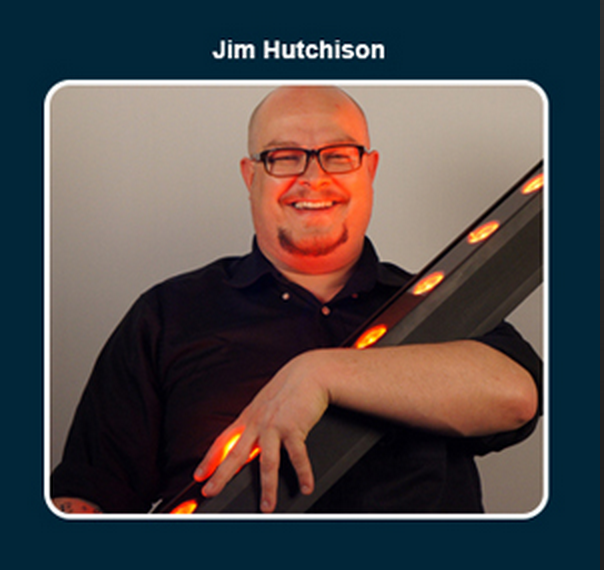
    CHAUVET Professional’s Customer Engagement and Education Manager Jim Hutchison will be bringing his popular seminar, LED COLOR: The Physiological Experience, to the PLASA Focus Kansas City audience! Check it out!

    jim-hutchison-plasa-focus

    The human eye contains millions of cone cells for detecting color — and Jim Hutchison hopes to tingle each and every one of them in his upcoming “LED Color: The Physiological Experience” seminar at PLASA Focus: Kansas City from 2-3pm, Wednesday, May 20. Hutchison, the customer engagement manager at Chauvet Professional and Iluminarc, will take visitors on a colorful tour showing the effect that different colors and combinations of colors have on human thought and emotion. Along the way, he will share some insights on ways lighting designers can utilize the influential power of color to create more impactful designs.

    “I’ve geared this course to show lighting designers what it means to be able to use color on a level that gives their designs even more depth and a greater ability to convey the story they want to tell,” said Hutchison. “It’s obviously very important that, as designers, we spend time talking about the pixel pitch and batching of LED fixtures and look at their mathematical data and photo metrics, but that’s still only part of the equation. What we also need to do is put ourselves in the audience’s seat to see how we can better tell a story to them and suspend their disbelief more effectively. This course will offer advice on how you can do that by having your audience experience different colors of light.”

    Some of the examples of color influence that the seminar will explore include the power of red to increase breathing and digestion rates, how heavy yellow hues evoke “an almost a blissful confusion,” and how blues and greens engender states of calmness. “Individual colors are potent influencers,” said Hutchison. “Then, when you use them in combination with one another, you pump up their power even further. Our seminar will cover some proven examples of this color synergy.”

    Hutchison will be relying on a collection of Chauvet Professional COLORado Batten Quad-9 fixtures to provide vivid examples of LED rendered colors in action during the seminar. “We’re going to fill that room with heavy hues and induce some color fatigue in everyone’s cone cells for the sake of art,” he said. “It should be fun and I promise that anyone who attends will never see color in quite the same way.”

    See Chauvet Professional at PLASA Focus: Kansas City, May 20 – 21.

    Stephen Ellison – Understanding LED Theatrical Lighting

    StarkRaving-Stephen Croped

    All but unheard of a few years ago, LED technology has clearly made its way into house of worship applications. Like all new technologies, it brings with it not only promise, but questions. We caught up with Stephen Ellison of Stark Raving Solutions to gain insights into the subject of LED theatrical lighting in churches.

    Stephen knows whereof he speaks. After receiving a BFA in Lighting Design and Technical Direction from North Carolina School of the Arts, he’s gone on to enjoy a distinguished career in the theatrical lighting industry as a designer, writer and product developer. Since 1999, he has been working with Technologies for Worship magazine, first as a teacher at their trade shows, then later as the production manager for their training pavilions. He has written many articles on lighting for the magazine and is its Lighting Editorial Advisor. He also has written for several other trade magazines about lighting and technical direction. He is now the lighting and stage designer at Stark Raving Solutions of Lenexa, Kansas. For more information visit www.starkravingsolutions.com

    Have your clients’ views on LED theatrical lighting changed in the last two years? Yes they are asking for LEDs now more than ever before.

    You use the term theatrical lighting, but really the church market lighting is based on two design looks. The first is more concert lighting than theatrical. The second is lighting the pastor for video, which is a white light/no shadows look. In the first look they have embraced LEDs for the range of color from a single fixture. In the second look they are now accepting the available front lights that can provide a quality white light.”

    What’s the biggest obstacle to your clients regarding adding LED theatrical lighting to their rigs?

    “Money, the cost is more than a traditional fixture with an individual dimmer.”

    How would you rate LED fixtures next to traditional theatrical fixtures in terms of throw distance, color temperature and light quality?

    “In just the past year to 18 months the LED fixtures have matched the traditional fixtures and even surpassed them. When you are working with a group of tungsten fixtures that have been in place for a few years, you begin to see differences in the output and quality based on when you last changed the lamp and whether or not the fixture was bench focused when the lamps were last changed. With the LED fixtures you do not have the same issue since the lamp will never change and they are factory set for the field output.”

    Looking at LED ellipsoidal and Fresnel fixtures, is one of them further along the development curve than the other?

    “No, not that I can tell. The Fresnel was probably easier to develop compared to the complexity of an ellipsoidal. Getting the optics right on the ellipsoidal was a challenge. Now they both are functional units being provided by multiple manufacturers.”

    As a designer do you have to treat LED theatrical fixtures differently than a comparable traditional fixture? Is is there a difference the degree of the lens that you would use to achieve throw distance? Would you arrange the fixtures differently?

    “Yes and no — optically all of the changes were to the lamp assembly and not to the front end optics. A 26° fixture is the same in output optically no matter the lamp source. Placement of the fixtures on the light plot is identical since it is based on the type of fixture and the optics.

    “The difference would show up in the cueing of the fixtures if you have a mixed lamp type plot. You would need to match the dimming curve between the fixtures. Also you would have to watch for the shift in color as you dim the fixture; a tungsten light source will shift to the red as it dims. Most LED fixtures do not have this shift so designers who are anticipating this color shift will have to compensate, or compromise. As the LED fixtures take over the market, the younger designers will think this is natural.”

    Do you have to adjust the way you use other lights on stage like washes or key lighting when you are using LED fixtures with them?

    “Now we begin to look at the dimming curves used in the LED fixtures. The dimming curve in a tungsten fixture is controlled outside the fixture, while the dimming curve for an LED fixture controlled by DMX can provide a multitude of curves based on the software in the fixture. The key is to match the curves in a mixed rig.”

    Can you match LED fixtures from different manufacturers and get the same color consistency?

    “I have not had much experience with a mixed rig, but I would always try to use only one type of fixture in a lighting system such as back or side light so there would be consistency within the system. Traditionally you are using different colors in the different systems so you are not trying to match colors.”

    Are there any theatrical applications where you wouldn’t use LED fixtures?

    “Not that I can think of.”

    As you said earlier, LED fixtures tend to cost more, so how real are the savings you can expect to get from LED fixtures?

    “The savings come in two forms. One is the actual electrical bill. The second is the decrease in fixtures required to light the space. For example, in a theatre I ran we had 3 lighting pipes with 15 pars on each to light 5 areas of stage per pipe to provide a full stage back wash in 3 colors. With LED fixtures you would only need 15 fixtures, a savings of 30 fixtures. Also you can achieve more colors with the LED fixture over 3 fixtures with colored gel.”

    Does having LED ellipsoidal and Fresnel fixtures change the way you approach your work as a designer?

    “Not at all, it only improves the options and enlarges the available color palette.”

    A lot of church services and theatrical presentations are captured on video today. How camera friendly are LED stage fixtures?

    “They are just as friendly as the tungsten equivalent at the top end of the dimming curve, and without the red shift they make dimming much more practical.”

    # # #

    LINKS TO ARTICLES

    Emmanuel Baptist
    http://www.chauvetlighting.com/paragon360-church-renovation.html

    River of Life
    http://www.chauvetlighting.com/river-life-church.html

    Millwood Baptist

    http://www.chauvetlighting.com/millwood-baptist.html

    Lighting Production vs. Mother Nature

    Check out a seriously pertinent article in this month’s PLSN Magazine…  production and the world of outdoors…  with serious issues of production safety and live entertainment very clearly in the forefront of everyone’s mind, this is an article to read.

    weather-v-lighting-designer-PLSN

    Check it out!  From the article…

    After a long design process, the plan was set. Close to 800 guests were bused the 100 miles or so from Los Angeles. The event would begin in a clear tent with a press conference and speeches by Sir Richard Branson and the governors of California and New Mexico. Guests would then be invited out into the Mojave evening to watch SpaceShipTwo rolling down 1,800 feet of taxiway, passing giant icons of the Virgin Galactic brand dubbed “The DNA of Flight.” As it approached the audience, 36 X&Y Big Lights and 40 Martin MAC 2000XB washes (part of a 500-light rig provided by Upstaging) would dramatically light SpaceShipTwo. After a walk around the history-making spacecraft, guests would move back into the tent along with two inflatable domes measuring 80 feet in diameter to party and celebrate. Sounds like a lovely evening, right?

    http://www.plsn.com/current-issue/102-safety-factor/15768-weather-vs-lighting-designer.html