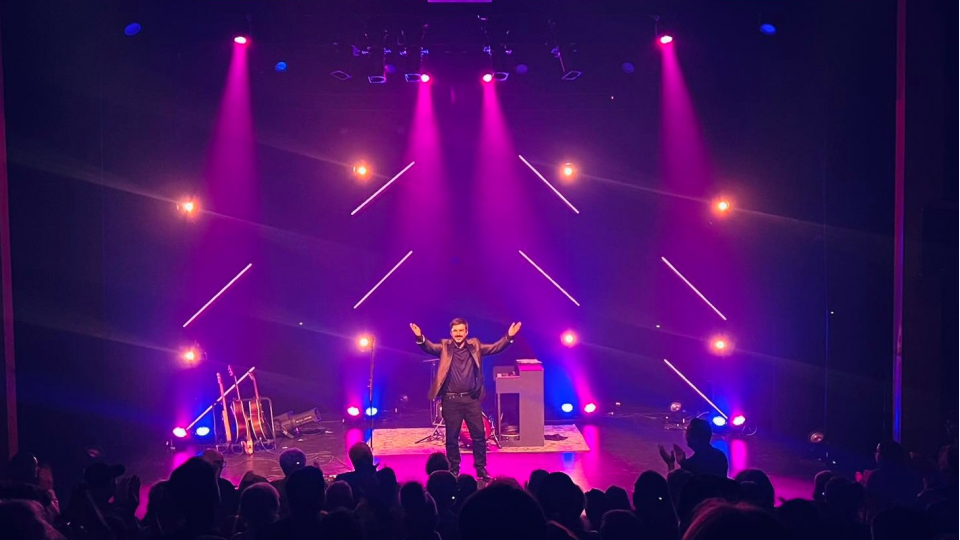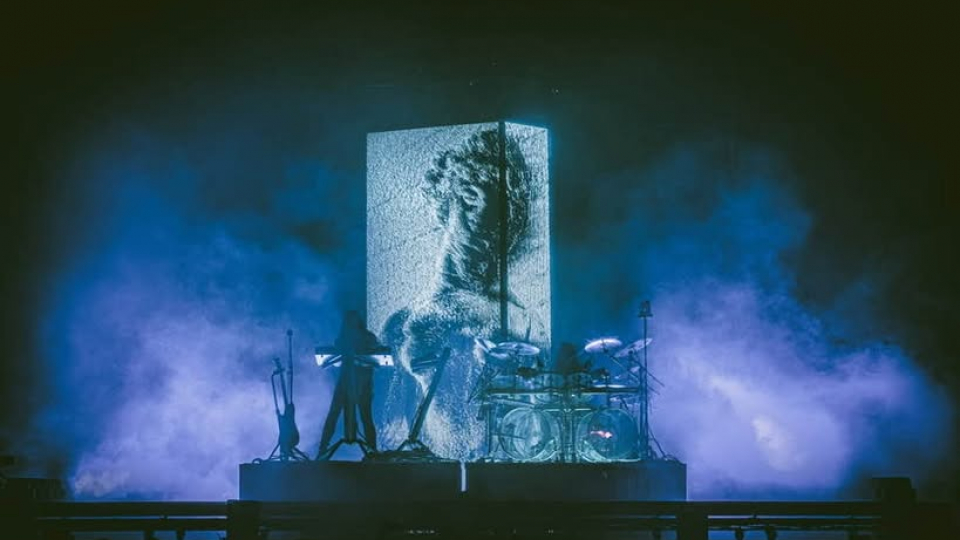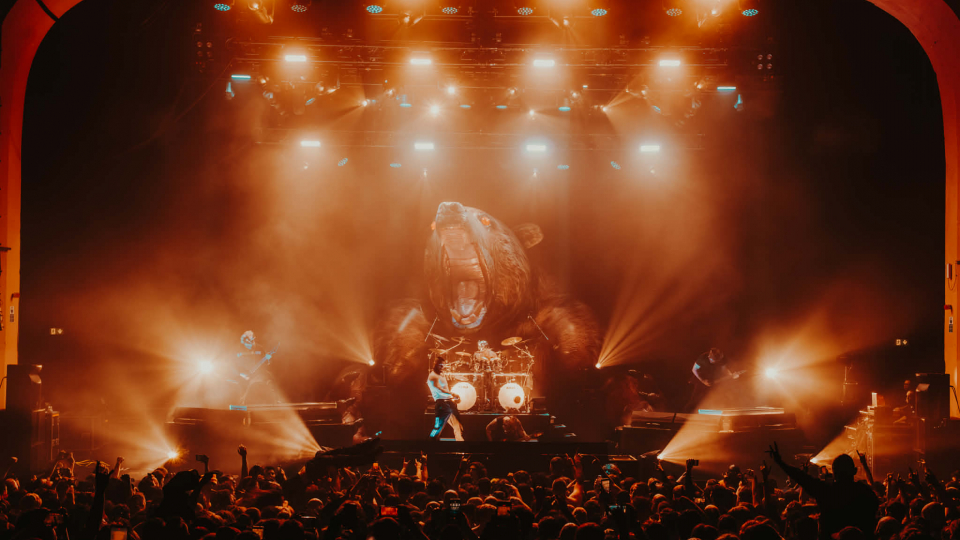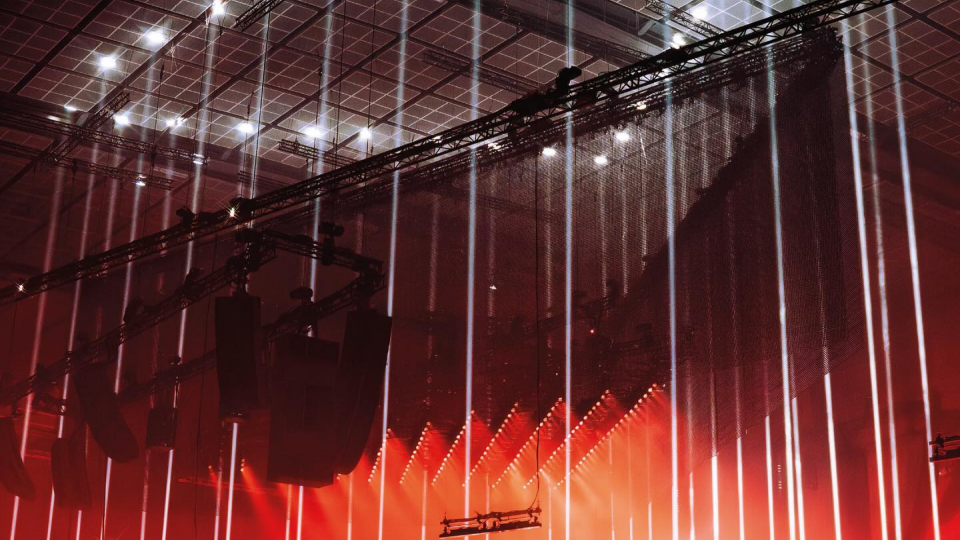
“One of my rules is NEVER try to do anything, just do it!” Ani DiFranco once said in the way of explaining her approach to taking on challenges. Ahh yes! No wonder Nate Cromwell forged a cosmic connection to the iconic singer as a youngster in Colorado.
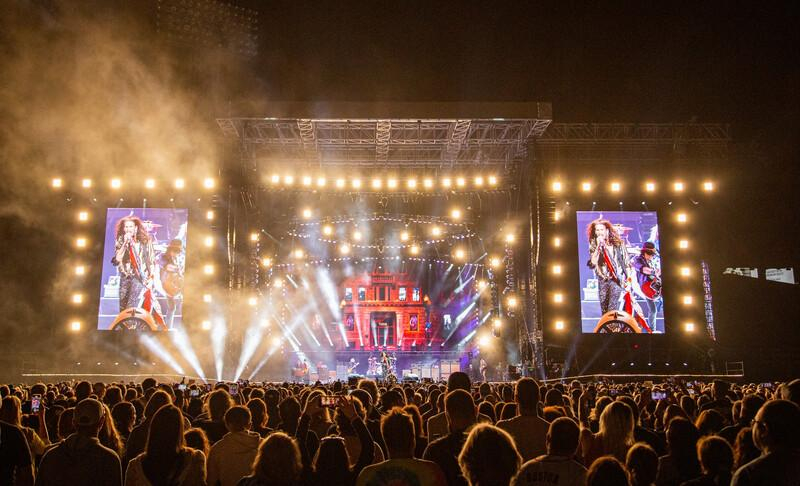
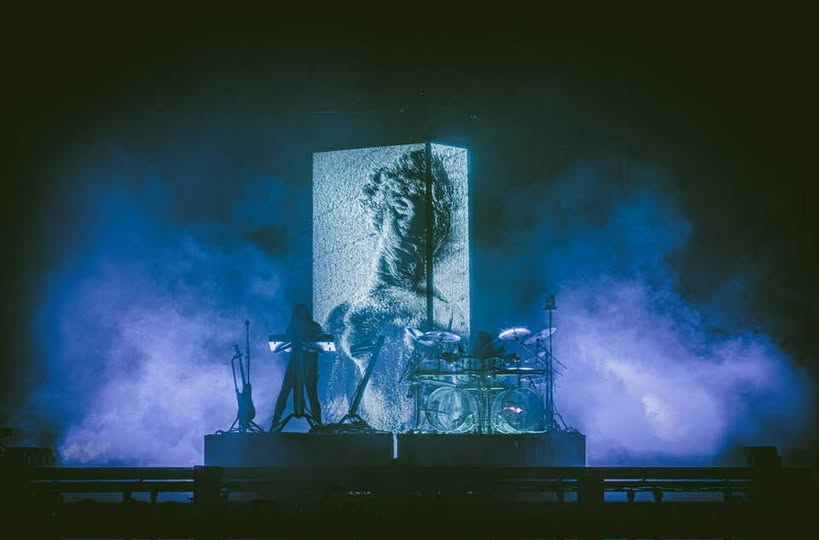
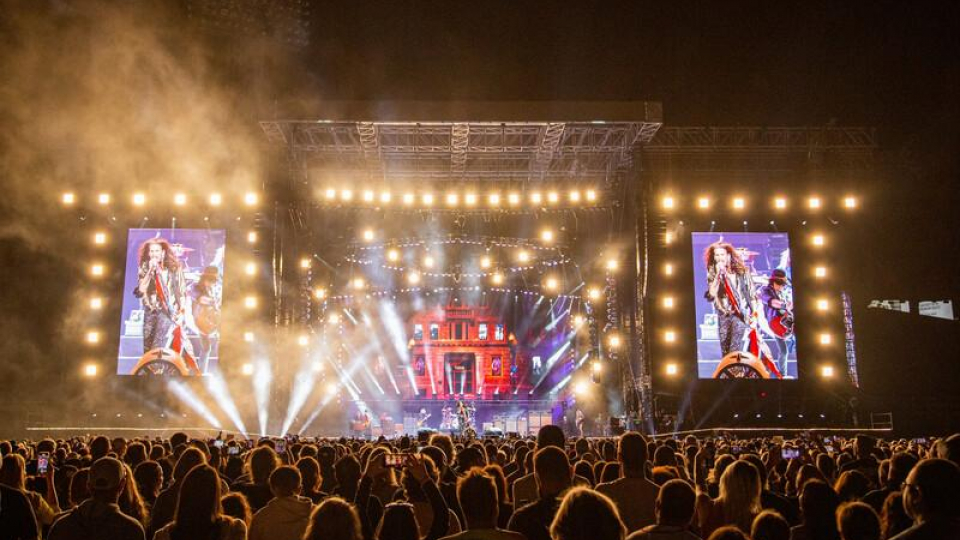
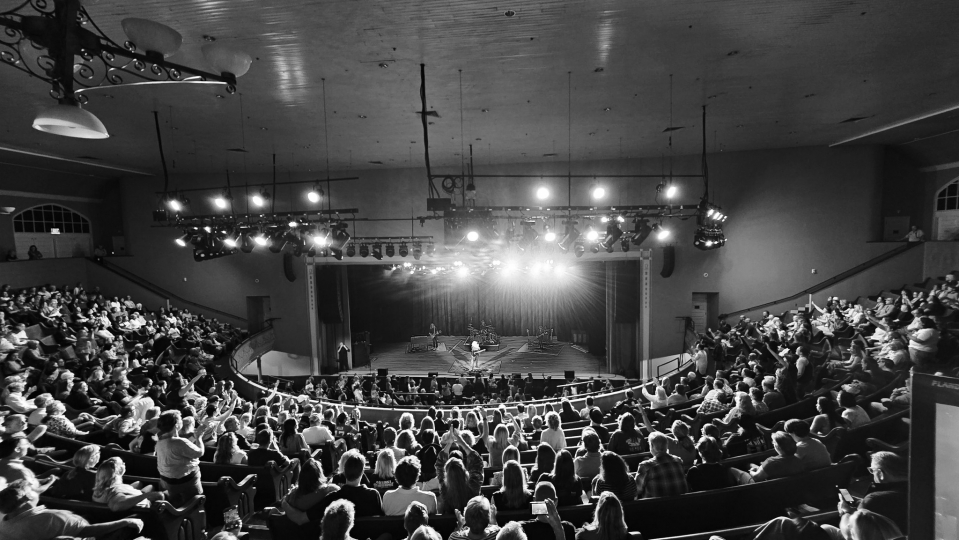
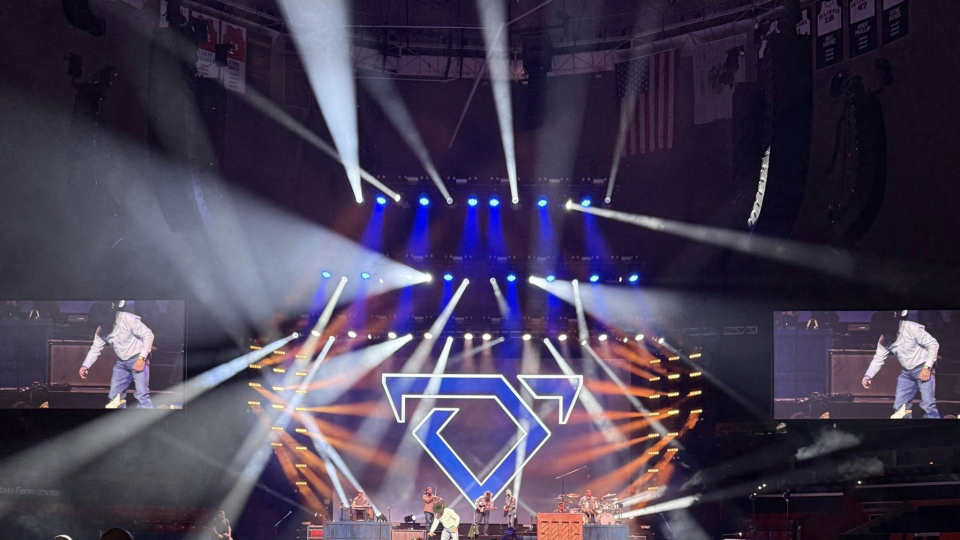
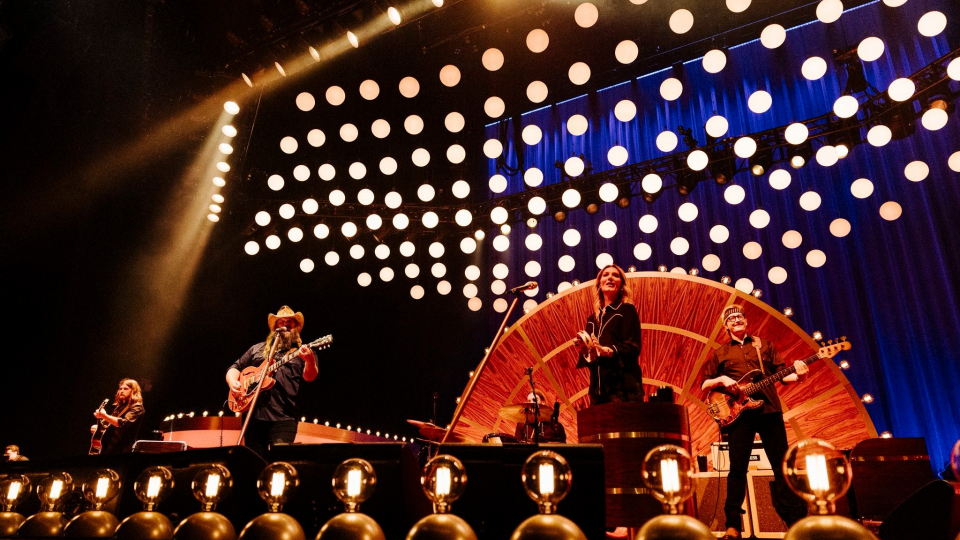
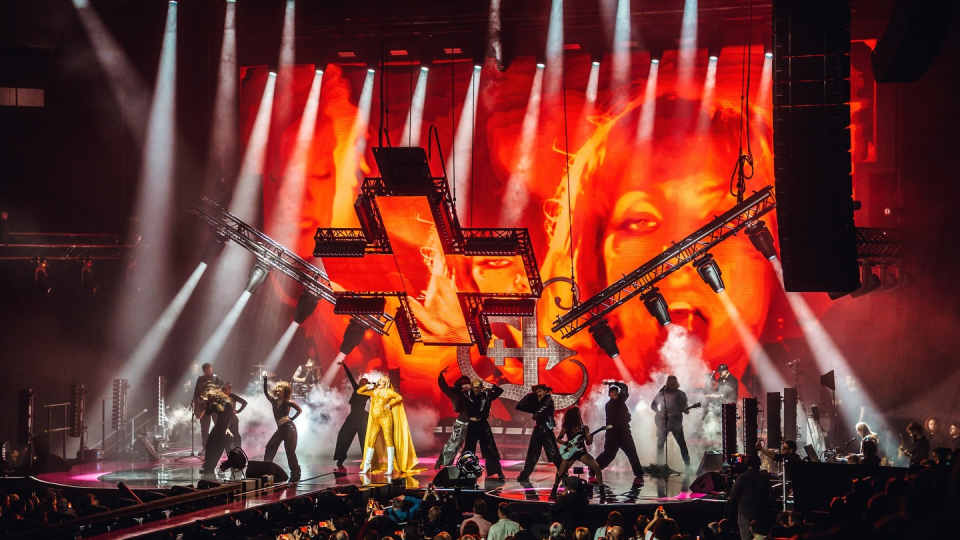
Cromwell likes to say that his interest in design was sparked by his desire to one day light a show by Ani DiFranco. True to his Grammy-winning idol’s fearless pursuit of goals, he eventually did. But he didn’t stop there… during his accomplished (and still young!) career, Cromwell, the founder of Na’cho Production and a member of The Playground, has been involved in tours and shows by Jelly Roll, Alanis Morissette, John Mellencamp, Billy Joel, and Carrie Underwood, to name a few.
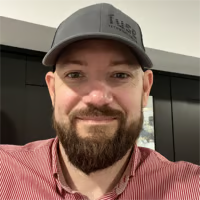
Throughout it all, Cromwell has not only been driven by a desire to meet challenges but also by an abiding vision to embrace new ideas and influences. When discussing those who inspired his work, he doesn’t mention just one or two names, but over ten of them — and not just in passing either, but with details of what each has contributed to his development as a designer. There is Peter Morse and the ideas he shared about using Lavender, Steve Cohen’s thoughts on the architecture of light… the list goes on.
Learning has been an ongoing passion for Nate Cromwell. Given this visionary philosophy, it is not surprising that he now excels at myriad design skills, from set and production to lighting and programming. His work time-coding Nick Whitehouse’s Carrie Underwood Cry Pretty tour was legendary, and his Follow Spot seminar at LDI 2025 was one of the highlights of the show for many.
Indeed, if you’re looking for a “Renaissance Figure” of entertainment lighting design, Nate Cromwell is a very good place to start. Speaking to us from his Celebration, Florida studio, he shared insights into the power of visionary design.
Your work on Alanis Morissette’s 2021 World Tour was extraordinary. You wore so many different hats: set designer, production designer, programmer, and lighting designer. How do you balance so many things?
“Thank you, that’s kind of you to say! For me, it comes down to maintaining constant mindfulness of schedule and progress. When you’re wearing that many hats, you have to be sure nothing is being held up because you’ve dedicated too much time to another area.
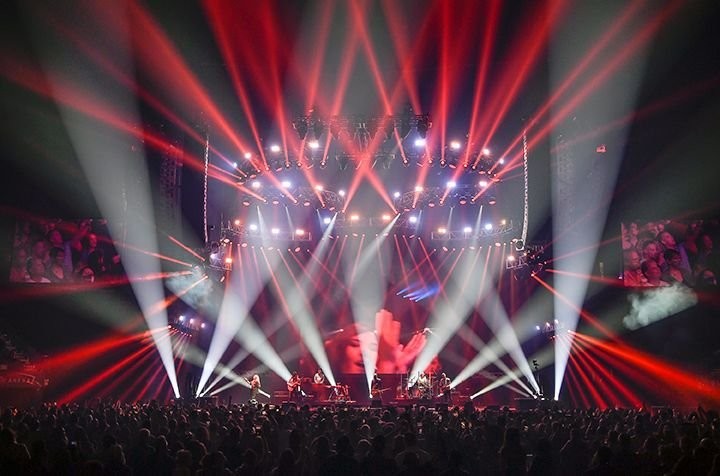
“The other vital piece was not skipping any part of the process. Even though I knew what I wanted each song to look like in my head, I still created a full creative document, breakdowns, renderings, all of it- even though it was only referenced by myself. That meant that during 3am rehearsals, often as a team of one, I already had a solid creative plan laid out and wasn’t trying to invent looks while programming.
“Full show soup to nuts” is a challenge. I was also surrounded by an incredible team, and being able to trust those. One example- Sonny Oyler is an incredible Rigger, and he produced a workable version for each show before we left rehearsals. Lighting and video vendor reps Michael Golden and Scott Bishop were also essential helping me juggle the inventories.”
To elaborate on that point, you do so many different things in design. Does your work in these different segments feed on itself? So, do you become a better lighting designer because you program or handle set design?
“To me, yes—absolutely. It helps because it gives me the objectivity that comes from having sat in the other chair. I know how to communicate in each discipline’s language, and I have a stronger understanding of how they interrelate, especially when it comes to timelines, task dependencies, and expectations.
“Having a deep technical background is an asset as a designer, but it’s also a double-edged sword. You can limit your creative thinking if you burden yourself with solving technical problems too early in the design process, instead of allowing project managers and master electricians to find creative ways to implement.”
Which of these different skills do you think you are strongest at?
“I’ve spent most of my career as an operator, and it’s where I’ve always felt most at home. I’ve been behind a lighting console since I was thirteen, when I first discovered the one at my school, and that foundation shaped how I think about shows. Because of that, my strongest skills live at the intersection of designing and operating—understanding not just what a show should look like, but how it functions night after night.
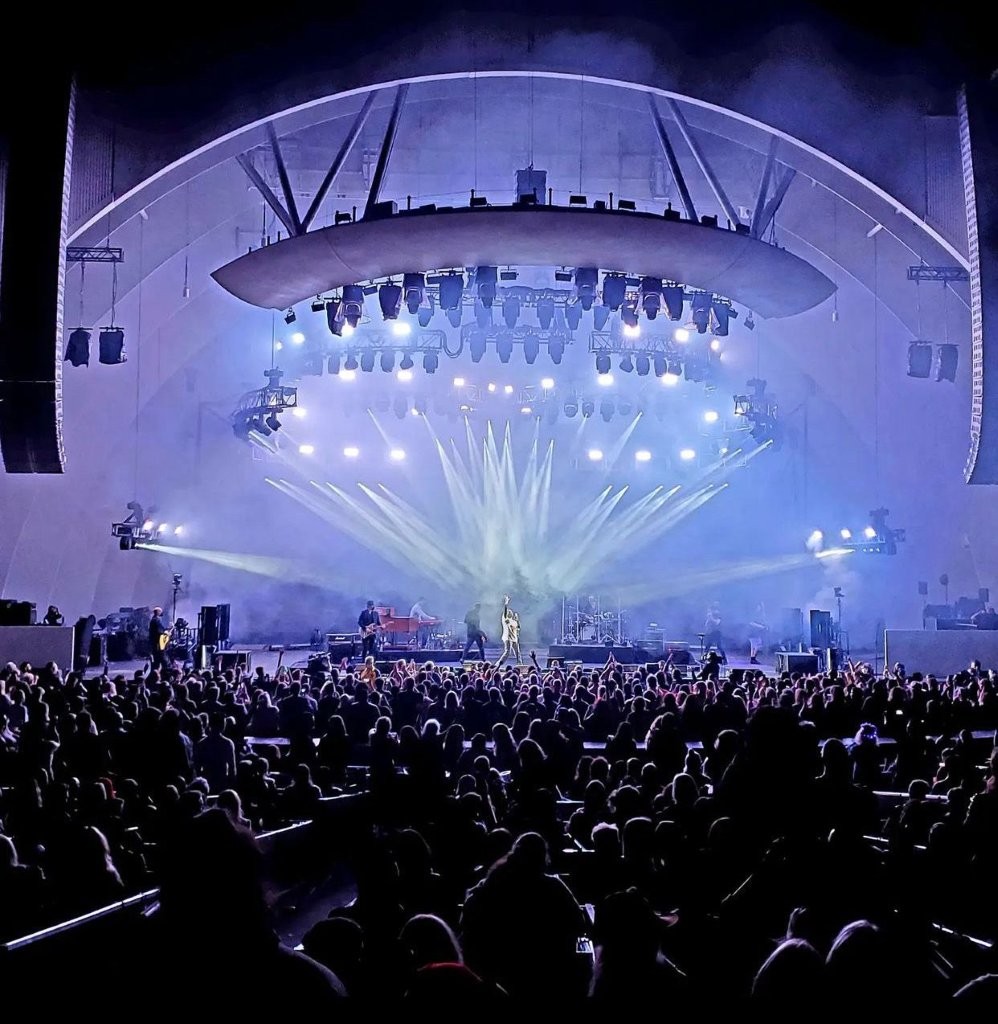
“These days, I’m focused on applying that experience toward building shows and tours that don’t just look good but are good to be a part of. I try to use what I’ve learned to express ideas through light, color, motion, truss, and automation, while also making systems that are clear, efficient, and respectful of the people running them.
You’ve said that your interest in lighting design as a teen was sparked by your desire to design for Ani DiFranco, which, happily, you eventually did. But we must ask, what was it about Ani that sparked this interest?
“A lot of my friends—especially dancers and other creatives—were listening to Ani in the early to mid ’90s when I was growing up in Colorado. What drew me to her then, and still does now, was the message and the lyrics. I’ve always been deeply drawn to lighting songwriters, and Ani was one of the first artists who made me feel like someone was articulating exactly what I was seeing and feeling. I quit writing after I found her music, simply because she was saying all the things I was seeing and feeling. She became the muse to my newfound art form…lighting!”
In addition to Ani, you’ve worked in various capacities for a diverse range of other artists: Billy Joel, Carrie Underwood, The Eagles, Don Henley, and John Mellencamp, to name a few. So, do you have to like an artist’s music to do a good job lighting it?
“I’ve been fortunate to genuinely enjoy the music of every artist I’ve worked with, but for me, liking the music isn’t the only requirement. I don’t necessarily have to agree with an artist’s message, but I do need to feel that the time and energy I’m investing is contributing to something positive in the world—at least as I understand it.
“That said, my relationship to lighting music is involuntary after this amount of time spent in that imagination pool. It’s an innate reaction. Every song or audio stimulation that enters my head immediately becomes visual—I see color, movement, and direction. I can tell where sounds live spatially and how they want to exist in light. It’s not something I can turn off, even if I wanted to. It’s both a blessing and a curse because I can’t objectively appreciate something without doing that, but it’s also the foundation of how I approach lighting any artist, regardless of genre.”
Is there an artist from another era, who is no longer with us that you wish you could have been around to light?
“Frank Sinatra.”
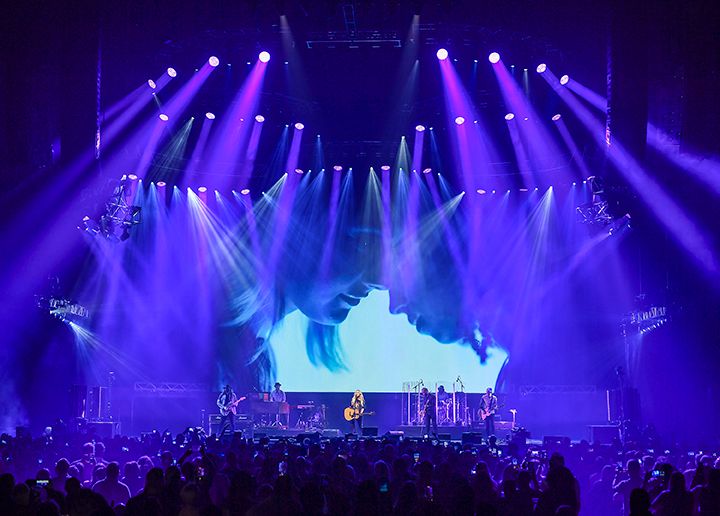
You’ve collaborated with a lot of very accomplished designers in your career. What are the best and most challenging things about working with super creative people?
“I have, and I’m grateful for it. I was a fan of the concert touring industry long before I became part of it, so working alongside people I’d admired for years is truly living the dream. Thankfully, every one of those designers lived up to the hype and is a great person.
“But one of the more challenging aspects of working with exceptionally creative people is learning how to accept criticism—because it carries more weight when it comes from someone you deeply respect. Early on, that can be emotionally difficult, but once you get past it, it puts you in a mindset that allows truly exceptional work to happen.
“A big reward has been learning from these masters and then making something my own. I’ve said many times that I’m really just an amalgamation of what I’ve learned from talented people along the way: Peter Morse’s use of lavender and intensity timing; how colors react to each other with Johnathan Smeeton; Steve Cohen’s architectural approach to design, scale, carving a scene with negative space, and spotlight calling and direction; the organization and key lighting that no one achieves like Jeff Ravitz; vision, collaboration, and show cohesion from the inimitable Sooner Routhier; learning how to direct rehearsals as a creative director watching Barry Lather; Communicating your idea to the artist with Baz Halpin; Designing, programming, and executing your own vision with Nick Whitehouse; and counterpunching current design trends and layering strobe hits from watching master designer Butch Allen collaborate with programmers Rob Koenig and Cat West.
I’m just standing on the shoulders of giants that I work with and came before me.”
We talked about the Alanis Morissette 2021 tour. You create some beautiful multi-colored looks on that tour. Some designers are reluctant to use more than two colors at once. What advice do you have for making multi colors work?
“The cause and solution to all of your lighting design problems. Any time I move beyond two colors, it’s usually because the song or look really demands it, or because there’s a story or a need to feature that I can’t tell with just a limited palette. The music or structure (or client!) always leads that decision for me.
“When I do use multiple colors, I approach it hierarchically: start with a primary color, then introduce a secondary color, and finally add accents. You need a core color to anchor the look, and everything else should support or contrast that foundation rather than compete with it. The look should move. Your eyes should be drawn to a point, and then to the next. Layered to have a natural path, it follows. Looking at it overall, it should feel balanced.
“The more colors you introduce, the more intensity, definition, and position become important.”
At LDI, you gave a seminar on tracking, something you’re an expert at. What does tracking add to a show?
“For a designer, it is a huge tool for using light as a metaphor and as a solution to leverage different angles of light to reflect emotion.
“As a director, having that information means fewer presets in the console and a higher level of accuracy and consistency in spotlight operation. For artists, it lets them focus solely on the music without concerns about hitting marks or the timing of lighting cues.
For everyone, especially the audience, it helps keep us in the moment of suspended disbelief. There’s nothing more distracting than a follow-spot prison break moment coming back in from a perfectly timed blackout. As an element, when we know exactly where a person or object is on the stage- sometimes down to the millimeter- we can create precise moments that appear magical. We’ve all experienced a perfectly timed spotlight fade-in or a scene that lands flawlessly out of blackout and gives you chills. Those moments can be so powerful, and with modern follow-spot tracking systems, they’re repeatable.
What are the mistakes most commonly made with tracking?
“The biggest mistake is using the wrong system for your show. They each have places where they really excel. Just as speccing the right lighting fixture or the right microphone is important, using the correct automated tracking system for your application.”
You were the LD for Nick Whitehouse on Carrie Underwood’s Cry Pretty tour. We understand that it was mostly time-coded. What was that experience like?
“Ah, yes – Overnight programming with Nick Whitehouse! Nick is an incredibly gifted designer and programmer. His approach to timecode programming is, in my opinion, without equal. It’s true single-sequence timecode programming.
“I’d stay with him on overnights, and Nick would just grind through hundreds and hundreds of perfectly timed cues, hour after hour. He’s incredibly intelligent to the point that he can have a full conversation with you while programming, writing an effect, already thinking about what the next three cues are going to look like, and drinking the beverage of his choice. We’d be laughing and talking about saturation levels of old fixtures while he was playing three-dimensional chess with an arena rig.
“The programming itself was highly adaptable. I was able to use that same show file not only for a massive in-the-round arena performance, but also to clone it in almost every show format imaginable. Delivering that level of lighting consistency for Carrie night after night simply wouldn’t have been possible without the way Nick approaches programming.
Looking at your entire career, is there any one project that stands out as being the biggest learning experience, either because of what it taught you about lighting or yourself?
“Working with Steve Cohen and Mark Foffano on my early projects with them stands out as the biggest learning experience of my career. That period is when I feel I really moved from the act of lighting into the art of lighting.
“I came in with a formal theatre background and had already lit and designed shows, but the deeper understanding of how to carve with light and shadow—any sense of magic I have in that regard—came from working alongside them at that time.”
If you didn’t become a lighting designer, what do you think you would have done?
I honestly don’t know. Probably the toughest question for me to answer. I’ve never really done anything else. My first real job was concert security at Red Rocks when I was fifteen, and after that, I started building four-post roofs with 120k PARs during the summers before college. I was already in the environment, learning the industry from the ground up, so lighting has always felt less like a career choice and more like an identity.
How do you see entertainment lighting changing over the next few years?
“I think the concept of a cue being our base state of existence will start to change.
We will be drifting further away from linear syntax-based programming of live events.
Systems will become more integrated, and fixtures will become more diverse.”
What is the one thing you want people to know about you as a lighting designer?
“There is meaning and intention behind every cue, look, and color.”