“Film music should have the same relationship to the film drama that somebody’s piano playing in my living room has on the book I am reading,” Igor Stravinsky, the pioneer of the soundtrack age, wrote. He had a point. Music’s role in film, as he so brilliantly demonstrated in his cinematic work, is to enhance the drama on the screen, not to overshadow it. But there has often been something more beating inside the heart of the music that pulsates through the narrative of great films, especially when it is created by a gifted composer like Hans Zimmer.
Setting this powerful, sometimes dangerous and wild spirit free is at the heart of “Hans Zimmer Live”, a landmark three-hour production that features the work of the multi-award-winning German composer whose music has transformed Gladiator, The Lion King, Pirates of the Caribbean, Dune and many other iconic films.
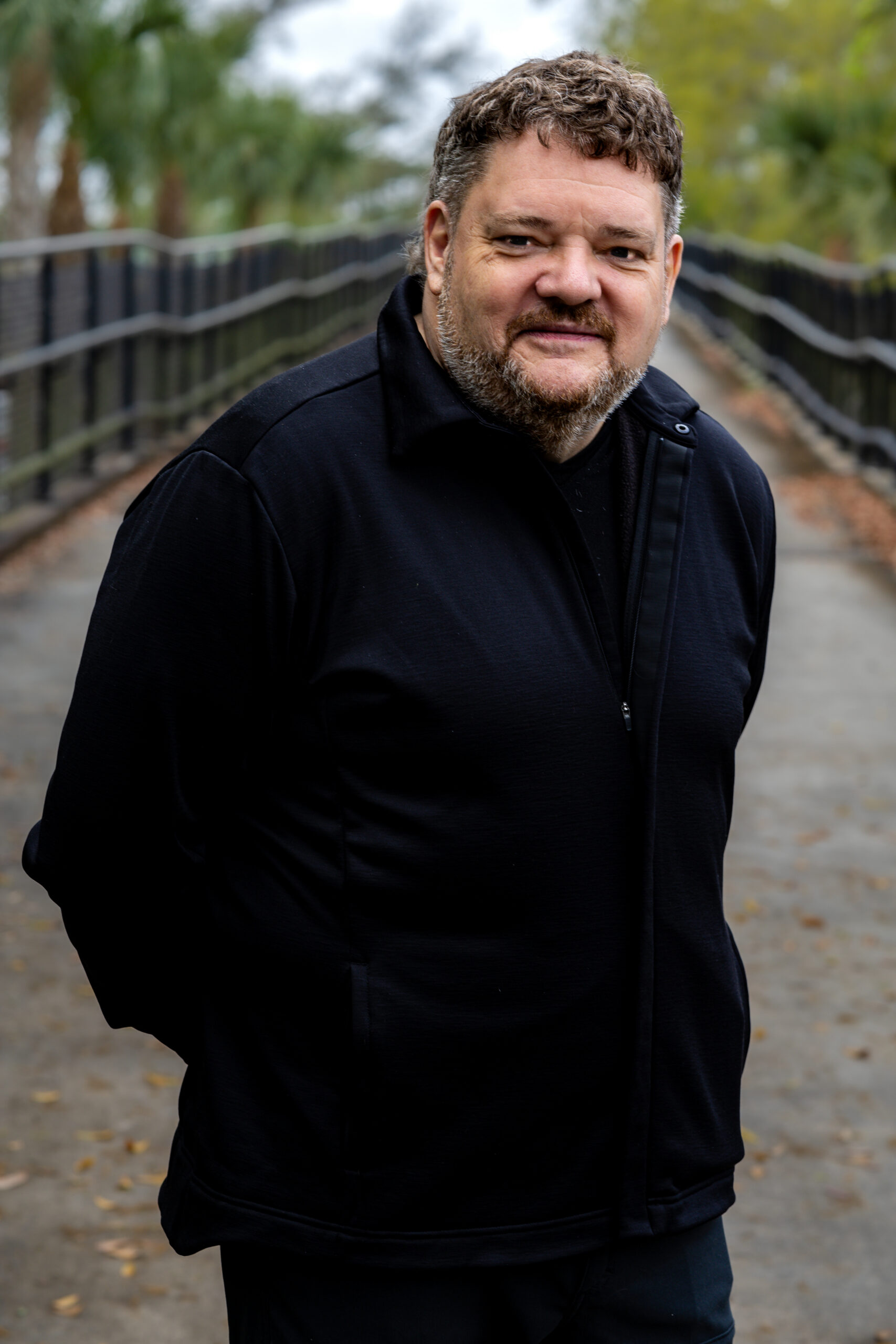
From the beginning, John Featherstone, cofounder of Lightswitch, has been involved in this ambitious show, which is now in its second iteration, “Hans Zimmer Live – The Next Level.” Like his longtime friend Hans Zimmer, who describes the show’s selection of music as “the disruptive collection,” Featherstone has eagerly cast aside convention, broken rules, and taken chances when lighting the deeply moving music.
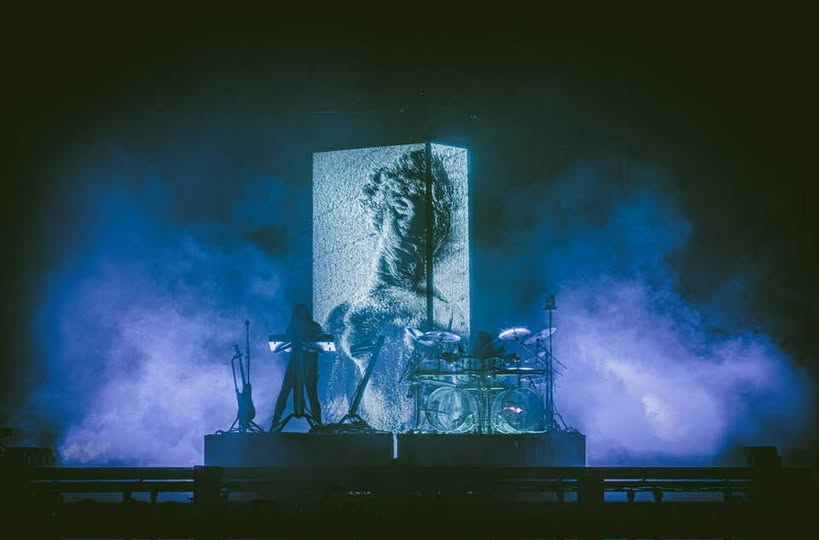
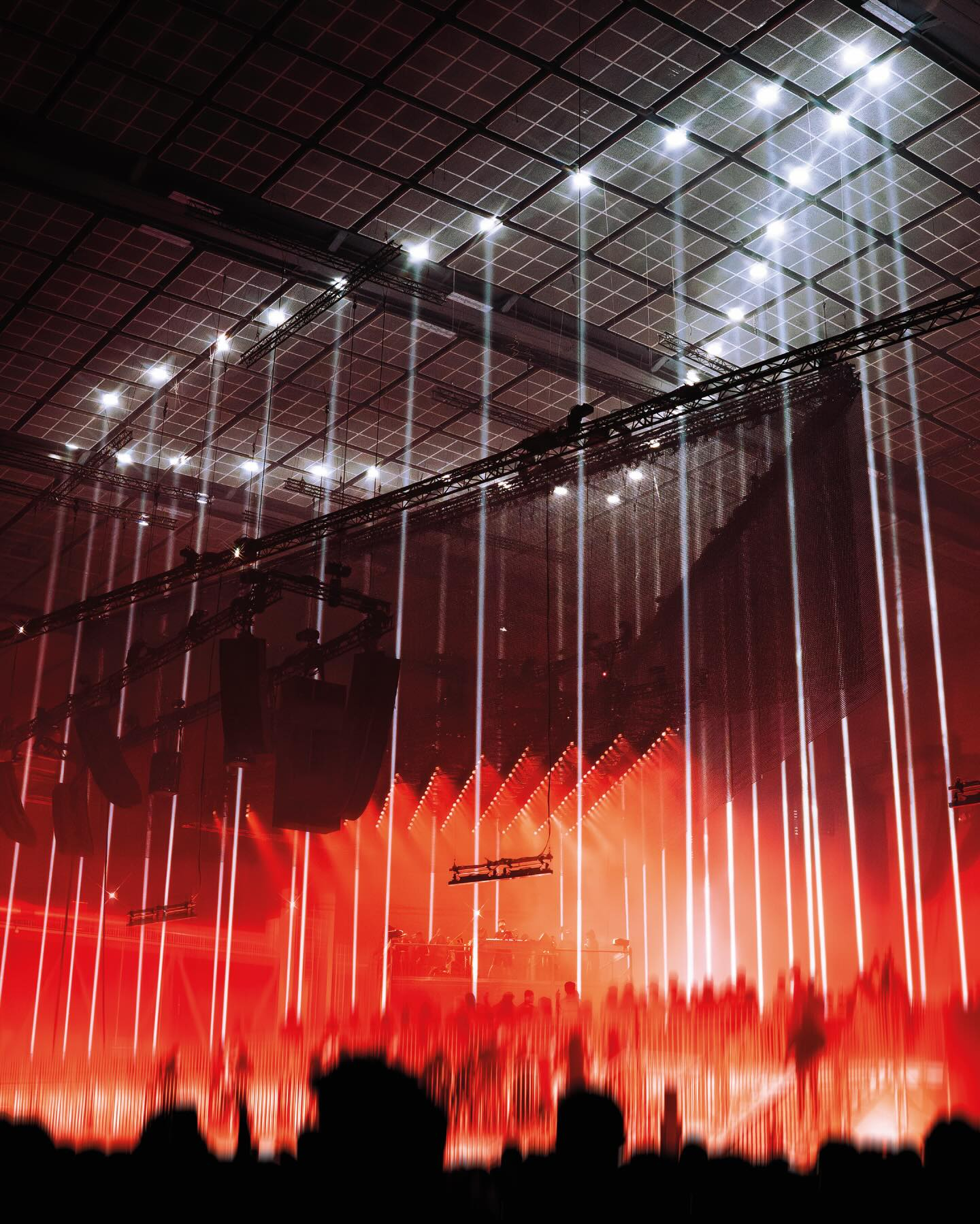
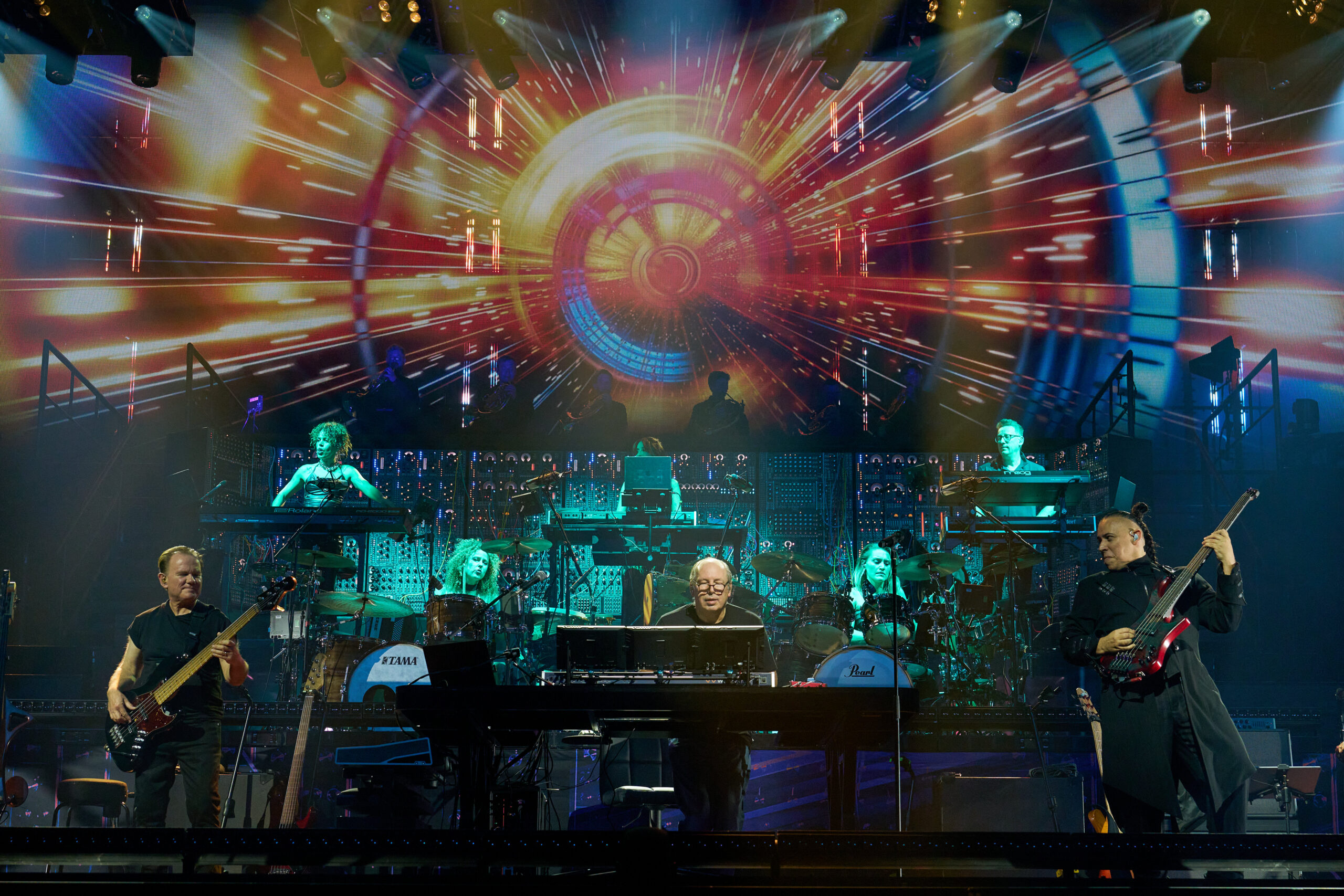
This is beautifully evident in his abundant use of automation that has the lighting live and breathe as it moves with the music. It can also be seen in the multi-layered stage with “Giorgio,” Zimmer’s massive synthesizer setting regally on the top tier, a symbol of the unlimited possibilities resonating in each performance.
Pulling together a production of this scope and magnitude required courage, in addition to the obvious inspiration, talent, and careful attention to detail — not to mention an immense level of collaboration. Featherstone discussed these qualities and more as he shared his insights into the heart and soul of this memorable production.
The show was originally imagined as six hours and became three. How did that evolve?
“At the beginning, like most things with Hans, it was almost gloriously over-ambitious. Hans has written so much iconic music that the temptation was to include everything. You could easily do six hours and still leave out half the favorites.
“But somewhere along the way, with Hans and his amazing musical director Steven Doar’s guidance, we realized this couldn’t just be a catalogue exercise. It had to be a journey. So we all stopped thinking in terms of chronology and started thinking emotionally. Where does the audience breathe? Where do we let something simmer? Where do we go absolutely enormous?
“Some pieces were folded into medleys. Some transitions became sharper. A few things we loved simply didn’t serve the arc and had to go. It wasn’t about cutting scale — it was about intensifying it. The three-hour version is actually more epic because it’s distilled.
Hans’ music is cinematic by nature. How did you make it theatrical?
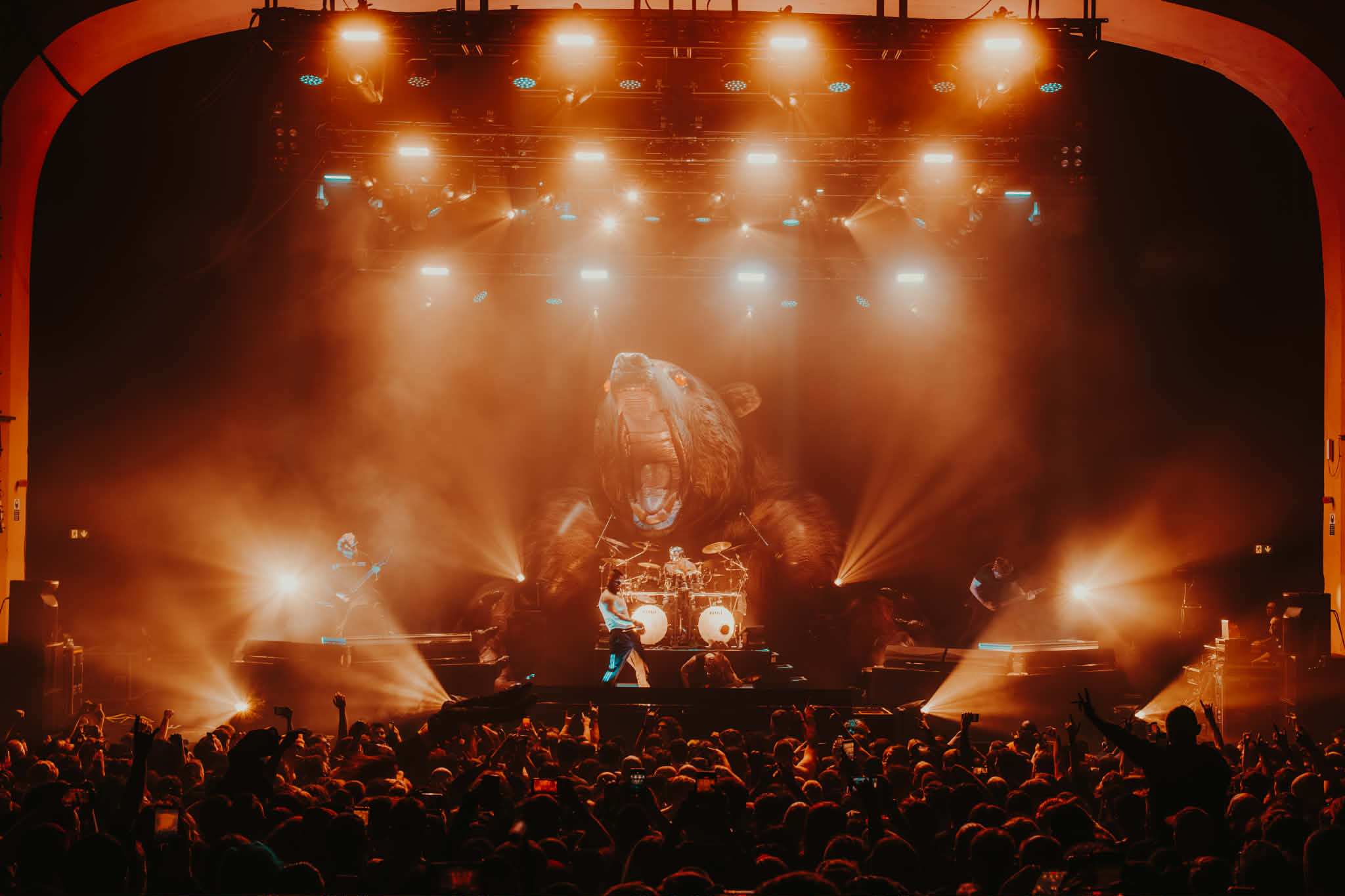
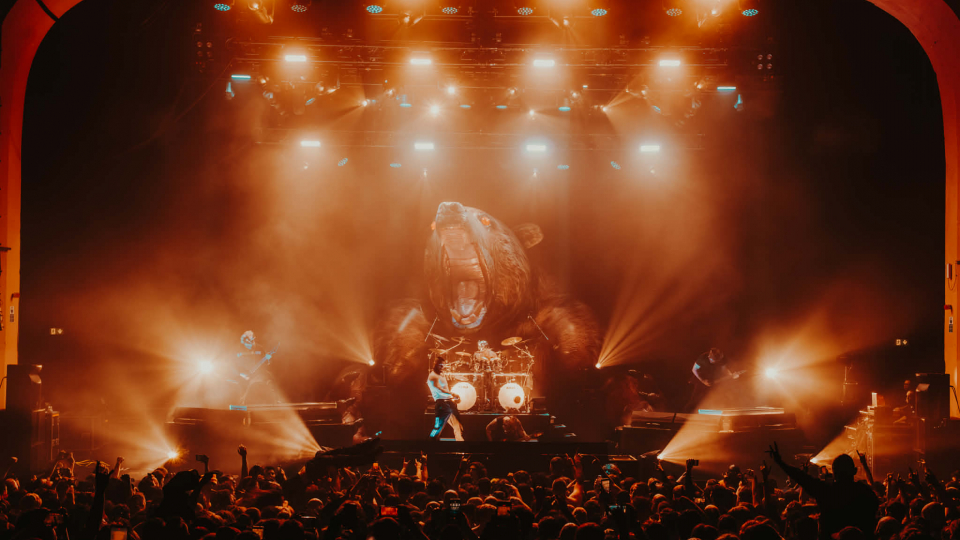
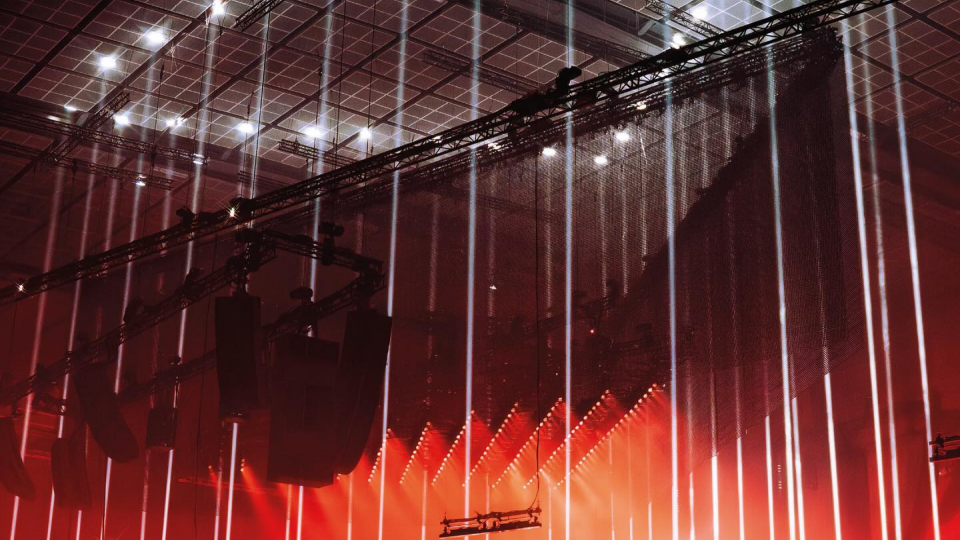
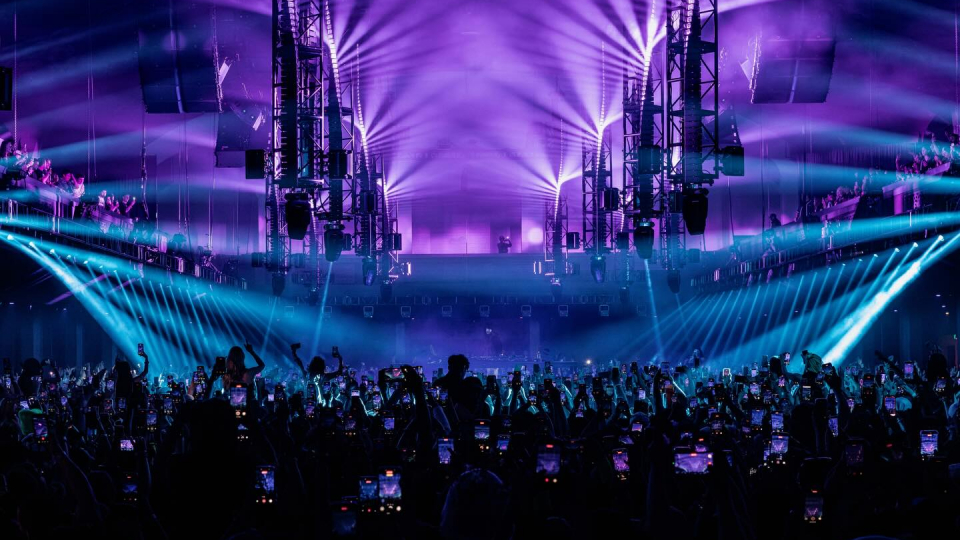
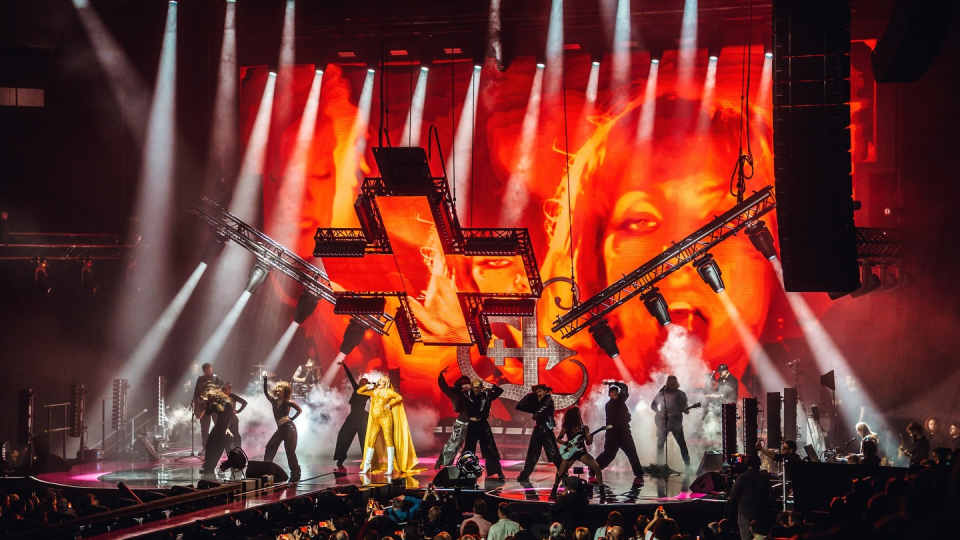
“In film, the music supports the image. In this arena show, the music is the image. That shift changes everything. Instead of lighting reacting to the picture, the lighting and staging become the picture. The four large pods we used give architecture — they’re not just lighting rigs, they’re also sculptural volumes that define space. They compress, expand, hover, loom. They let the stage feel intimate one moment and monumental the next.
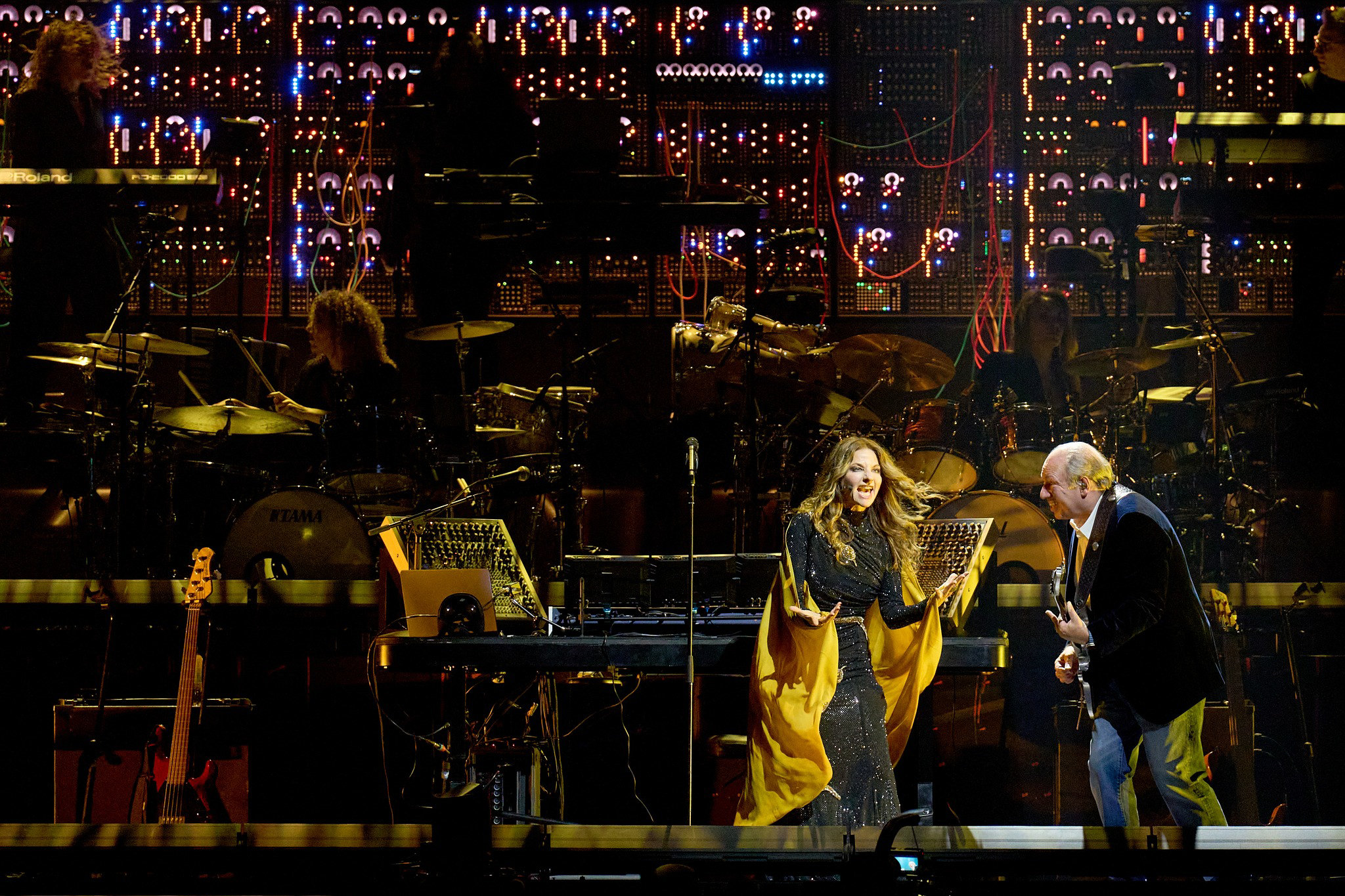
“And then, of course, there’s that enormous modular synth sitting at the centre of the stage. It’s not just an instrument — it’s a statement. It has real physical presence. Once that went in, the scale of the entire set had to rise to meet it. You can’t tuck something like that into a polite design. It demands verticality, mass, drama. In many ways, the size and ambition of the set radiated outward from that single object.
“So rather than recreate film scenes literally, we built atmosphere — depth, shadow, silhouette — and let the audience bring their own cinematic memories with them.”
There was clearly a lot of collaboration in this effort. How did that develop?
“It started relatively tight — Hans and his team of amazing musical collaborators, then the team, production design, lighting, audio, and video design. A small group shaping the bones of it.
“As the design gained ambition, the circle naturally widened. Automation specialists, structural engineers, programming teams. It’s an arena show of this scale — it takes a village.
“What’s interesting is that although the number of collaborators grew, the creative voice remained focused. There was a lot of discussion, yes, but always around the same central idea: the band is the hero. The music is the focus. Everything else supports that. By the time we hit rehearsals, it had become properly collaborative in the room. The show found itself there.”
The show now centers around four large pods. Why so much automation?
“Because the music moves!
“Hans’ work isn’t static. It swells, fractures, builds tension, collapses, and rebuilds. We wanted the space to do the same. The four pods allow the stage to transform physically. They can feel like a ceiling pressing down or like a cathedral opening up. We arrived at four because it gave us balance without clutter. Six would have been busy. Two would have been polite. Four gives rhythm — a visual beat.
“The real challenge was making the movement feel musical, not mechanical. The pods have to behave like instruments. When they move, it should feel like part of the score, not a bit of kit doing a trick.”
The earlier iteration of this show included mirrored elements. Why?
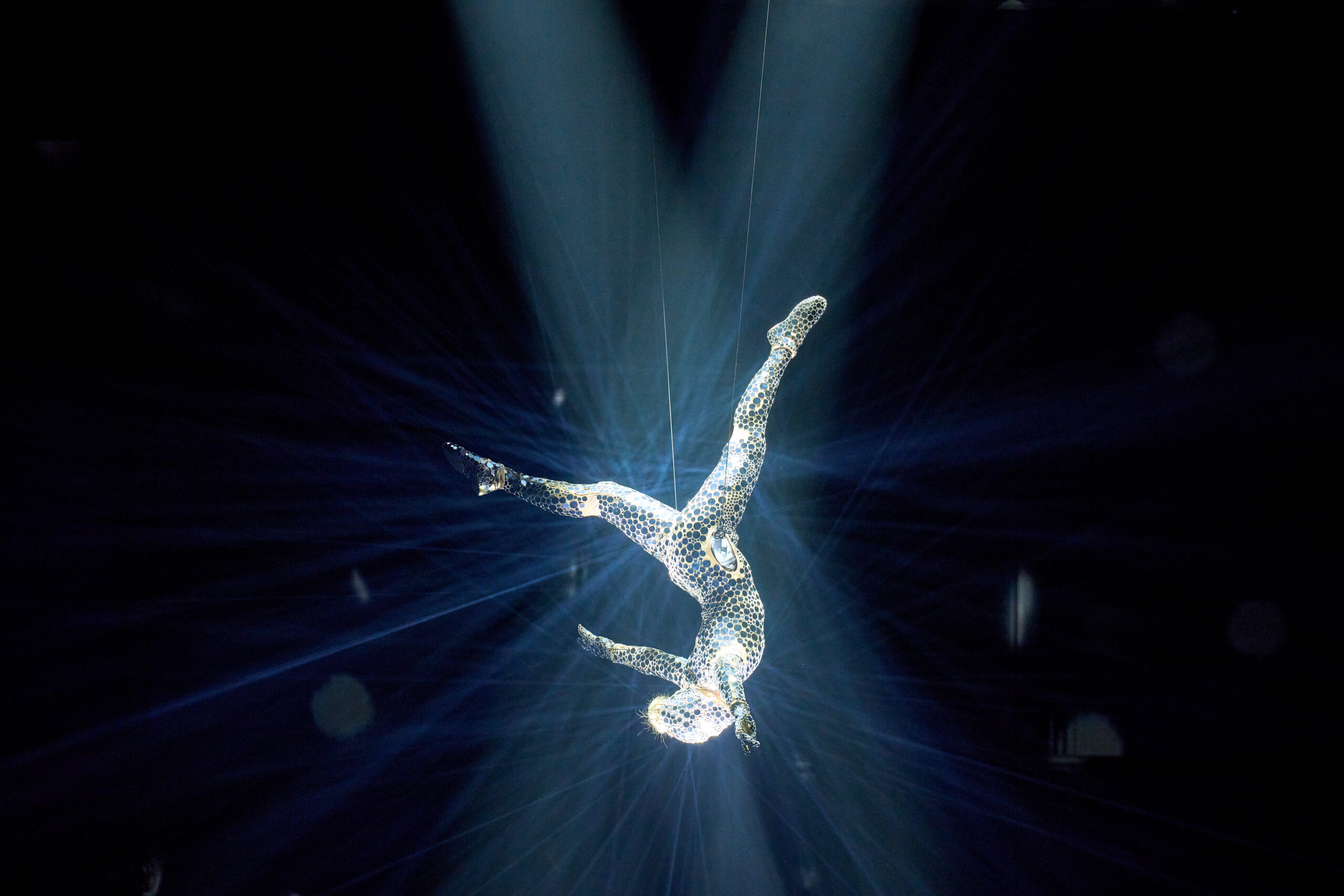
Reflection was about amplification. Light doesn’t just hit a surface — it multiplies. It extends the stage beyond its physical limits. There’s something quite poetic about that. Hans’ music reflects emotion back at the audience. The mirrored elements did something similar visually — echoing light and energy into the arena. So as this tour design evolved, that idea of expansion — of light escaping its boundaries — remained.”
You have multiple stage levels. What guided this decision?
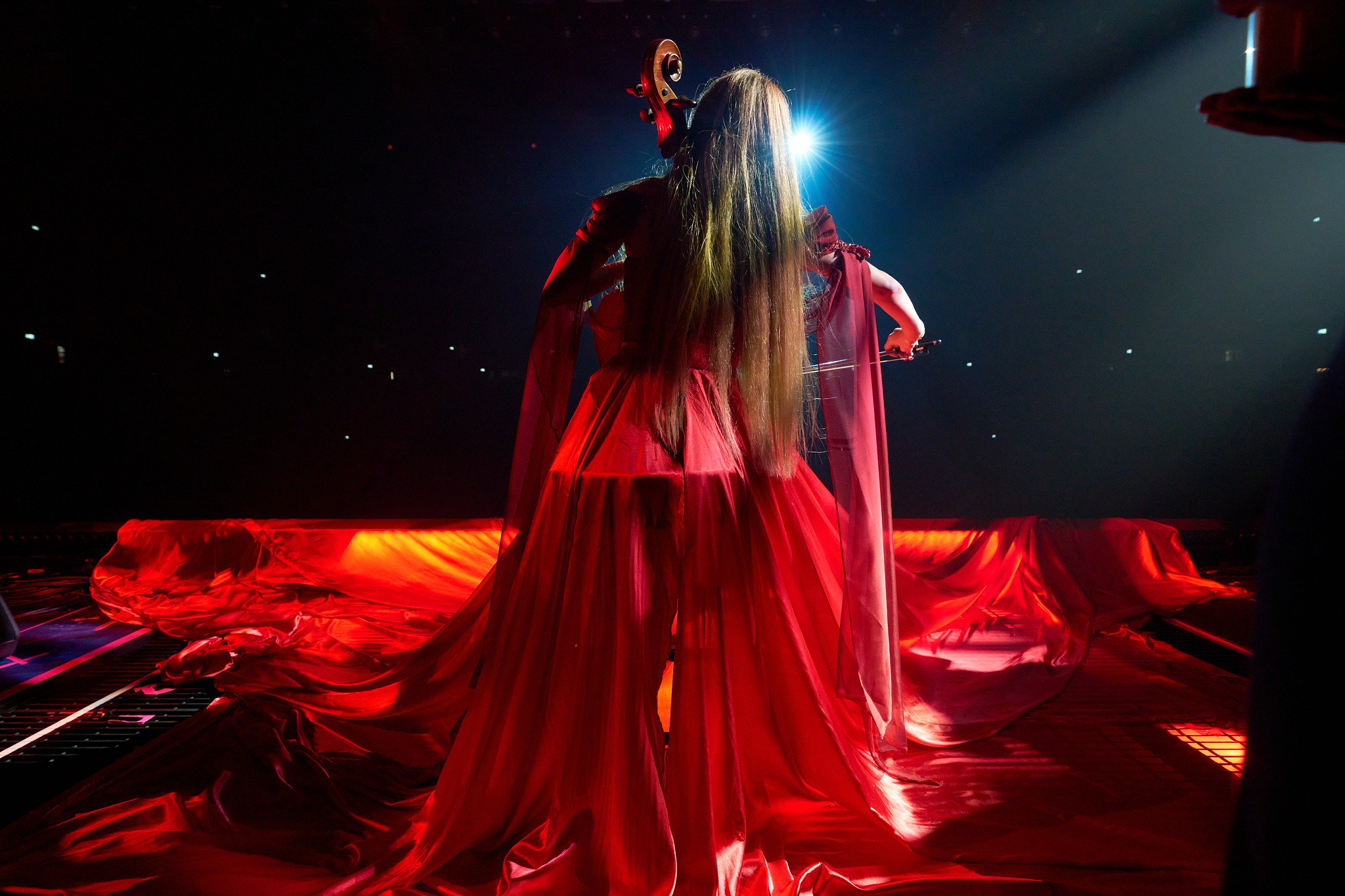
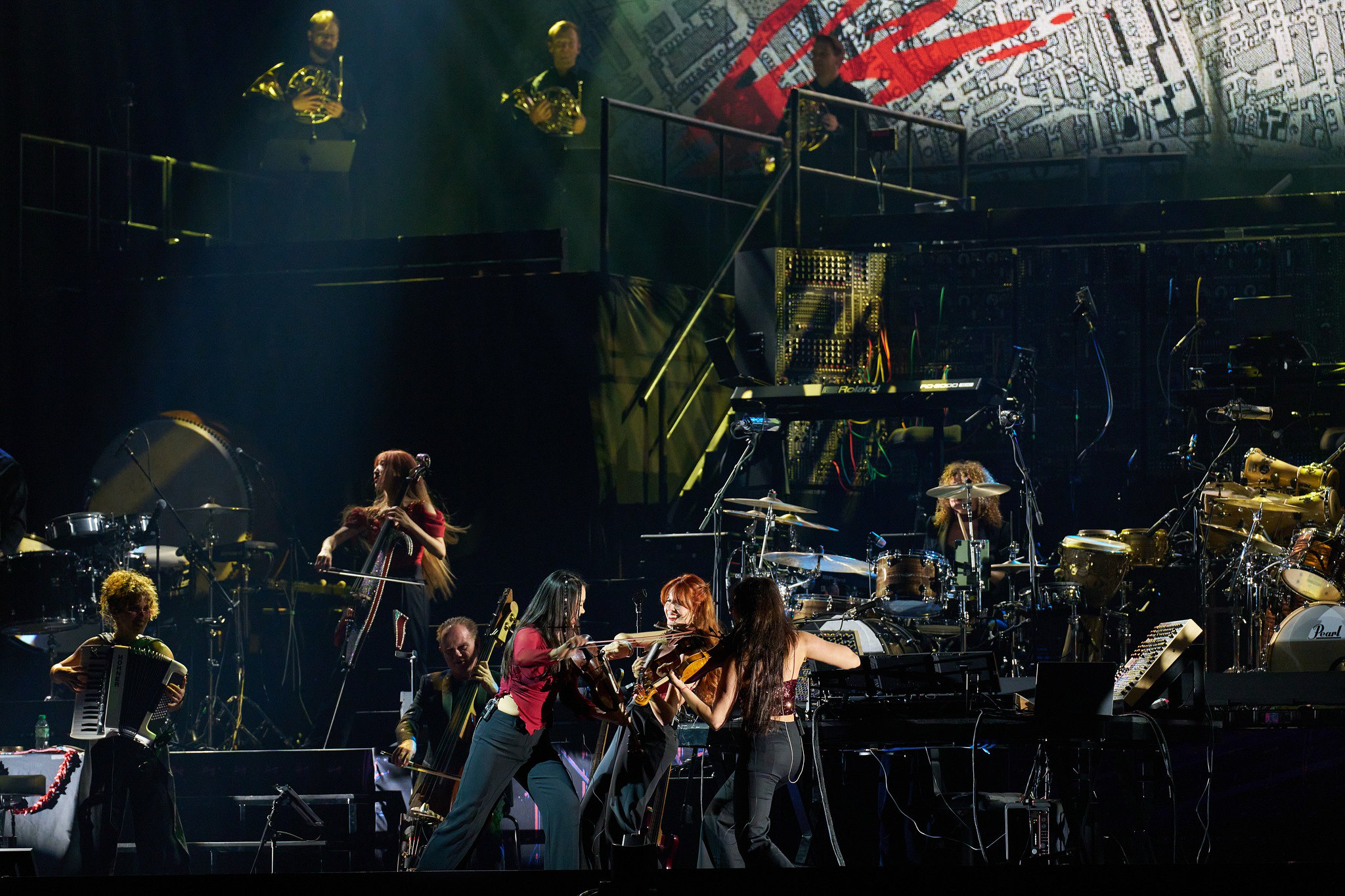
The band is layered. Strings, percussion, electronics, choir — it’s not a flat arrangement musically, so it shouldn’t be visually either. The tiered staging gives hierarchy. It gives drama. It means a soloist can rise and command the room, and percussion can feel tectonic rather than tucked away. And again, the modular synth played a role here. Its physical presence encouraged us to think architecturally. The levels feel almost like terrain — peaks and valleys rather than risers.
There are many brilliant colours in the show, but also quite a bit of dark space in some scenes. What role did you see dark space and shadows playing in this design?
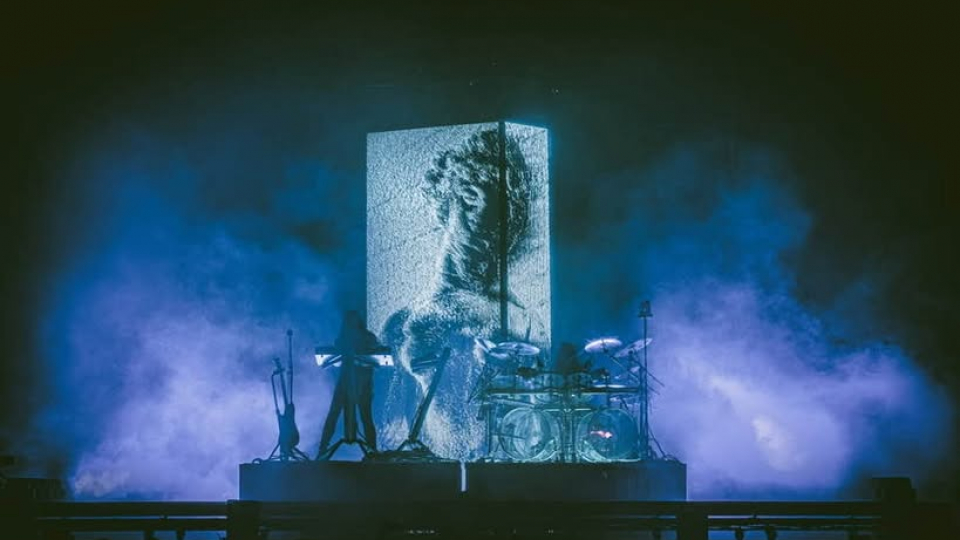
The dark was actually doing as much work as the light, if not more! If everything is bright, nothing has hierarchy. The shadows gave us contrast, focus, and tension. By allowing parts of the space to fall away, we could direct the eye precisely and make the lit elements feel intentional — even precious?
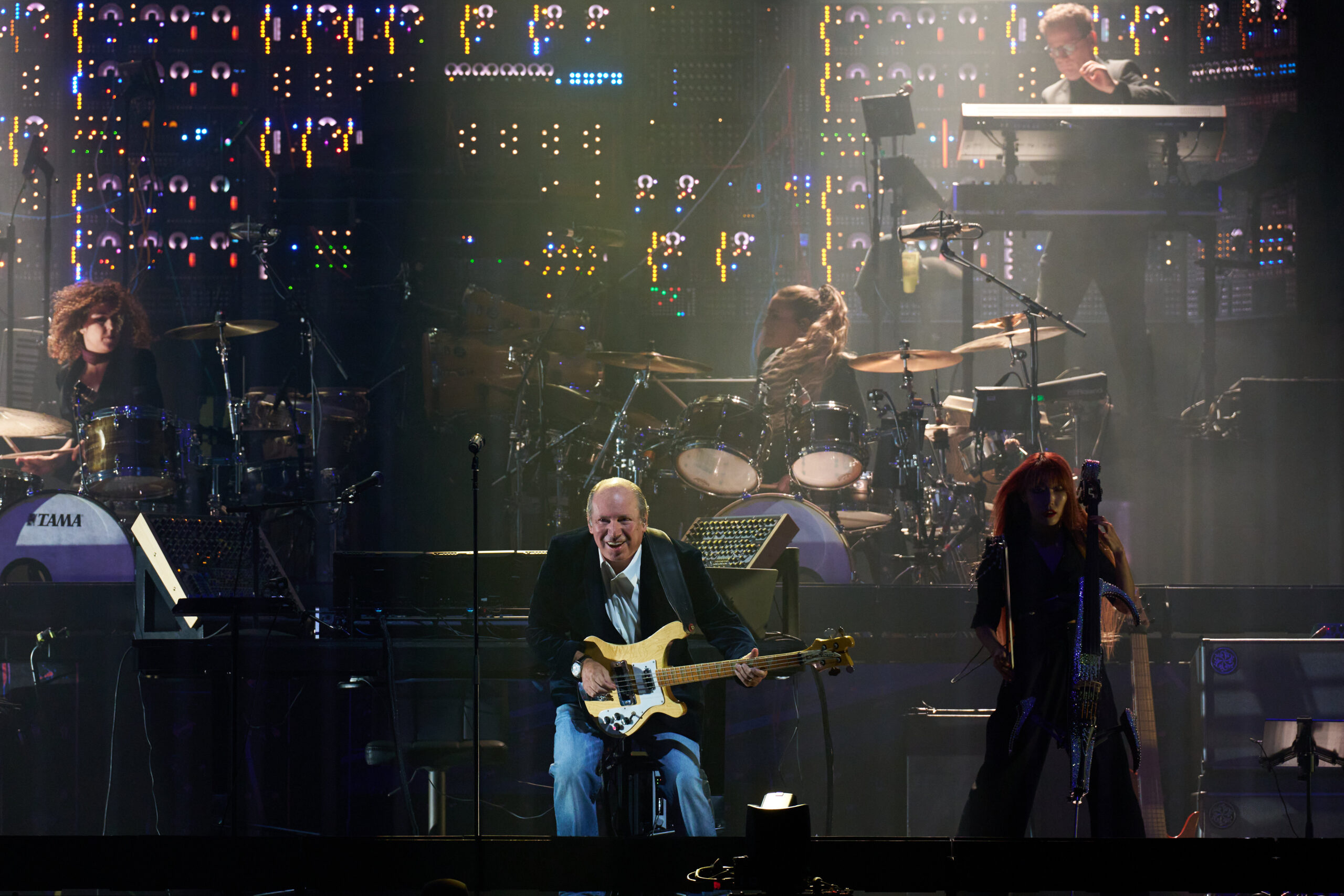
“Darkness also creates depth. It lets you sculpt rather than simply illuminate, and it invites the audience to lean in. In a show full of bold colour, those quieter, shadowed moments are what give the design rhythm and emotional weight. Without shadow, colour is decoration. With shadow, it becomes storytelling.”
What was the initial creative spark behind Hans Zimmer Live?
“Honestly? To let the band feel dangerous – Hans calls them ‘The Disruptive Collective’ for good reason! Hans’ music is often described as cinematic, but live, it’s visceral. There’s grit and power in it. The spark was about capturing that immediacy — making the show feel alive rather than reverential. The idea wasn’t to politely present film music. It was to celebrate it as something muscular and contemporary.
The project began in 2019 and was interrupted by the pandemic. Did that change it?
“Massively! When you sit with a project for that long, it deepens. The world shifted. Audiences shifted. The appetite for shared live experience became much stronger. Technically, we had time to rethink things — refine the stage architecture, reconsider how scale worked, adjust the emotional pacing. It became less about spectacle for spectacle’s sake and more about connection. The finished show feels more considered because of that pause, and especially with the redesign from the last tour to this, The Next Level tour.
Looking back, what stands out most?
“The scale — but not in a bombastic way. It’s the moment when the pods rise, the modular synth glows at the centre, the band locks in, and the entire arena feels like it’s breathing together. That sense of collective immersion.
“If we’ve done our job properly, people don’t walk out talking about lighting or automation. They walk out feeling something…And that, frankly, is the point.”
John Feathrston Extends His Thanks To The Core Creative Team
Tom Bairstow – Screen Visuals Producer
Colin Pink – Audio Designer
Marina Toybina – Costume Designer
Barry Lather – Choreographer
Hailey Featherstone – Lighting Designer & Director
Chris Herman – Lighting Designer & Programmer
Zach Boebel – Lighting Director / Robospots
Michael Weiss – Tour Director
Mark Botting – Head Tour Manager
Jim Baggott – Production Director
Derek McLane – Art Director
John Featherstone – Concept & Lighting Designer