    Bridging the Visual Divide

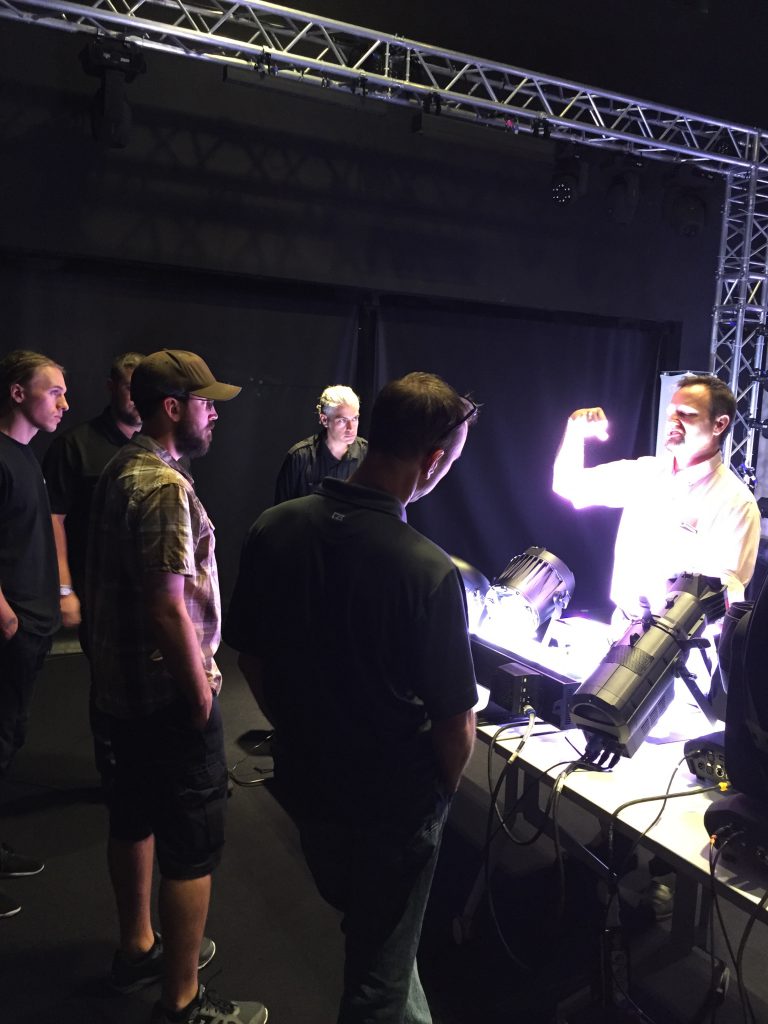
    So, there I was, presenting new gear to a group of industry experts when something that has never happened before to me, well, happened.  I was showing off one of our new video drivers and explaining how it worked and what it could do for lighting designers, when I hear the most dreaded words ever; “This is going to put me out of a job.”

    After the demo was over, I got a chance to speak with the gentleman who made the statement.  As we spoke, I got a better feeling of what he was saying.  He is a video designer by trade and thought that by making it easier for lighting designers to set up and throw content to video walls, it would make him a little less useful in the event market.  Once I explained to him that was not our intention and that the creation of a new driver, no matter how cool it was would not put him out of a gig, we got to the bottom of the real issue, the visual divide.

    Since the beginning of amplified audio and flashy lights, there has been a divide between audio engineers (noise boys) and lighting technicians (sparkys) have had a rivalry in the booth.  There are many reasons for this rivalry and it has gone on forever, but now there is a new player in the booth – Video designer (Vidiots).   Sorry, I don’t make up the names here.  I leave that to the Urban Dictionary.  Adding in the video designers into the mix has left the force with no balance.  The Jedi have the Sith, the Autobots have the Decepticons, Pepsi has Coke.  Where does the Video designer fit in?   This is a problem indeed.

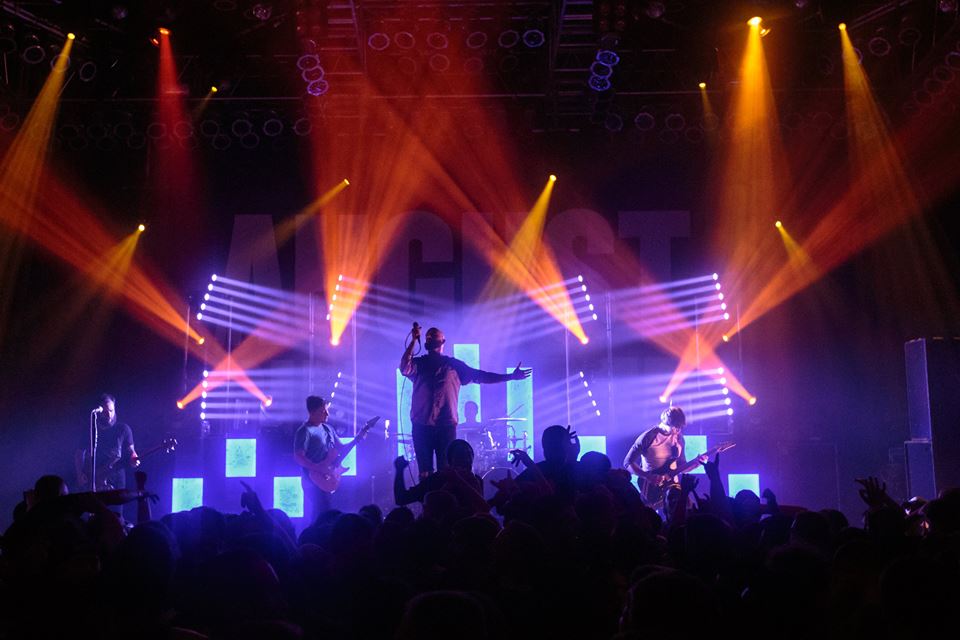
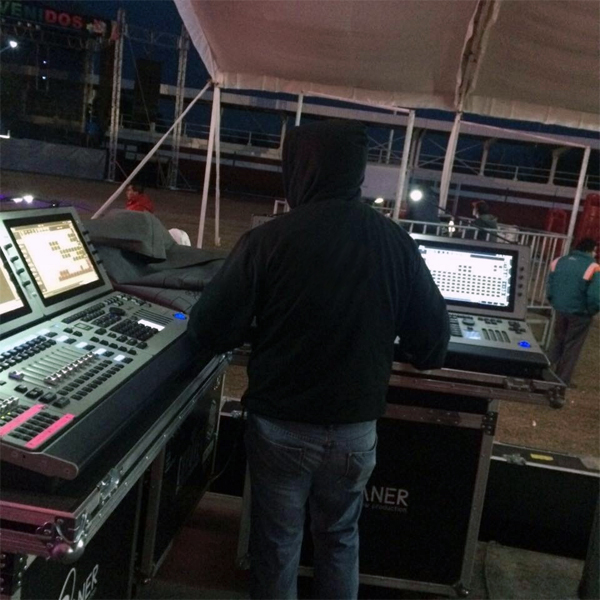
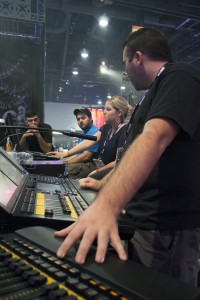
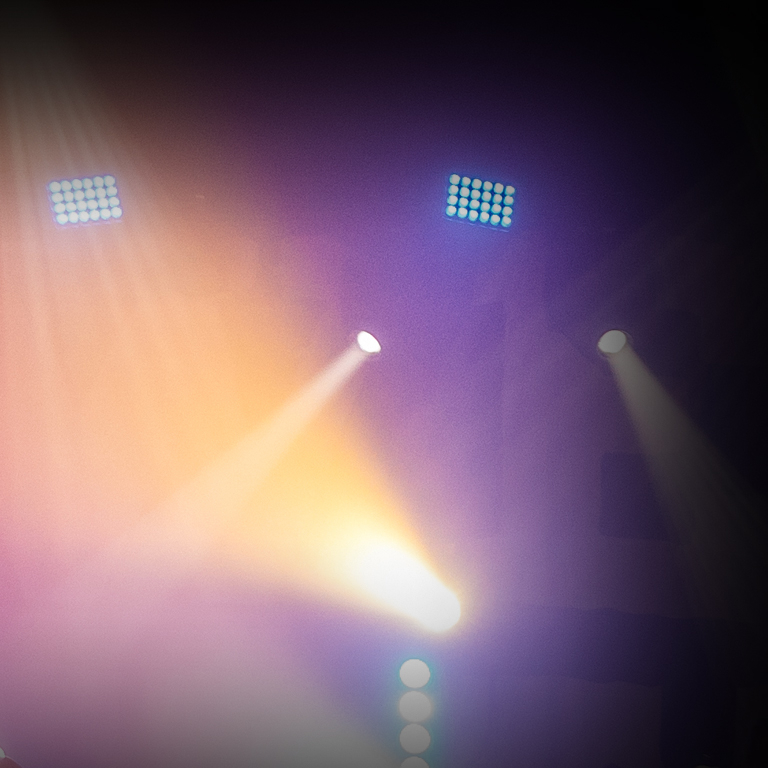
    So, how does a FOH position meant for two fit three?  CONVERGENCE!!!  Allowing video and lighting to play together is the key.  The perfect example of this is pixel mapping.  With pixel mapping combined with video effects, the video designer can really add some amazing layers of texture and content to the lighting rig.  Not only that, it means that the lighting designer and video designer have to work together to formulate how cues will look and what structural direction the show will go.  OK, easy to say, but how does this happen?  Again, it’s all about layers and convergence.

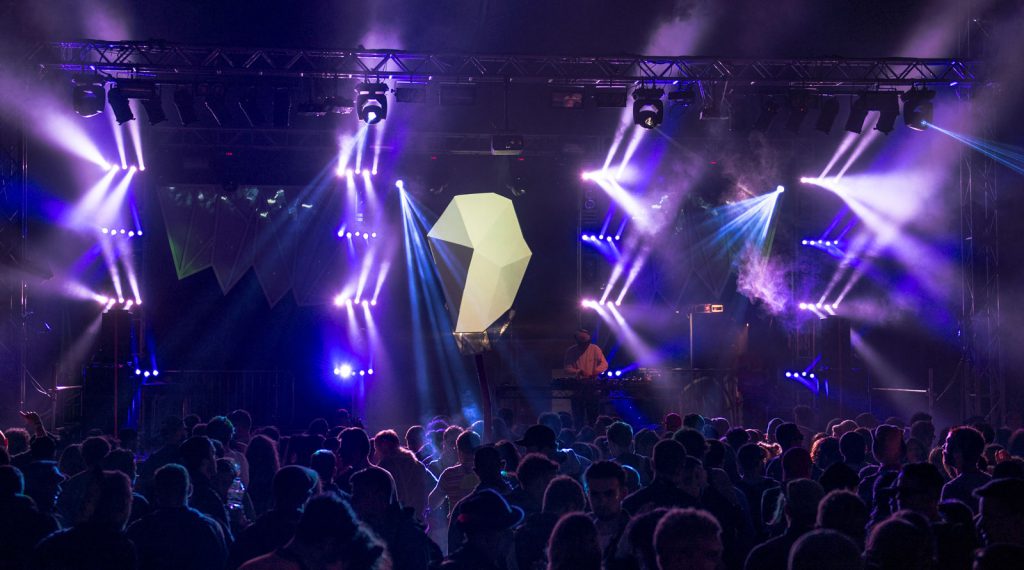
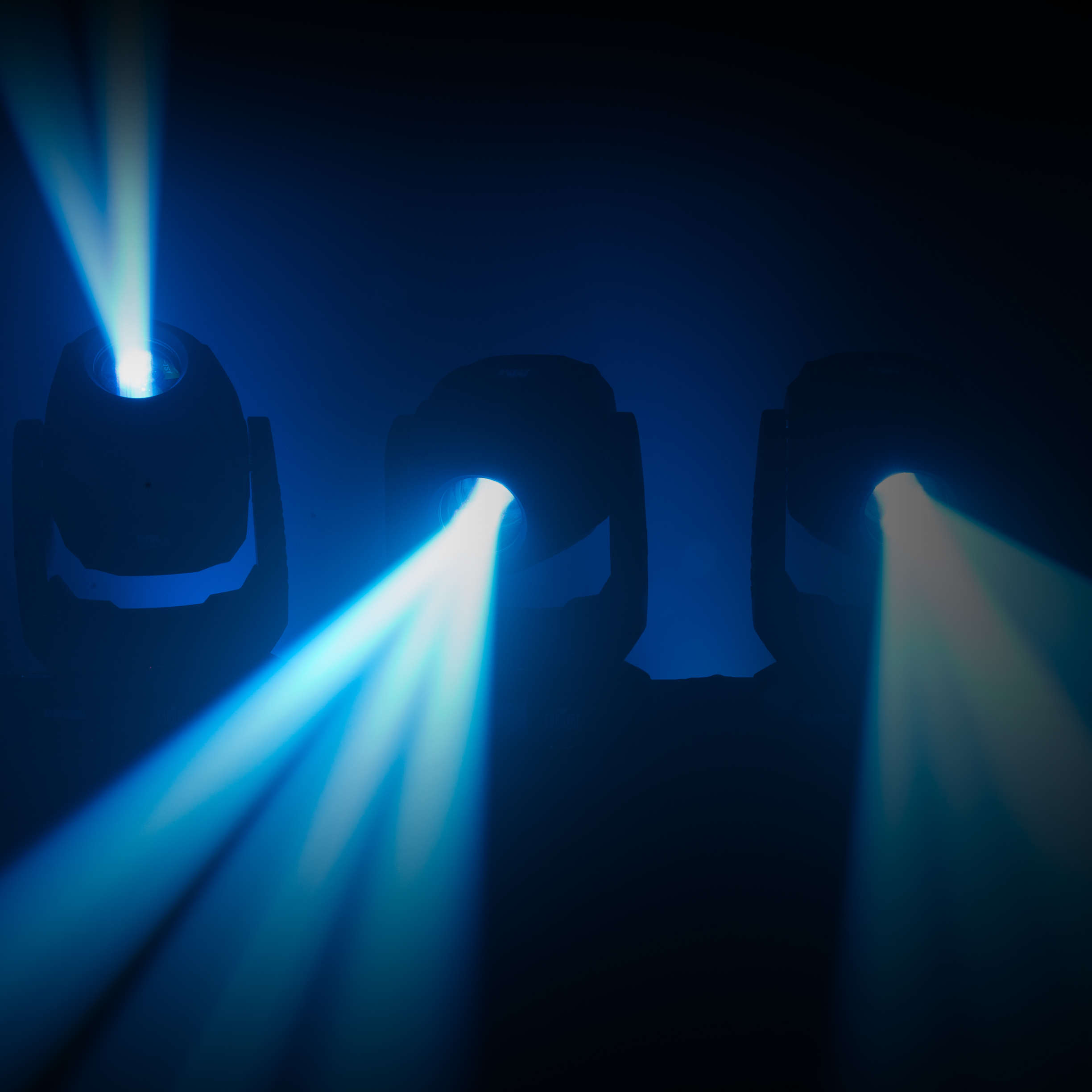
    gal_rogue_r1_fxb_7

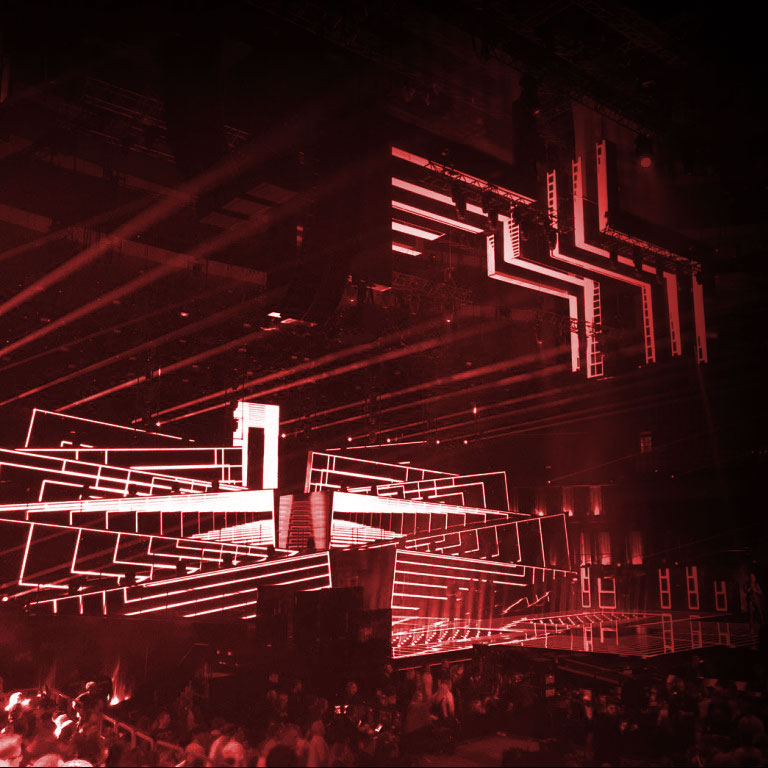
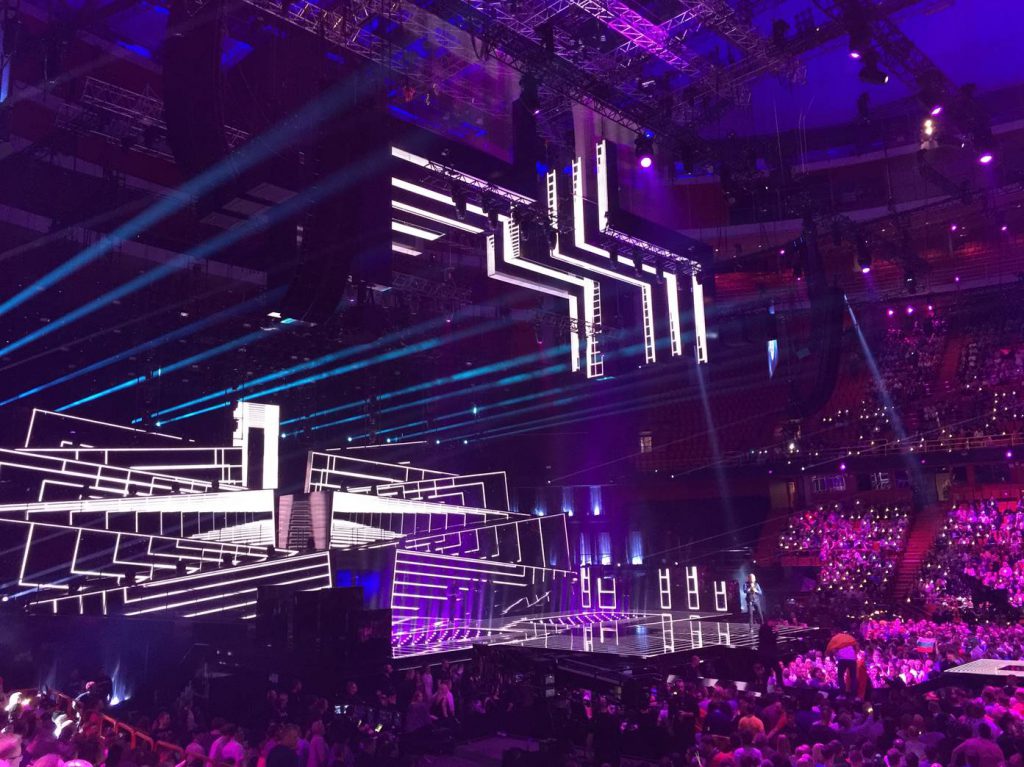
    Here is my example of the perfect world of lighting and video living in photonic harmony;  So the rig is made up of a combination of video wall, pixel products, and moving heads.  The lighting designer has control of all of the movement and dimming of the lights including pixel products as well as the colors and gobos coming out of the spots over ArtNet or sACN.  The video designer has control of all of the pixel products and video panel playback.  In this way, the lighting designer can still control the overall output of all of the lights and the video designer can still work his content in the way that the client or artist on stage wants.  Happy world!

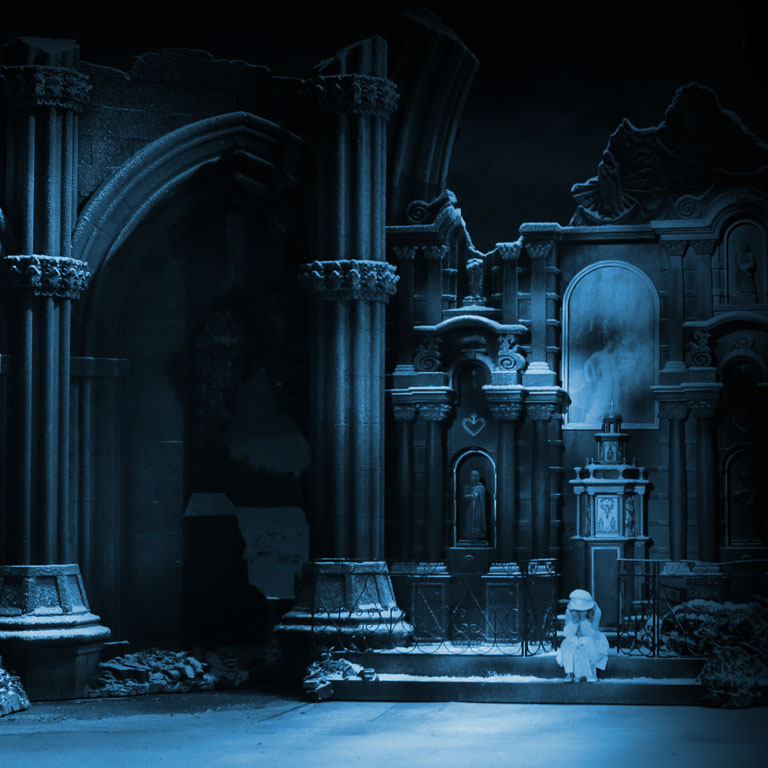
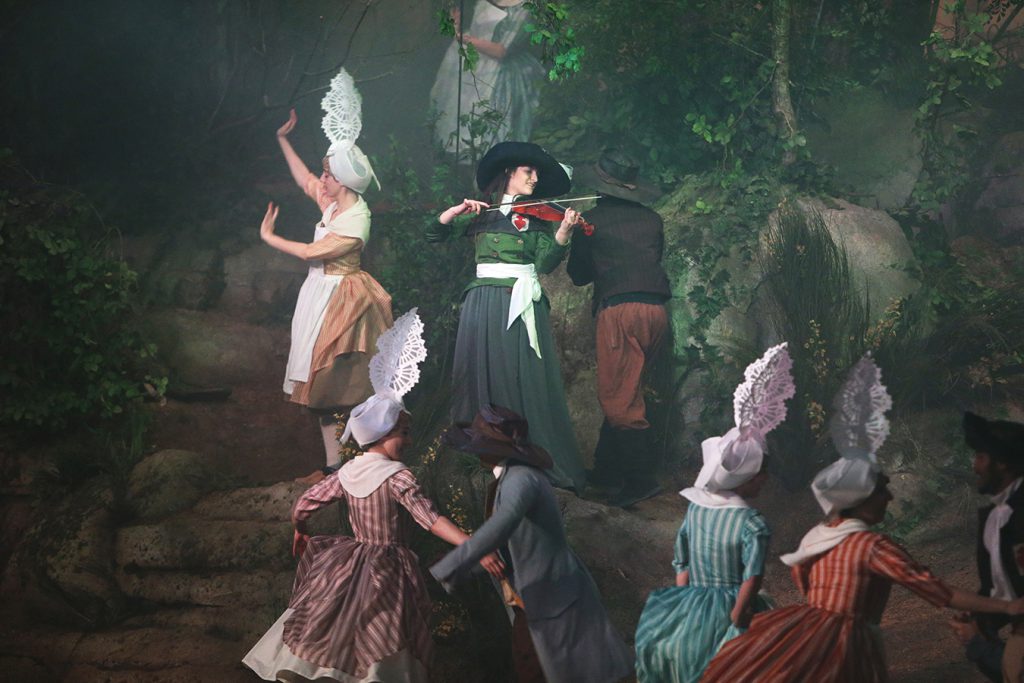
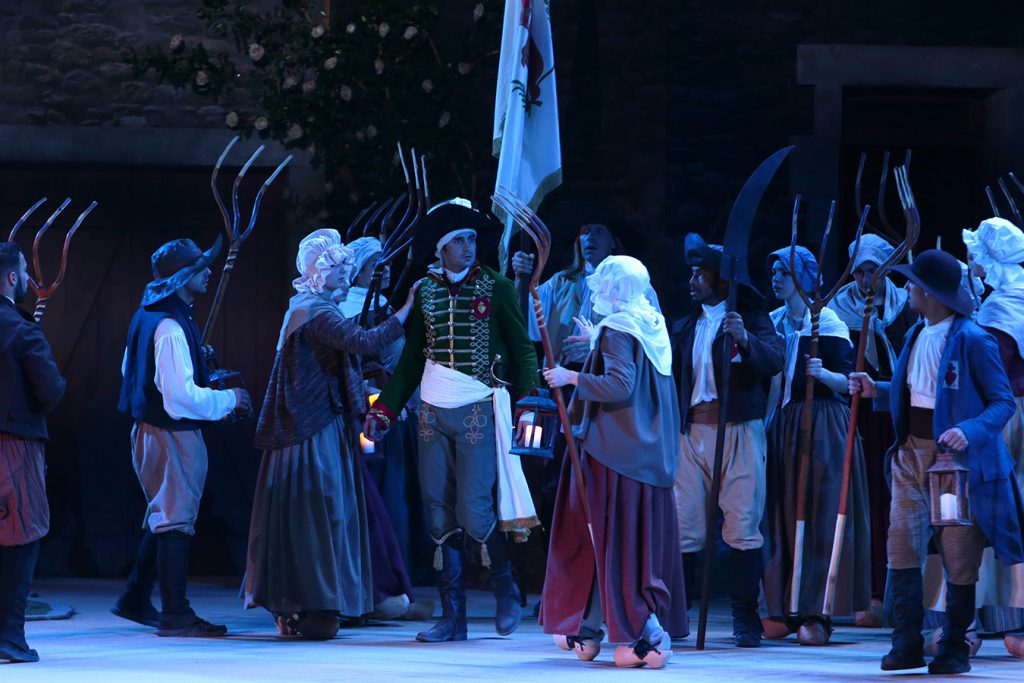
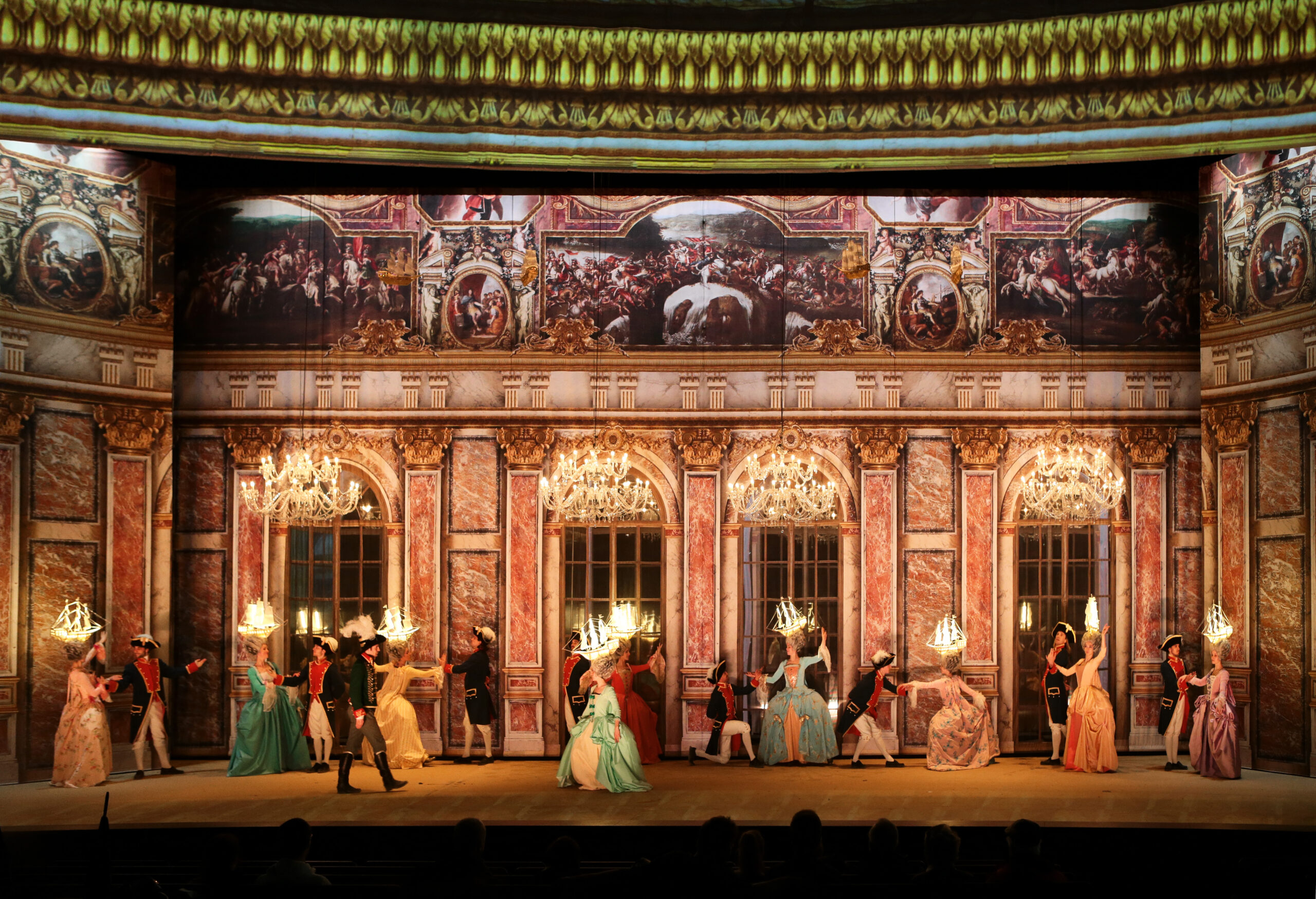
    Eurovision Song Contest stage

    With a fixture like the Maverick MK2 Wash, and Rogue R1 FX-B the convergence is easy.  These fixtures allows you to operate it on two levels.  Actually, they allow you to operate it as two different devices at once from two control sources.  This allows me to run the function stuff (pan, tilt, dimmer, strobe) from a lighting console and then run all of the pixel stuff from a media server totally separate from the lighting controller.  This gives both designers the ability to have the control they are looking for.

    So, people of the video world, we welcome you with open arms!  It’s all about converging the visual arts.

    Visual Artists Come to CHAUVET Professional

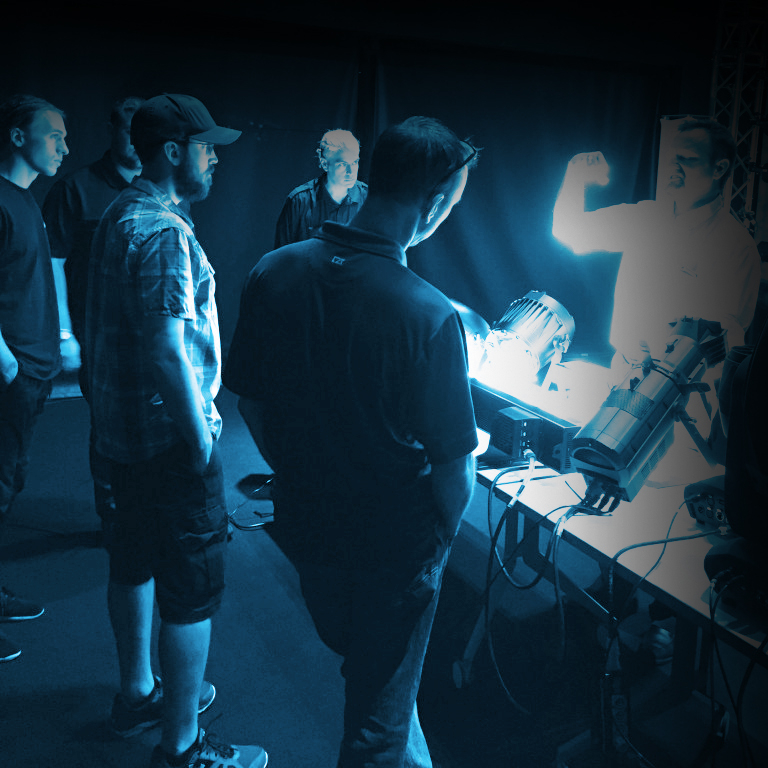
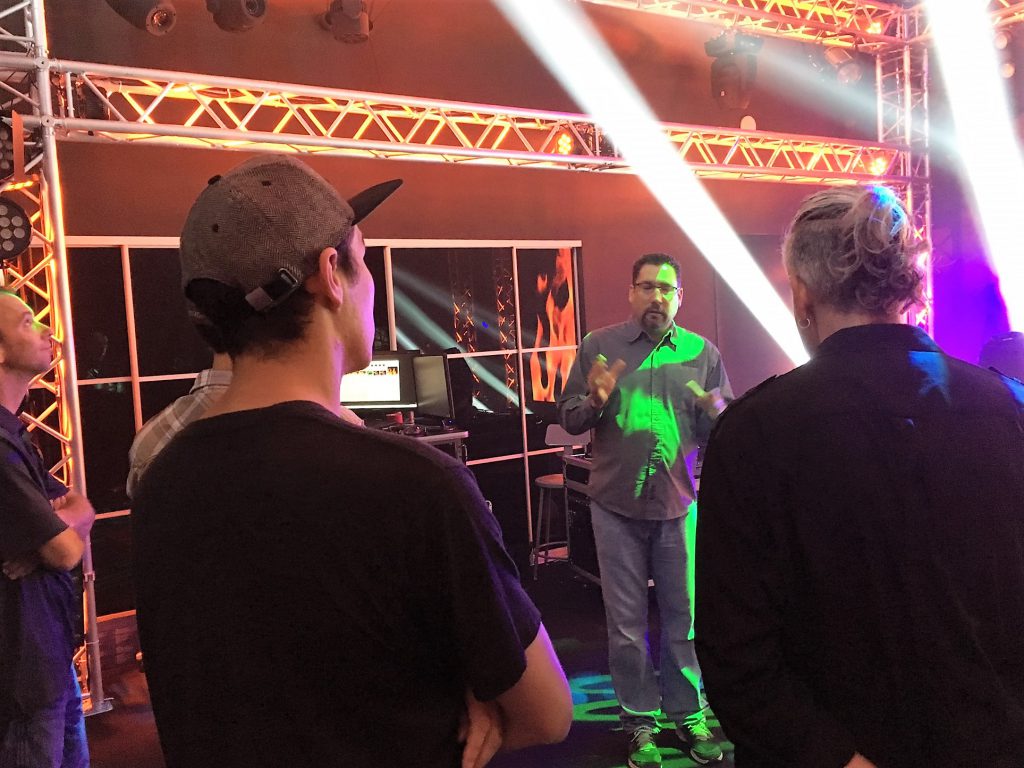
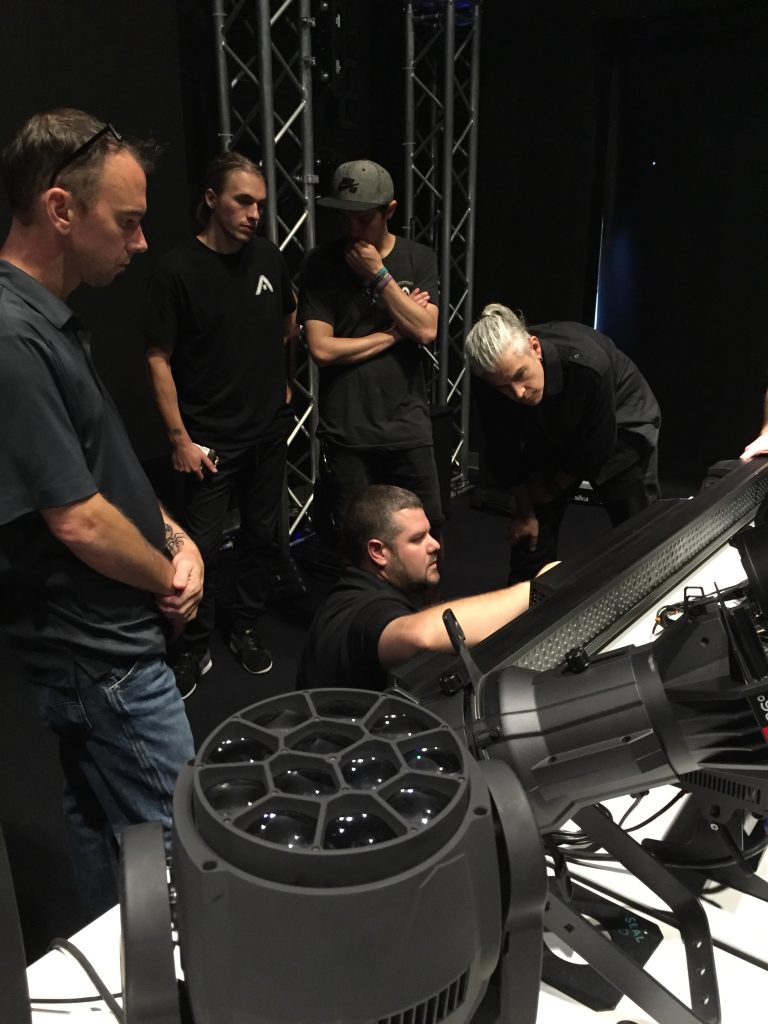
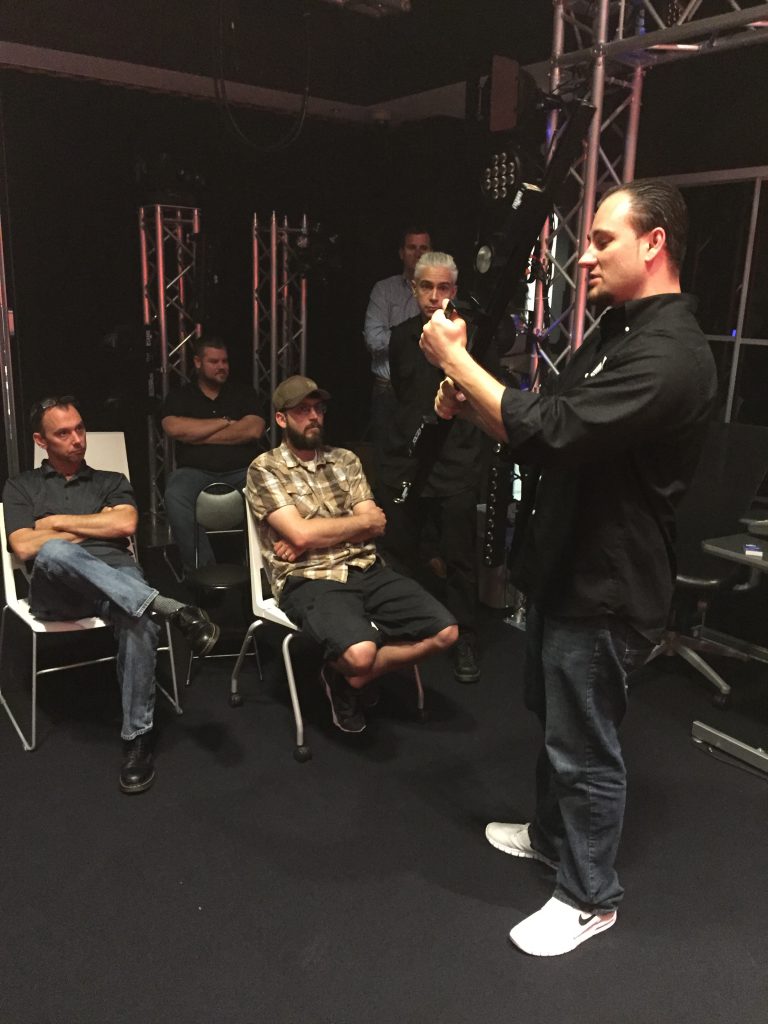
    June 23 and 24th were two amazing days at CHAUVET Professional.  We hosted lighting and scenic designer Christian Choi and Martha Vasquez here at our offices in Sunrise, Florida.  Along with Christian and Martha, we also invited several other designers into our offices to meet and share ideas.  John Dickson of LD Systems, Brett Angstadt of Round Peg Productions, Max Koehler & Ryan Warffuel of Antic Studios,  and Tristan Rudat were also invited down to participate.  Over the two days, the designers participated in several product demonstrations, collaborative discussions, and facility tours culminating in Christians’ seminar on scenic element design and fabrication.

    Christian Choi blog


    Christian Choi and Martha Vasquez


    Doing sessions like this at CHAUVET Professional is a way for us to get a good understanding of how designers use products in their daily lives whether it be lighting, video, or pixel products.  It also gives designers a chance to discuss their ideas particular topics with each other in an open environment. With this many designers and each one bringing something different to the table, all of the discussions were very lively,  really interesting, and extremely informative.

    IMG_3367

    Mike Graham discussing the high points of the Maverick series

    IMG_3371

    Ben Dickmann showing off the new Ovation B 2805FC


    IMG_3368

    Anthony Chiappone talking EPIX Tour

    IMG_3373

    Ford Sellers showing off the punch of the new COLORado 3 Solo


    This event was a lot of fun for everyone involved and we want to thank Joe Fucini for setting this whole thing up.  We’re sure that trying to organize this many artists into one spot must be like herding kittens.

    INFOCOMM 2016 is already here?

    Is it June already?  How did that happen?  I feel like I just got back from Pro Light and Sound like yesterday.  I guess time flies when you’re having fun!  CHAUVET Professional will be ready to blow your doors off next week at the Las Vegas 2016 edition of INFOCOMM.  This year promises to be one of our best years ever.  We have some exciting new products that we will be revealing at the show and we can guarantee that you will not be disappointed by the show we are putting together in the newly darkened staging pavilion booth number C5054.

    We are introducing new products in several of our ranges including Ovation, Strike, COLORado, Colordash, VIP and ROGUE.  This show also marks the official US debut of the Maverick series, which is absolutely worthy of your attention!  For more on Maverick, check out the videos below.  For more on our new products, stay tuned to www.chauvetprofessional.com, and our Facebook, Instagram, and Twitter pages!!


    Higher Ground Music Hall Goes Rogue

    Vermont’s largest city is built on a steep hill rising from an elevation of 95’ at Lake Champlain to 300’ by the time you reach the university district only a half mile away, where the appropriately named Higher Ground Music Hall is located. The cavernous venue has indeed taken the local music scene to new heights since it opened in 2004, bringing in national and international jam band, jazz and indie acts.  Recently, this rapidly rising music venue upgraded its house lighting rig by adding a collection of Rogue R1 Spots, R1 Washes and R2 Washes from CHAUVET Professional.

    HIgher Ground 2


    “The time had come to take the house rig to a new, more sophisticated level,” said lighting designer Kyle Rose of KTR Recording and Higher Ground Music Hall. “We’re seeing bigger and bigger touring acts perform here. Management wanted to move away from what was basically a traditional par can rig to something more up to date, so the touring LDs could integrate the house rig more successfully into their own lighting packages. More bands come with their own LDs today, so how well your house rig meshes with their gear has a good deal to do with how they feel about playing at your venue.”
    According to Rose, the 26 Rogue fixtures added to the Higher Ground house rig increased its flexibility, creating more options for touring LDs. “Many of the bands already had Rogues in their package, so there was instant familiarity,” he said. “The color mixing on the R1 and R2 Washes gives them such a wider palette than we could have given them with the pars we had been using. Plus the wide zoom angles helps them do all sorts of creative things with the coverage area.”


    Rose installed 12 Rogue R1 Washes, six R2 Washes and eight R1 Spots on the house rig. The spots replaced older profile fixtures and have resulted in a much beefier output. “Most of the bands come in with some intensely bright fixtures in their package,” he said. “If your house rig is weak, it really compromises the look of the entire show.”

    HIGHER GROUND_


    The 18 Rogue Washes in the new house rig are all flown on truss. Rose has positioned six of the R1 Washes on downstage truss, where they’re typically used for front washing, audience lighting and spotting band members.  The remaining 12 Rogue Washes are flown on upstage truss and used primarily to wash the stage, while the eight R1 Spots are positioned on upstage truss and the deck and are used for a spotting and aerial effects.


    “I wanted to somewhat mimic the old rig as far as coverage,” said Rose. “At the same time though, being that these are all moving fixtures we have more freedom. Now we can set focus points without having to climb a ladder and adjust pars by hand. We installed a HedgeHog 4 to control the rig, and it’s working out fine.”


    Along with adding to the performance features of the Higher Ground house rig, the new fixtures have increased its energy efficiency. “The savings that we could realize going with the LED fixtures was a huge reason why this project got through,” said Rose. “Management could see a return on investment.”

    Higher Ground 3
    Also adding to the efficiency was the speed with which Rose and his team transitioned from the old house rig to the new Rogue rig. “Decommissioning the old rig was a huge challenge, as we only had four days between shows to pull out all of the old rig, sort all of the old and new gear, and rehang the new gear and get some house programming done before our first show with it,” he said. “I couldn’t have done it without the help of my team: Chris Friday and Alex Cort, Sean LaRock and Connell Gess.”
    In the end, though, it was done – and one of New England’s up-and-coming touring venues now has a house rig fitting for its well-known guest artists.

    Pro Light + Sound 2016 – A Peak Behind the Curtain

    This year, Pro Light and Sound in Frankfurt, Germany was something special for us.  This is the first show where the product staff from the UK, Belgium, and The US was all set together to build up the stand.  It was great to put faces to people whom I speak to on the phone and exchange E-mails with regularly. Also, having the opportunity to exchange ideas and techniques in person, and especially in a show environment is something that you just can’t do without being face to face.   Thanks to everyone from CHAUVET and One Big Star for an easy build up and an amazing show!

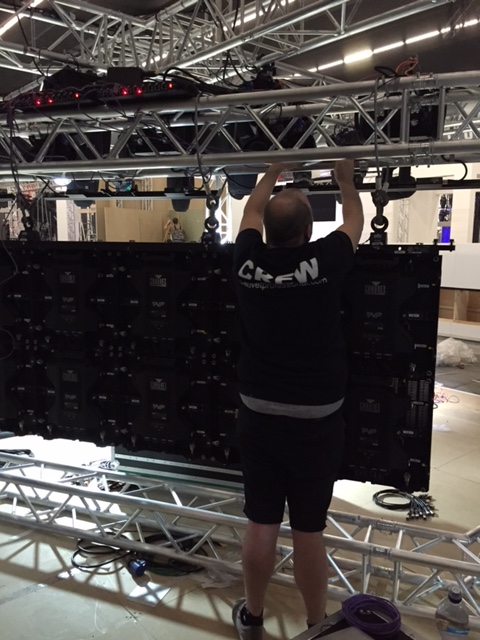
    Sam Bowden rigging PVP Panels

    Getting up to trim!

    Trade Show kitchen!  all the comforts of home in one road case.

    Maverick MK2 Washes rigged in a show for the first time!

    Let the programming begin!


    Our big launches this year were the Maverick series that consists of the Maverick MK1 Hybrid, Maverick MK2 Spot, and Maverick MK2 Wash, which were all very well received.  Also launching at this show was the Rogue R1 FX-B, which also received a lot of attention by everyone who saw it.

    Check out our UK and EU Product Manager, Sam Bowden, as he takes us through the new toys –

    Launching your Lighting Career on the Right Foot

    graduation images

    This is dedicated to all of the young minds that are graduating from a higher learning institute this spring, or this month, depending on the school you have chosen. Also, these are the suggestions and opinions of a person who started out on this path many years ago as a bright eyed young lad who thought he knew a lot more than he actually did.

    The road to your future is yours to explore and navigate any way you see fit. The key here is making the right decisions and forming good habits right away. Hopefully you chose good mentors during your primarily educational portion of your career. I say primarily educational portion because the education never ends. Here are a few habits that you should adopt immediately no matter where you choose to start working;

    1. This is the number one rule to live by in this industry. This rule should never be broken! Always try to be friendly, humble and open to ideas. Sound easy, but it’s not. There are tons of different personalities and backgrounds in the industry, and you have to find common ground with all of them. When you are making the break from the educational world to the professional world, it is a huge change. Think about it this way, there are some amazing quarterbacks in college football who have huge numbers and are great prospects for the NFL, but then when they get to the big dance, they either ride the pine for a few years, or fail all together. You are going to have to pay your dues for a while in your pro gig. It does not matter if you were the best lighting person that your school ever saw, you still have to prove yourself again. The best way to start is to be friendly, humble, and open to new ideas.


    1. Leave your school shirts at home. I know you have a closet full of show t-shirts from your school. I know you are dying to wear one to work. Don’t do it! Here is why – Let’s say you wear your lucky “Into the Woods” shirt you got in your freshman year with your school’s name on it and it happens to be a rival school that your crew chief attended. Welcome to a rough show run. Oh, and here is the other reason why – Nothing says NEW GUY like a school shirt. Until you get some show cred or get some swag from your gig, stick with a black shirt. Don’t worry, once you attend a few tradeshows, you will have more manufacturer shirts than you know what to do with.

    drama shirtTrade this shirt up for something like this one –

    rogue shirt

    1. Show up with the right tools, but take the tags off. Again, you are the new person on the gig, but you don’t need to look like it. I love shiny new chrome, but you need to take the tags off before your get to work. In fact, I would suggest picking up hand tools at a flea market if possible. They are broken in and cheap. Kline tools are great, but they are expensive and grow legs really easily. Don’t take them to work! Also, you don’t need a ton of tools to start with anyway. If you are starting out as a deck electrician, which is a good place to start, here is what you are bringing with you on day one:


    • Adjustable wrench (Crescent wrench or C-wrench). I like the ones with the 8” handle. It gives me enough torque to get clamps undone if some muscle head over tightened them.
    • Speed wrench (ratcheting open end / box wrench) in two sizes – 18mm and 19mm. The 18mm will open almost all metric clamps, like the ones that CHAUVET sells, the 19mm will open all of the 1Ž2 inch bolts on imperial style clamps, like the ones you will on mega claws. I suggest the 19mm over the 1Ž2 inch because if you are buying a set, you can stick with a metric set instead of having to buy a metric and imperial set. You can also find these in singles as well.
    • #2 Philips screw driver with a minimum of a 6” and maximum of 8” shaft. Any shorter and it will let you down, any longer and it is uncomfortable.
    • 6” flat head screw driver. You will never need a longer one.
    • Razor knife. Don’t spend a ton of money on one, it won’t be the last one you buy, but you have to have one. It is OK to lend this out. You will most likely get it back
    • Pocket knife. Spend a little more money on this and don’t lose it. It is not OK to lend this out. This is yours and a pocket knife is very personal. Take some time in choosing one and make sure it locks when you open it. Keep in sharp and do not use it to cut plastic wrap or tape. That is what your razor knife is for.
    • Multi-tool – this is optional. I used to be a big fan of the Gerber style, until they quit making the flick open style. Now all they have is the fold open style and the tools are hard to get out of the handles. These guys can get expensive quick, so be careful.

    Now that you have your tools, how do you label them so that the world knows they are yours? You can either paint a stripe of color on them, or pick two colors of electrical tape. I prefer the two color tape. And you need a bag. A good backpack is fine. One with a lot of pockets is great. I like the Swiss Gear ones. They are a few bucks, but they last.

    1. Be observant. Watch what the rest of your crew is doing and how they do it. This is especially true in the very beginning of your career. There are many paths to arrive at the same destination. Seeing how other people get there will add to your personal experiences.

    LDI 2015

    1. Entertainment lighting is an art form. It might be your design; it might be someone else’s. None the less, it is someone’s art. Treat it with respect. You might not like the design or the method that it is being applied, but always keep tip number 1 in mind and you won’t go wrong.


    So, welcome to a fascinating field of employment. There are a lot of really cool people in this industry and there are tons of opportunity to do amazing things and travel to interesting places. You never know where you are going to end up or who you will meet along the way. Be kind as you navigate your career and you will never go wrong.

    Inspiration is Everywhere!

    Inspiration is everywhere

    One of my favorite questions to ask lighting designers is “Where do you find inspiration?”. As a designer myself, I can answer this question both simply and complexly with a one word answer – everywhere.

    I can say this because I look at lighting as a natural occurrence rather than a technological creation. Light is everywhere. This seems like a no brainer, right, I mean, come on, of course light is everywhere. How else would we see? However, there is a more subtle reality at work here. Stick with me while I try to explain myself.

    Think about natural light and what it is comprised of. The sun produces a vast spectrum of energy, of which a small sliver of that is visible light. Of that sliver, our eyes manipulate it in such a way as to allow our brains to dissect it into a visual representation that we can see as either colors, or a variation of white light. I say a variation because as we know, there are several different flavors of white light in nature. Think about this as well, what is the obsession with natural light. Why is it that several blog posts and Lighting Insights deal directly with natural light rather than manufactured light? Basically, it is because I firmly believe that we as humans are designed to see natural light as the energy that it is. Our brains crave it. We crave full spectrum light! Science has proved that sunlight produces vitamin D, which is an essential part of our vitamin consumption. Beyond that, natural light is the best inspiration to look to for us as lighting designers. Nature provides us with the most amazing canvas of colors on a daily basis. When you are done reading this, get up from your computer and go outside and look at the building that you just came out of. Look at how shadows fall across the windows or under the trees. Look at the way that the light is refracted off of a lake or even a puddle in the parking lot. All of this is simple ways of seeing inspiration for design.

    natural light


    Now, let’s take another step. This one is pretty cool. Go into a room in your home that gets the best sunlight. Turn on all of the lights and close the shades. If you are like me, you are in the process or have changed out to LED light bulbs (that’s right, I said light bulbs, not lamps, deal with it). Take a look at the paint colors on the walls. They are going to look a certain way based on the color temperature and makeup of your indoor light source. If you are using incandescent, your spectrum is pretty wide, if you are using CFLs (Compact Fluorescent Lights), the spectrum is pretty narrow, and if you are using LEDs, then again, the spectrum is pretty narrow, but will still look better than the CFLs. Take a good look at the walls, the furniture, the floor coverings and whatever else is in the room. Remember the colors. Now shut off the light sources in the room and open the shades. You will notice that the colors in the room look completely different now. If it is a cloudy day, they might look less vibrant, if it is a sunny day, more vibrant. Why is this important? Because natural light is reality, and reality never lies. Our lighting design should be based on natural light where ever possible. It is our job to try to re-create these kinds of colors so that our shows mimic what our eyes crave.

    natural room


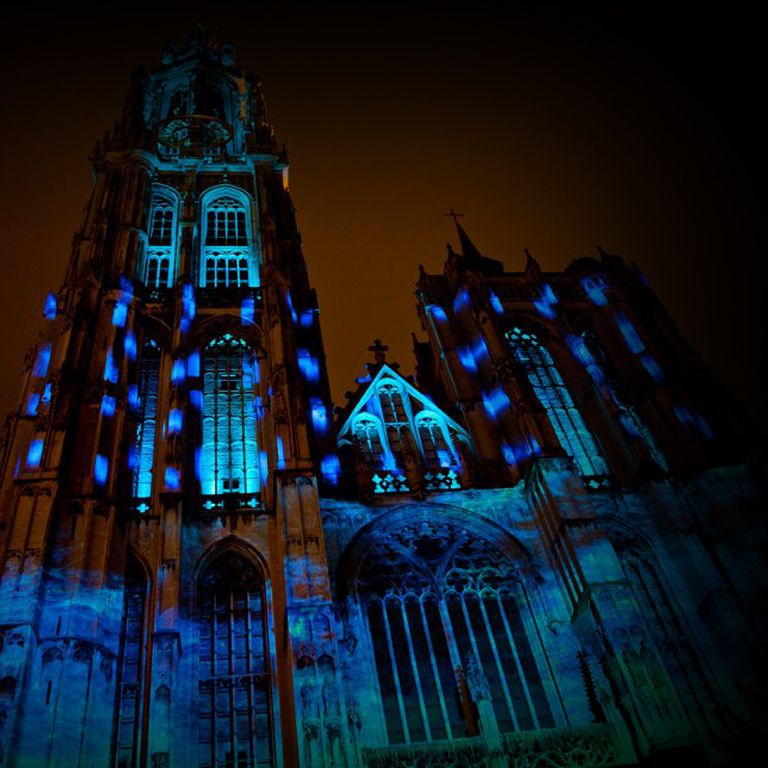
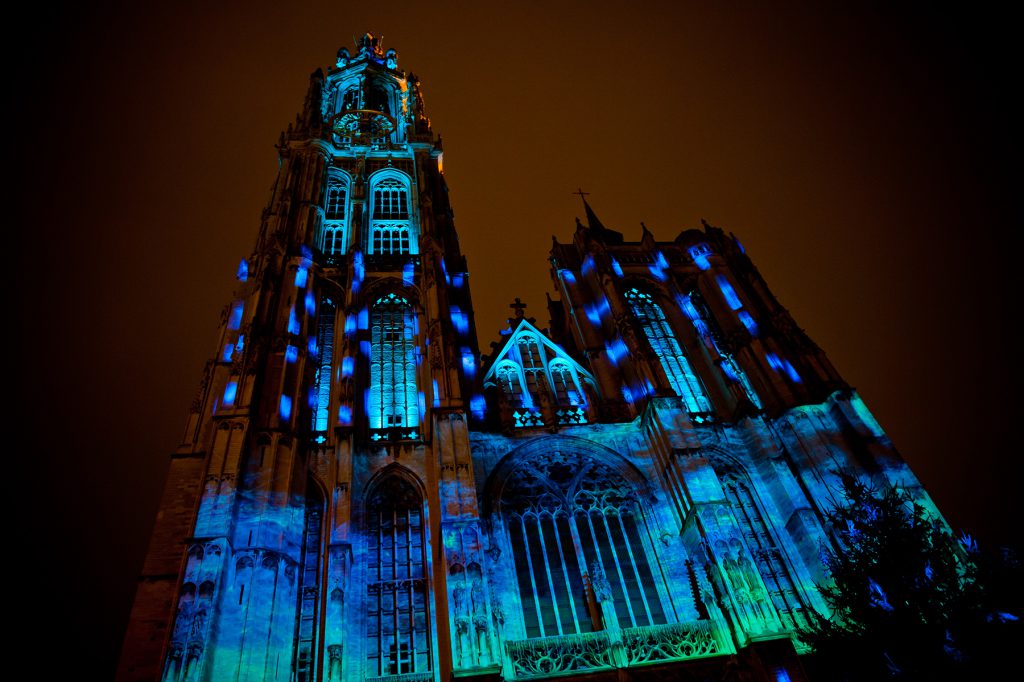
    So, last night I was at Church. My son sings in the choir, so I sit as close as I can to where he sings. Mass started at 5:00 PM and my seat faces the south stained glass windows. And I am of to the side and slightly behind the alter. Our church is set up in the round with the alter centered. About 15 minutes into the mass the sun shone through that glass like the ultimate single source directional light that it is. It illuminated that glass and every single color in it. There are reds, greens, blues, yellows, and every shade in between in the glass, and they all projected at once on the alter and choir. But it was not just the light that was produced; it was the shadows as well. Looking at the vestments of the priests and how the light and dark worked together to create dimension looked like something that you would see in a renaissance painting. The fact that it overpowered the house light and created so much dimension and drama was amazing. Not because it was Church and it was some kind of sign, but because it was inspiring to me and a look that I would love to attempt to reproduce. What was even better, was the fact that the clouds would occasionally diffuse the sun and mute the window to allow the houselights to take over again, which added to the effect. It was really something to see. I was tempted to take photos, but I knew that they would not do justice to how my eyes saw it. Anyway, it was very cool. This is one of the reasons that I find the natural light inside churches to be one of my favorite inspirations in lighting.

    church light

    What are the takeaways’ from this? Well, you could say that I have an un-natural obsession with natural light, or you could get up and see how natural light could influence your design style for yourself. Either way, I hope that you do get up and go look around and see what inspires you and think about it the next time you are making layers of light. Using multiple colors to light a stage, or people is totally natural. Using different levels of light in your front, side, and back lights is perfectly acceptable since natural light is anything but flat

    Let this thought rattle around inside your brain for a bit….Is natural light the composition of the visible spectrum, or does the visible spectrum come together for us to create the white light that our brain sees?

    Introducing the Maverick Series

    From the team that brought you ROGUE, MAVERICK is a series of moving head fixtures designed to exceed your expectations at every turn.  Launching at the Pro Light and Sound show in Frankfurt on April 5th, 2016, these lights are targeted at the touring industry. Check out the teaser video!

    Mentoring the Future of Our Industry

    The future of the lighting industry is in our hands. That seems like a big responsibility, and it is, but together, we can make sure that the next generation of lighting professionals is ready to face the challenges of entertainment lighting as we move evermore forward into the digital age of lighting.

    For those of us in the 40+ portion of the industry, we all remember the world before DMX. A lot more cable, clunky control systems, and dimmer racks that went on for miles. With the advent of LED and the Windows based lighting controllers, that all changed. Now, when I hear someone say that they can focus a par can rig in no time flat, I have to think to myself, “Yea, that’s great, but when is the last time you saw an all par can rig?” The truth is that the skill of being able to focus a par can rig is now almost part of our history. That is like saying “I know how to use a telephone style patch board”. Many lighting professionals today have never seen one of those old 2 scene preset consoles that we used to use that had those old systems. Again, it’s all history. BUT HISTORY IS IMPORTANT!!! and by mentoring the people coming up in the industry, we can make a positive impact on the future, so when we retire, we know we have left it in good hands.


    dimmer control

    I am not suggesting that we should force people coming up in the business to learn how to use a Kliegl Brothers 2 Scene Preset lighting system. The amount of asbestos in those old systems alone would be deemed an environmental hazard. I am suggesting that it is important to talk about them because the idea of how they ran is still relevant.

    Let’s take patching for example. Now patching is almost always done one to one. This is to say, that there is one channel per circuit, or one channel of a fixture personality to one channel of DMX. It’s all done virtually on the console now. It used to be done physically on the side of the stage. Someone physically assigned pin (output circuit) 23 to dimmer (channel) 6. If this was the only channel assigned to dimmer 6, that was dimmer per circuit. However, most people used multiple circuits on a single dimmer so that they could maximize the amount of lights that would be controlled by a single dimmer. This meant that no matter what, when I raise up channel 6 on the console, dimmer 6 would bring up whatever lights were plugged into it. Why is knowing this important? It is important because if you can visualize the physical track that your channels take when you set up a system, it can help in system design and trouble shooting. Learning how patching works from someone who has physically patched fixtures will show you the value of understanding how your system layout actually works.

    dimmer patch bay


    Now, back to the par can guy. Why is it important to be able to focus par cans quickly? The same reason it is important to focus anything quickly. Time is money. Learning how to focus lights from someone who has done it for a long time can be a big advantage. They know the tricks on how to find your best light, even during a daytime outdoor focus call quickly and effectively. Trust me, that is a great skill to have.

    Def_Leppard_Sweden_Rock_2008

    So, OLD GUYS, the next time someone asks you for your help or advice, don’t just throw them the line “I learned it the hard way, welcome to the game!” take a moment and actually help the person out. And by the same token, YOUNG GUYS, listen to what the experienced guys are telling you. They have a ton of life experiences that you don’t. Let the lessons they learned the hard way make your life a little easier. Trust me, you will have to learn enough things the hard way yourself.  This is a collaborative business and there is room for everyone!