    Tech Talk: Troubleshooting made easy.

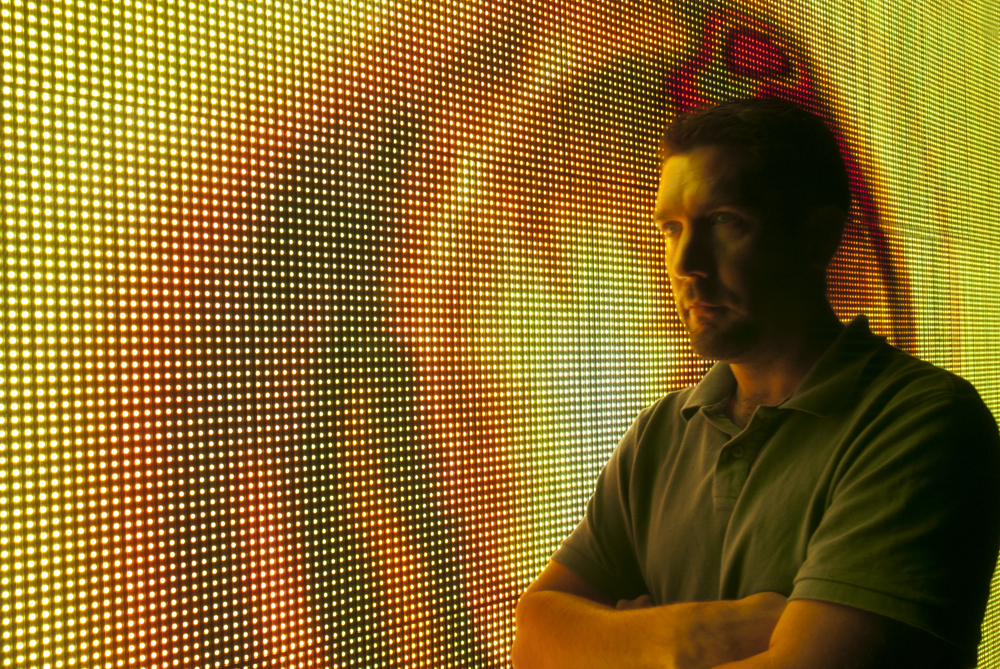
    Mike Graham, looking pensive in front of MVP video panels

    Written by Mike Graham, product manager for CHAUVET Professional

    Everything breaks.
    As John Bender said in The Breakfast Club, “It’s an imperfect world, screws fall out all the time.” I can vouch for this. Not only am I a product manager for CHAUVET, but I have worked extensively in the field. The majority of my field experience was on the water—as in cruise ships. The great thing about working on those ships was learning self-reliance. We did not have a lot of support beyond our own brains and had to troubleshoot for ourselves.

    Searching the internet for answers had to be done from an internet café somewhere in Alaska, St. Thomas, Germany, or an even more exotic place like Miami. We had to be able to think on our feet and figure out stuff for ourselves. We had to take good notes so when we did finally get to a place where we could talk to someone from customer support we had all of the variables figured out. (We typically had only one shot per week to get one of these technical geniuses on the phone.) The funny thing is I can remember the names of every phone technician that helped me and I still run into many of them at trade shows. Some of them have become life-long friends.

    Break down the system.
    Troubleshooting is a critical skill we all need to have, not only in the field, but in the shop as well. The key to fast and easy troubleshooting is to break down the system to its simplest components to see what actually works. For example, if you are working on a moving light and it is not panning or tilting properly, swap the motor cables from the pan to tilt drivers and see if the problem stays with the pan. Or did it move to tilt? If it stayed with the pan, the motor is most likely the problem. If it moved to the tilt, you most likely have a driver problem. Figuring this out before you call the phone support guys will save both of you a ton of time. If it’s a color wheel, you can do the same kind of trick with the cables from the gobo wheel and vice versa. For CHAUVET Professional products, we use the same motor for both positions. It may have a different shaft length, but the motor is the same none the less. Simple things like this will save you a lot of headache.

    Back up a step.
    For a bigger system, it is the same principle: break it down to its basic components. Let’s say you have a club running three universes of DMX from ShowXpress. The last five fixtures on your third universe are not responding to DMX at all. First thing to do is eliminate every non-essential part of gear. Take the DMX cable from the output of universe three to the input of the first fixture that is not working properly. Now all five work, great! Let’s back up one fixture. Now you have six fixtures in line and everything is fine. Let’s back up one more step to the opto-splitter (you are using opto-splitters, right?).  Drop your DMX line from your controller right to the DMX input of the opto-splitter. If the problem comes back, you have a bad channel on the opto-splitter—problem solved. Swap it out.

    Change a cable.
    Let’s say we still have the same lights down. There are six lights on the line coming from the opto-splitter. Fixture one is working fine. The last five are not responding at all. You bypass the first light and find this fixes the problem. First change the cable between the first and second light. (After all, it would not be the first cable that died for no reason.) If this does not solve the problem, change the cable between the first fixture and the opto-splitter.

    The next step is realizing you have a fixture problem. Since most lights send DMX from fixture to fixture without buffering the signal, you most likely have a bad DMX socket. (At least this is where I would start the process.)

    Again, it’s all about breaking down the system to its simplest operation. When you call the technicians at a manufacturer, they are going to ask you if you have already done this. (If you have not, they are going to ask you to do so.)

    10 tips when calling for support.
    You are ready to pick up the phone and call technical support. Make sure you have the following at hand as it will help out the tech immensely:
    1. Serial number of the light in question.
    2. LOT number of the light in question if there is one
    3. What kind of controller are you using?
    4. How many are on the DMX chain?
    5. Are you using an opto-splitter?
    6. How many lights are plugged into one circuit?
    7. How many lights are daisy-chained for power to each other?
    8. What is the power level?  110, 208, or 220 volt?
    9. Is it clean power? Are you on a generator?
    10. How long has it been installed or in operation?

    All of these questions are important for the tech you’re calling (and for you) as it helps to narrow down the scope of the problem(s).  At the end of this process, I hope your problems are solved and that your show is running flawlessly.  If not, “feel free to call us back.”

    BBQ at CHAUVET HQ

    CEO Albert Chauvet helms the grill flanked by managerial staff.

    A great afternoon with delicious food and even better company. Best part? Management cooked for everyone! Check out more photos. Wish you were here!

    CHAUVET goes to The Peabody

    While in Orlando for InfoComm, we also did a lighting demonstration for a renowned hotel in the area. We’ll give you a hint—ducks march every day at 11 a.m. and 5 p.m.  Get it? Yep, The Peabody Orlando.

    We illuminated their original building to create a more cohesive look between that and their new $450 million addition. Four COLORado Range IP and two COLORado Ridge IP illuminated the north and south side of the building. Shades of purple, green and blue could were seen from every direction along International Drive.

    InfoComm 2011, Orlando

    Written by Mike Graham, product manager for CHAUVET Professional

    Whew! It’s been hectic trade show season so far. We launched our new line of modular video panels at this show. Three of them in different pixel pitches (MVP 18, MVP 12 and MVP 37.5). And a new moving wash to the Q-Series called Q-Wash 260-LED. Here are a few quick photos from this year’s InfoComm. (Click on each to view a larger image.)

    Things are looking up. Visitors checking out our new video panels.

    Justin Lang, from PLSN/iSquint, stops by booth 5859.

    View of our booth and its grand scale.

    LD Profile: Paul Wyse

    Six questions with Paul Wyse.
    Technical Manager for Hampshire County Council and musician, based in the south UK

    1. How did you get into this field?
    Lighting was something I always did at school for shows and bands, I suppose as a side step to get dancers and singers to hang out with me! I couldn’t sing and piano at the time wasn’t a cool instrument so I thought doing lighting and sound would work. Ever since, I have worked in theatre and live music and love every minute of my job.

    2. What do you think is the next big thing in the lighting industry?
    In short I am keeping a very keen eye on the evolution of LED lighting and am looking forward to bigger and more powerful generic and moving fixtures. LED followspots maybe?

    3. Do you have a favorite fixture (and why)?
    If you had asked me this before working in council theatres as a young technician, I would have said an ETC Source Four or a Vari*Light VL1000 or 2000. But after years lighting shows with basic equipment, I would say the humble PAR 64 has a lot going for it! Working in a theatre where they purchased PARs to work as washes, spots, backlights, sides, etc., trying to design a good, solid lighting rig for Les Miserables was a challenge. But it looked great! And with good use of gel, top hats and positions you can really work well with PAR cans. I think it’s a great test for new technicians because everyone can light a show and have it look great with plenty of moving heads. But if you achieve a breathtaking design, that is subtle and effective with PAR cans, Fresnels and profiles, you will think about basic lights first.

    4. What has been your favorite design/project?
    I would say my favourite lighting design would have to be a project I toured with called The Flying Monk. This was a very small-scare theatre show, but with an exceptional cast and production team, a lovely piece was created that worked in a 50-seat studio as well as a 400-seat theatre. During the tour, we would visit venues with very basic lighting rigs—no more than eight to 12 fixtures and a very basic lighting desk—right up to full-scale theatre rigs with moving heads. I have found the smallest venues to be the biggest challenge, but the most fun. I think the creativity of working in studio theatres and fringe festivals is still a great buzz for me.

    5. What was the biggest unforeseen obstacle that you’ve faced in one of your designs, and how did you overcome it?
    I would say teaching lighting design and operation has shown me some large obstacles for young designers. Often students and young technicians charge into lighting all areas of the stage in the three primary colours so that they can colour the whole stage. I believe lighting a show in a very Brechtian style, with minimal colour and effects, is creatively just as pleasing as throwing tons of colour and gobos or even moving fixtures at a show. Although it will have that “Broadway” factor, does it really support the production or does it change the feel of the piece entirely?

    6. Complete this thought: A show without light is like…A cup of tea and no biscuits!

    Tech Talk: The Right Tool for the Job

    Mike Graham looking pensive in front of MVP video panels

    Written by Mike Graham, product manager for CHAUVET Professional

    I can clearly remember my dad always telling me to pick the right tool for the job. Pretty simple rule, right? The truth is that this rule applies to more than just picking the correct wrench.

    W-DMX is one of those tools in our industry that is the right tool for the job. We just released the WELL fixture. It is already a huge success and a lot of that is because of the W-DMX option. W-DMX from Wireless Solution is a wireless DMX solution that allows the user to send DMX without a cable.
    This comes in really handy in ballrooms, corporate events and anywhere else where having wired data is not really wanted. For me, any kind of ground lighting is a good time to avoid running data cable. Avoiding any additional ground clutter is a good thing. W-DMX to the rescue! Couple this feature with the battery-powered WELL and you have a really slick way of having a completely wireless uplighting package.
    Now that is the right tool for the job.
    Good luck, be safe and send us pictures from the road!

    Tech Talk: How to keep up to date in a tech-savvy world

    Written by Mike Graham, product manager for CHAUVET Professional

    Mike Graham looking pensive in front of MVP video panels

    I had a meeting with an optics supplier today who was telling me he used to sell computer servers. He pointed out to me that he thought his old industry moved fast. When he got into the optics industry, and more specifically into LED optics, he really found out what fast was. The point? We all know when you buy a computer, it is already out of style and there is a newer, faster one out there. In the LED world, it is no different. It is hard to imagine, but we all know that the PAR can, beam projector, and ellipsoidal fixtures have continued to be produced with very little change over the past decades (with just a few exceptions).

    LED fixtures have changed drastically in a very short time, going from the tiny 5mm diodes to the high-powered LEDs we typically see today. While this is a good thing and keeps us all on our toes, we all must do our homework every day.

    CHAUVET launched the MiN Spot in 2007 and revolutionized the industry. Yes, it was a club light and not designed for touring, but it paved the road for things to come (such as our road-ready, LED-fitted COLORado series). Now we have the Q-Series, which has gone from an all-discharge series to an all-LED series in just under two years and continues to grow.

    We must keep up to date on new technology. For manufacturers, it is to stay ahead of development trends. For retail markets, it is to make sure they have the latest, newest gear. For rental houses, it must offer its clients the latest, newest gear with an eye on maintaining their return on investment. And for light users, make sure you have www.chauvetlighting.com set as your browser’s home page.
    Good luck, be safe and send us pictures from the road!

    Tech Talk: Four Ways to Keep Mud off Your Lights

    Written by Mike Graham, product manager for CHAUVET Professional

    Mike Graham looking pensive in front of MVP video panels

    Spring is in the air. Warm air is finally returning to the northlands and people are ready to start partying outside. Ah yes, outdoor festival season is upon us with all its glory. Mud, mud, and more mud. Cables running through mud, generators running “around” the kind of power you need, midday rain storms, wind, and my personal favorite, people throwing mud balls onstage. What are we to do to survive these rites of passage into summer? Here are four easy tips:

    1. Bag it! When you are hanging moving lights in areas that are prone to getting soaked by a passing shower, put a plastic bag over it. Pull the bags off before the show opens and you are good to go. While the show is running, as long as the lights are on, keep them on unless you are in the middle of a driving thunderstorm. In that case shut down and head for the bus.

    2. Shield it! If at all possible, shield the ground row. Keep the mud off of your strip lights. If you are using COLORado IP fixtures you are good to go. Just hose them off for the next show. If you are using COLORado Tour products, make sure that the powerCon connectors are covered if you are not using them. Also make sure that the DMX connectors are covered as well. If you are using the COLORado Batten 72 TOUR, make sure that the airflow to the fan is not obstructed.

    3. Meter it! Make sure the generator is actually working at the voltage you want it under the load you intend to use on your show. DO NOT USE home generators for powering your show. Those are fine for keeping your fridge and a few lights going at the house during a storm, but are not meant for running entertainment lighting.

    4. Check it! As in the weather before you load in. Every year we hear about someone who has set up their roof system only to have it blown down or hit by lightning. While sometimes this is completely unavoidable, the dangers can be kept to a minimum. Take every safety precaution before doing the load in. Keep an eye on the weather reports. There are a ton of websites and applications that can warn you of impending thunderstorms. If you see the sky clouding over and hear the thunder rolling in the distance, time to get off the rig.

    After your show is over and you are packing the truck, try to leave as much of the festival at the festival you can. It’s always a good idea to make sure to pack a bunch of towels so you can wipe down your cables and lights. This will save time at the shop and keep your truck cleaner. If your movers or other electronics did get soaked, make sure to get them dried out as quickly as possible. Nothing worse than putting an expensive wet moving head into a road case, storing it in the back of a hot truck, then opening it up a few days later and smelling the mold grow. Good luck, be safe and send us pictures from the road!

    Prolight + Sound 2011, Frankfurt

    Written by Mike Graham, product manager for CHAUVET Professional

    Back from Frankfurt and here is my bloggage, as promised. I thought to do a photo-driven blog instead since our booth rocked. But first, here are some official words for the show. We introduced three new fixtures to the European market at this year’s show in Frankfurt. The WELL, COLORado Range IP, and COLORado Ridge IP. Additionally, we announced the expansion of our year-old branch in the U.K. (Click on each to view a larger image.)

    Our booth at its quietest, just before the show opens.

    One brand. Global reach.

    This fixture, WELL, was extremely popular. The shot before above showed its 6-slot road case.

    This is a great shot showing the scale of our booth and the trade show floor.

    Our team (L to R): Ben Dickmann, Michael Brooksbank, Gerry Zigman, Albert Chauvet, Berenice Chauvet, Ford Sellers, me, Stephane Gressier

    We also have a quick video. See you next show (which is InfoComm in Orlando, Fla.)
    [youtube=http://www.youtube.com/watch?v=QyOnAIYHQQc&feature=channel_video_title]

    And so it starts… trade show season.

    Written by Mike Graham, product manager for CHAUVET Professional

    This year, we at CHAUVET have a pretty aggressive trade show season. We kick it off with Prolight + Sound next week in Frankfurt, Germany, and will end it with LDI in Orlando, Fla., come October. I will be in Germany next week and will be sending bloggage back from the show. We are looking forward to a great season with some awesome booths.