Blog Series: Designer Profiles

    NEXUS and REND COLLECTIVE – March Lighting Insights!

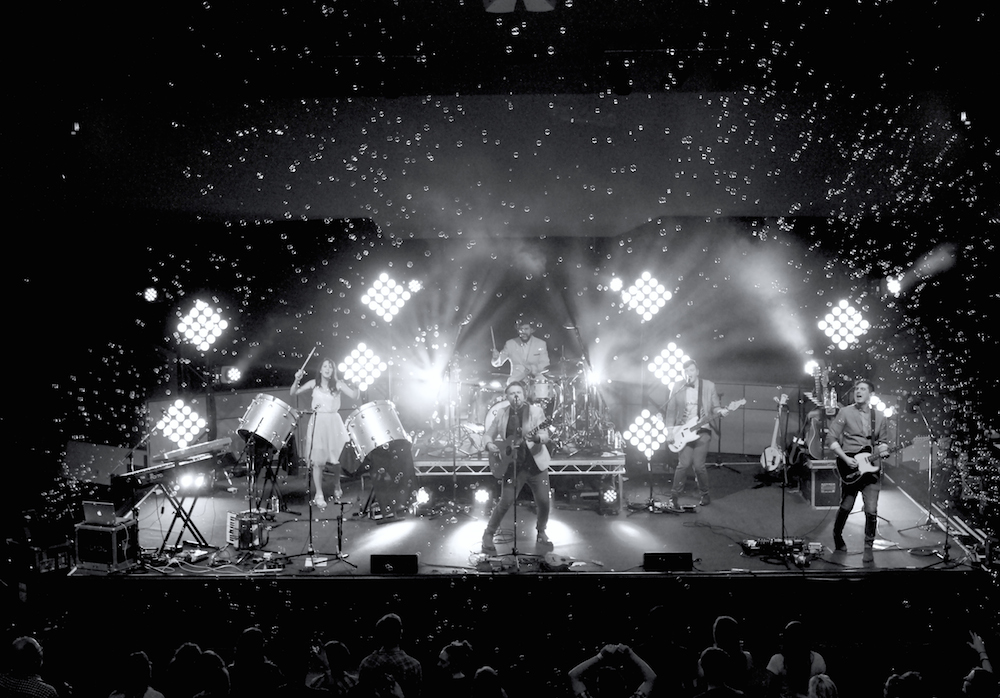
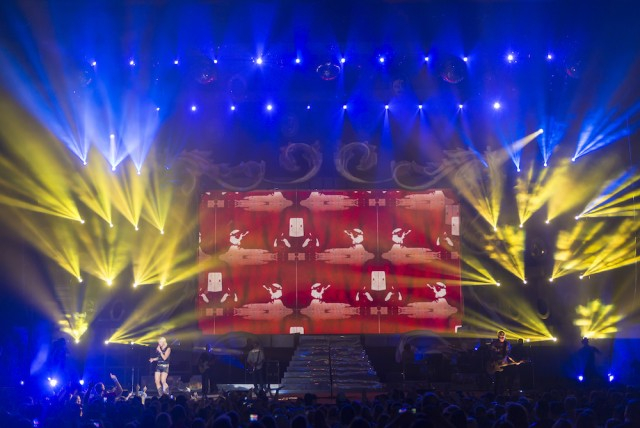
    Have you seen Tyler Santangelo rock his NEXUS units out with Rend Collective?  It’s truly a sight to see!

    From the March 2015 Lighting Insights article:

    When lighting designer Tyler Santangelo decided that floating diamonds would look better than squares on the stage for the Irish Christian experimental group Rend Collective, he simply adjusted the Nexus panels on his rig and created a new look. This was the first (but certainly not the last) time that Santangelo got to appreciate the versatility of the intense COB LED panels from CHAUVET Professional.

    As the LD on the Rend Collective tour, which has crisscrossed the globe from Sioux Falls to West Sussex and Manhattan to Budapest, Santangelo has frequently called on the Nexus panels to create new looks to fit different venues and keep pace with spontaneous flow of the group’s performance.

    Check it out!

    REND-collective

    https://chauvetprofessional.com/nexus-on-the-move-with-rend-collective/

    Stephen Ellison – Understanding LED Theatrical Lighting

    StarkRaving-Stephen Croped

    All but unheard of a few years ago, LED technology has clearly made its way into house of worship applications. Like all new technologies, it brings with it not only promise, but questions. We caught up with Stephen Ellison of Stark Raving Solutions to gain insights into the subject of LED theatrical lighting in churches.

    Stephen knows whereof he speaks. After receiving a BFA in Lighting Design and Technical Direction from North Carolina School of the Arts, he’s gone on to enjoy a distinguished career in the theatrical lighting industry as a designer, writer and product developer. Since 1999, he has been working with Technologies for Worship magazine, first as a teacher at their trade shows, then later as the production manager for their training pavilions. He has written many articles on lighting for the magazine and is its Lighting Editorial Advisor. He also has written for several other trade magazines about lighting and technical direction. He is now the lighting and stage designer at Stark Raving Solutions of Lenexa, Kansas. For more information visit www.starkravingsolutions.com

    Have your clients’ views on LED theatrical lighting changed in the last two years? Yes they are asking for LEDs now more than ever before.

    You use the term theatrical lighting, but really the church market lighting is based on two design looks. The first is more concert lighting than theatrical. The second is lighting the pastor for video, which is a white light/no shadows look. In the first look they have embraced LEDs for the range of color from a single fixture. In the second look they are now accepting the available front lights that can provide a quality white light.”

    What’s the biggest obstacle to your clients regarding adding LED theatrical lighting to their rigs?

    “Money, the cost is more than a traditional fixture with an individual dimmer.”

    How would you rate LED fixtures next to traditional theatrical fixtures in terms of throw distance, color temperature and light quality?

    “In just the past year to 18 months the LED fixtures have matched the traditional fixtures and even surpassed them. When you are working with a group of tungsten fixtures that have been in place for a few years, you begin to see differences in the output and quality based on when you last changed the lamp and whether or not the fixture was bench focused when the lamps were last changed. With the LED fixtures you do not have the same issue since the lamp will never change and they are factory set for the field output.”

    Looking at LED ellipsoidal and Fresnel fixtures, is one of them further along the development curve than the other?

    “No, not that I can tell. The Fresnel was probably easier to develop compared to the complexity of an ellipsoidal. Getting the optics right on the ellipsoidal was a challenge. Now they both are functional units being provided by multiple manufacturers.”

    As a designer do you have to treat LED theatrical fixtures differently than a comparable traditional fixture? Is is there a difference the degree of the lens that you would use to achieve throw distance? Would you arrange the fixtures differently?

    “Yes and no — optically all of the changes were to the lamp assembly and not to the front end optics. A 26° fixture is the same in output optically no matter the lamp source. Placement of the fixtures on the light plot is identical since it is based on the type of fixture and the optics.

    “The difference would show up in the cueing of the fixtures if you have a mixed lamp type plot. You would need to match the dimming curve between the fixtures. Also you would have to watch for the shift in color as you dim the fixture; a tungsten light source will shift to the red as it dims. Most LED fixtures do not have this shift so designers who are anticipating this color shift will have to compensate, or compromise. As the LED fixtures take over the market, the younger designers will think this is natural.”

    Do you have to adjust the way you use other lights on stage like washes or key lighting when you are using LED fixtures with them?

    “Now we begin to look at the dimming curves used in the LED fixtures. The dimming curve in a tungsten fixture is controlled outside the fixture, while the dimming curve for an LED fixture controlled by DMX can provide a multitude of curves based on the software in the fixture. The key is to match the curves in a mixed rig.”

    Can you match LED fixtures from different manufacturers and get the same color consistency?

    “I have not had much experience with a mixed rig, but I would always try to use only one type of fixture in a lighting system such as back or side light so there would be consistency within the system. Traditionally you are using different colors in the different systems so you are not trying to match colors.”

    Are there any theatrical applications where you wouldn’t use LED fixtures?

    “Not that I can think of.”

    As you said earlier, LED fixtures tend to cost more, so how real are the savings you can expect to get from LED fixtures?

    “The savings come in two forms. One is the actual electrical bill. The second is the decrease in fixtures required to light the space. For example, in a theatre I ran we had 3 lighting pipes with 15 pars on each to light 5 areas of stage per pipe to provide a full stage back wash in 3 colors. With LED fixtures you would only need 15 fixtures, a savings of 30 fixtures. Also you can achieve more colors with the LED fixture over 3 fixtures with colored gel.”

    Does having LED ellipsoidal and Fresnel fixtures change the way you approach your work as a designer?

    “Not at all, it only improves the options and enlarges the available color palette.”

    A lot of church services and theatrical presentations are captured on video today. How camera friendly are LED stage fixtures?

    “They are just as friendly as the tungsten equivalent at the top end of the dimming curve, and without the red shift they make dimming much more practical.”

    # # #

    LINKS TO ARTICLES

    Emmanuel Baptist
    http://www.chauvetlighting.com/paragon360-church-renovation.html

    River of Life
    http://www.chauvetlighting.com/river-life-church.html

    Millwood Baptist

    http://www.chauvetlighting.com/millwood-baptist.html

    Joe Paradise and Balancing the Paradox – March 2015 Lighting Insights!

    April 2015’s Lighting Insights newsletter is coming out, so make sure you take a last peek at the March 2015 selections from CHAUVET Professional, starting with Joe Paradise a lighting designer’s lighting designer!

    Check it out, and more — in March 2015’s Lighting Insights from CHAUVET Professional!

    Chauvet-Joe-Paradise-3

    https://chauvetprofessional.com/joe-paradise-balancing-the-paradox/

    Beyond Watts and Lumens – Daniel Connell, Church On The Move

    Wading through all your options when doing a church lighting project can be a daunting task as anyone who’s ever walked through an LDI or WFX show will readily agree. Setting aside brand preferences and some of the more conspicuous performance features, how to you evaluate your lighting choices?

    We could think of no better person to help us answer this question than Daniel Connell, the lighting designer at Church on the Move in Tulsa, OK. Widely regarded as one of the leaders in worship technology, Church on the Move has been featured in industry publications like PLSN and Lighting and Sound America. Much of the ink in these stories has been devoted to Daniel’s standout lighting designs.

    Prior to joining Church on the Move, Daniel was the LD for a number of major recording stars. His work combines a soaring creative vision with a down to earth sense of fitting his design to specific needs of every event or worship service. We talked to Daniel about some of the things that are often overlooked when churches evaluate lighting products.

    Daniel-Connell-Special-Edition-Churches-1

    Many, if not most, churches rely on volunteers to run their lighting systems. Should this be a factor in which fixtures you choose fixtures for your church? Are there fixtures that you might select if you had professionals running your rig that you’d avoid if you had all volunteers?

    “We are lucky at Church On The Move to have an incredible staff AND an extremely dedicated team of volunteers. This allows us to design systems based on the needs of the room and then staff it accordingly. However, when I’m asked to consult with other churches, my first questions are always about their production team. What levels of experience? If volunteer, how much time do they have outside of running events to dedicate to maintenance? My next questions are about infrastructure. Do they have fly battens? Motorized truss? Lift access onstage? All of these factors should be consider when selecting equipment. I’m a firm believer in equipping volunteers with the tools and training they need to do the job rather than dumbing down a design to fit a lower level of experience.”

    Are there any “tricks” to accomplishing the same (or almost the same) results with those “volunteer” fixtures as you can with the ones you’d select for pros?

    “We put a great deal of emphasis on proper setup and layout of all of our lighting consoles. A phrase I hear commonly from other churches is “I like console brand “XYZ” because it’s volunteer friendly.” I tend to disagree with this mindset. Although there are definitely consoles that are poorly designed to begin with, I think whether or not a console is “volunteer friendly” depends on how it is setup. When we add a new fixture into any room we spend a lot of time on proper creation or palettes, macros, and effects to support this fixture. Keeping the console well organized makes programming easier for our volunteers AND paid staff.”

    Daniel-Connell-Special-Edition-Churches-3

    How can you judge how easy or difficult it would be for a volunteer to master a given fixture?

    “I worry less about a specific fixture and focus more on the tools we give a volunteer to interact with that fixture. This is another area where console selection and layout is so important. I’ve been a lighting professional for over 20 years but I will occasionally come across a console so confusing that makes me feel like it’s my first day. Picking the right console is important, but getting that console laid out in a clear and organized fashion is even more important.”

    Maintenance is another hidden factor. How much attention do you think churches should devote to things like lamp replacement and power consumption when evaluating fixtures?

    “Unfortunately at many churches, especially churches new to using production in their services, this is an area that is all to commonly overlooked. Luckily the advancements in LED technology over the past few years have made this much less of an issue. LED isn’t a magic bullet that negates the need for maintenance, but it does decrease the frequency and cost involved. We still use a lot of non-LED fixtures, but on new project designs we always look for an LED option first.”

    How about the multi-functionality of fixtures? Should a church try to look for fixtures that can do double duty in a house of worship – for example acting as a house light during services and a color wash during events?

    “Getting a wider range of usage out of a fixture can be a really good thing, as long as it does all of the intended functions well. I’ve seen the mistake made of getting a fixture that does a lot of things ok, but doesn’t do any of them GREAT. Sometimes the best choice is to get the fixture that only does one thing for you but is the exact right fixture for your need.”

    Daniel-Connell-Special-Edition-Churches-2

    Any advice on what to look for when evaluating the flexibility of a fixture?

    “It’s a two way street. Sometimes a very “flexible” fixture does a lot of stuff but none of it very well. You have to decide in each situation if you need a multi-use fixture or one that only serves one purpose but does it incredibly well.”

    Everyone wants to stretch their budget, but how do you distinguish between a fixture that offers a good value and one that just has a low price that you’ll pay for later?

    “Ha ha, that’s getting tougher and tougher. I usually insist on a hands on demo at my facility before I purchase or rent. Beyond that I stick with established manufacturers who have a brand name they want to protect.”

    Looking at specific types of fixtures like LED video panels and moving heads, how can a church determine if those types are right for its facility?

    “This is a real personal decision for each church. The word “church” can describe so many different types of facilities and organizations now. First, you have to decide if it’s going to help serve your mission as an organization. Second, don’t be afraid to rely on outside expertise to help make those decisions if you don’t have the experience on your team.”

    Going back to the volunteer issue do you have any advice for churches on training volunteers?

    “Always choose heart and character over experience when building your team. My right hand guy started volunteering when when he was 12 because if the doors to the church were open he would be there. He didn’t amount to much at the time, but now he could easily be the head lighting director at almost any church. Once you have your core team, expose them to outside training. There are great opportunities at conferences like LDI, USIITT, and Infocomm. Also, visit other churches that are doing what you want to do. Learn from those that are already where you want to be.”

    Looking at training are there one or two – or three – things that a volunteer should learn to help stretch its lighting budget and get more impact out of its system?

    “Simple system upkeep. I’m amazed at how many places don’t know to lamp off arc fixtures, replace lamps at rated hours, or clean air filters.”

    Setting product features aside what are the things that churches most often mistakenly overlook when evaluating fixtures?

    “Longevity. Will this purchase still be serving us well in two years? Five years? Ten years? Any purchase we make at Church On The Move is expected to last 10 years. Otherwise we look at alternative options.”

    Any other advice?

    “Don’t be afraid to rent for a period of time before you buy. You may spend more money but it gives you the opportunity to make sure the purchase is the right decision before you commit your churches resources to it.”

    Women’s World Cup Kickoff, Flo Rida, This Month in Lighting Insights!

    Lighting Insights brings another awesome article to the Lighting industry forefront! Check out a great conversation with James Schipper of Kinetic Lighting in Glendale, CA!

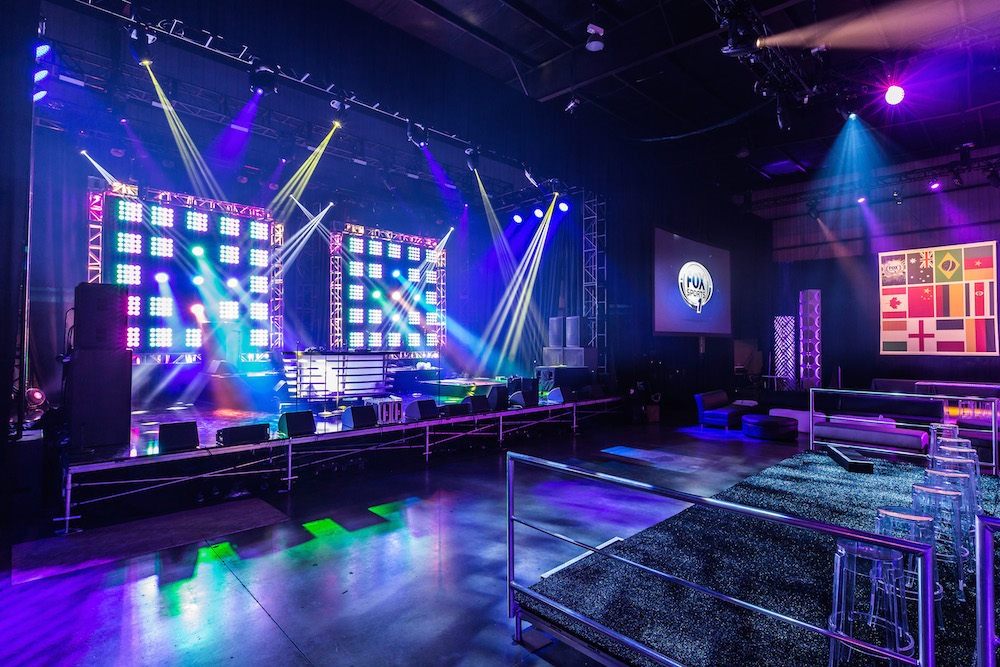
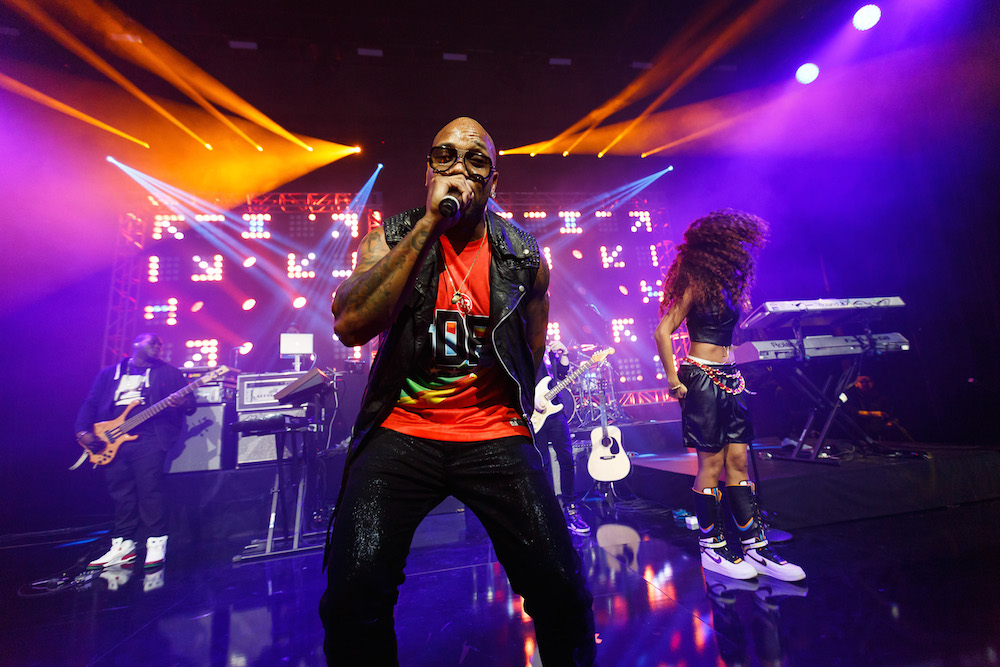
    CHAUVET Pro WC_FOX Sports

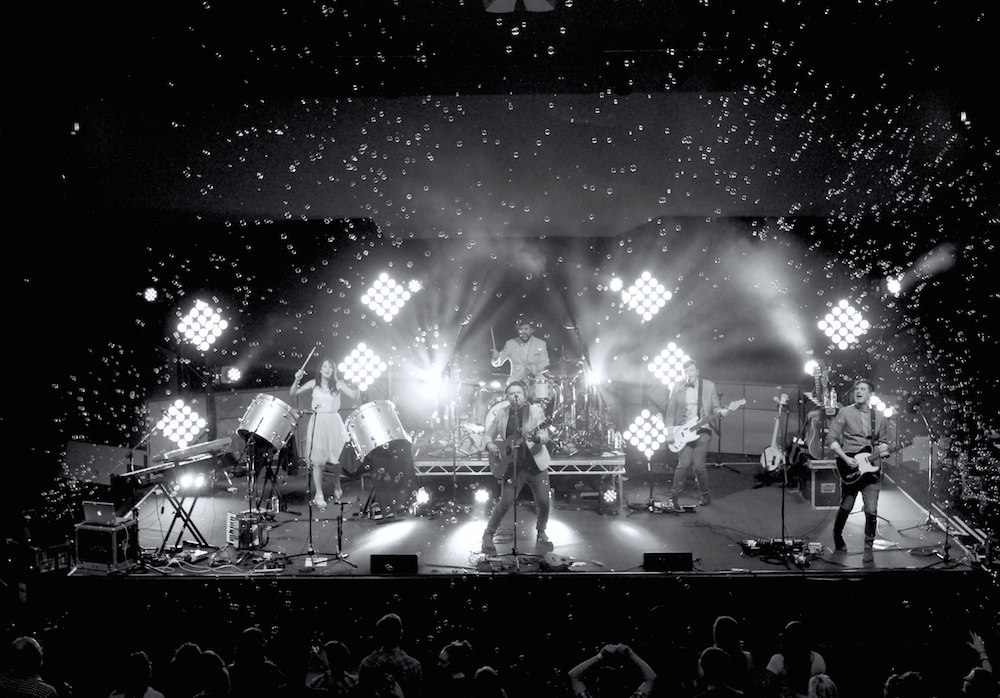
    Lighting Designer James Schipper of Kinetic Lighting (Glendale, CA) used 40 Nexus 4×4 panels to create a dynamic stage backdrop for the celebration’s main entertainment event: a concert by the iconic hip hop rapper Flo Rida backed up by DJ Blaze. The Nexus panels on stage not only matched the Grammy nominated People’s Choice-winning star’s performance; they also reflected the upbeat mood of the televised celebration.

    https://chauvetprofessional.com/nexus-kicks-it-up-for-womens-world-cup/

    CHAUVET Pro WC_FOX Sports 2

    Design Oasis, Chris Kuroda, and JAM CRUISE – Holy Ship!!

    Legendary lighting designer Chris Kuroda, lighting designer for Phish, The Black Crowes, among others, made Jam Cruise 2015 ROCK this year, using CHAUVET Professional’s MVP-12 video panels! Check it out!

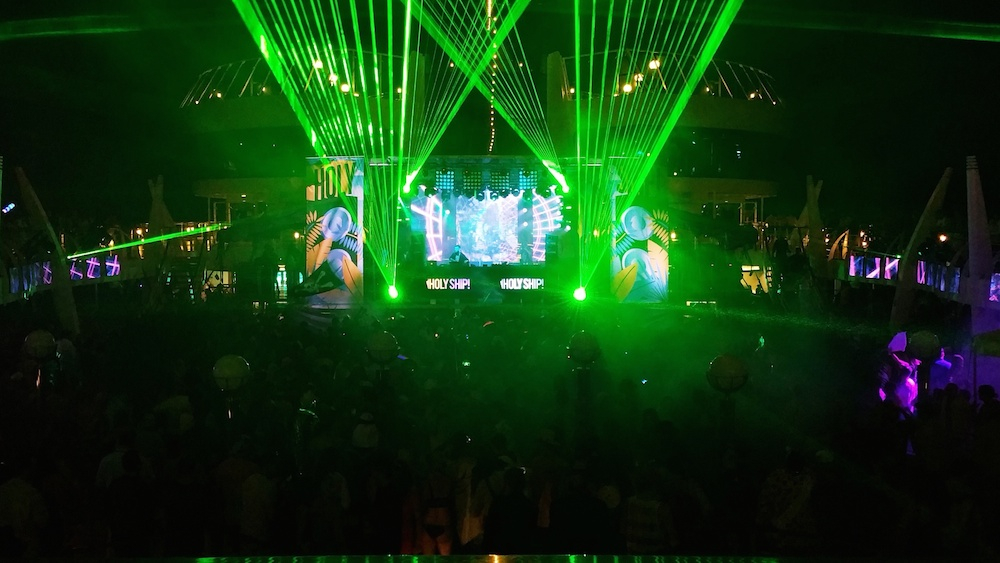
    Holy Ship 1

    MIAMI – Every music festival offers fans a chance to get away from it all, but few do this quite so dramatically – or literally – as Jam Cruise and Holy Ship! Produced by Cloud 9 Adventures, these floating festivals serve up hours of live music on the decks of cruise ships playing their ways through the warm Caribbean waters to exotic ports of call like Half Moon Bay, Bahamas and Rotan, Honduras. The Design Oasis helped provide gear to create an engaging environment at both nautical music fests with a lightshow designed by Chris Kuroda anchored by 72 MVP 12 Video Panels from CHAUVET Professional.

    “Jam Cruise and Holy Ship! both feature big name artists and both draw large crowds expecting to have the time of their lives,” said Abbas Ritscher of The Design Oasis, which supplied the video gear for both cruises. (Premier Global Productions supplied the lighting equipment.) “Chris Kuroda and video engineer Ashten “Whoopi” Winger of V Squared Labs did standout work that lived up to the high expectations that people had when they went on this cruise. They created a big production look on the main stage as well as different points on the deck where fans gather.”

    Jam Cruise, which drew 3,500 passenger/fans for five days at sea, featured an all-star lineup of live music bands like Umphrey’s McGee, The Word, Galactic and Karl Denson’s Tiny Universe. The four day Holy Ship! cruise gave fans a chance to set sail with top DJ acts like Knife Party, Boys Noize, Maya Jane Coles, Flume and A-Trak. The same video images on MVP panels were used for both cruises, but IMAG was added for Jam Cruise.

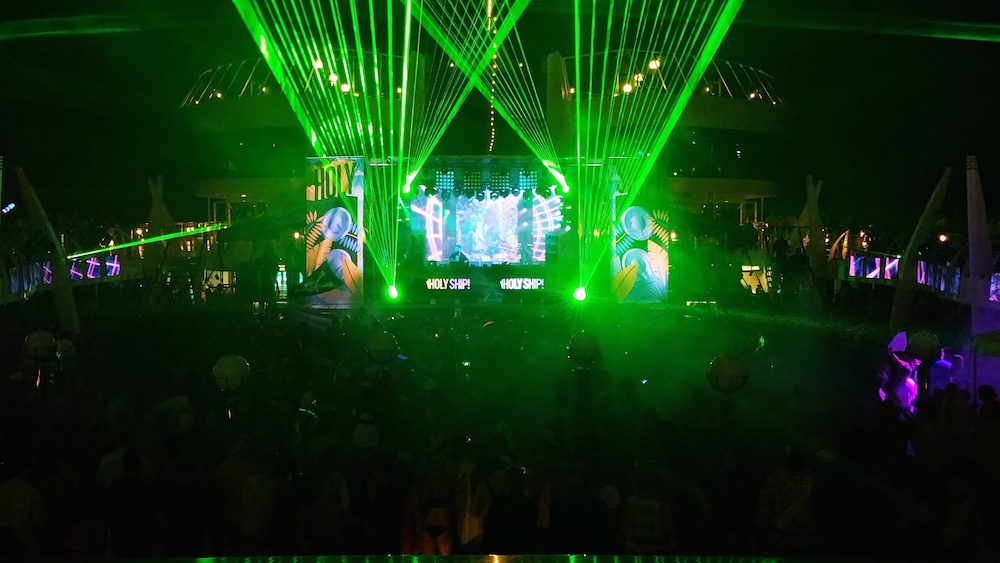
    Holy Ship 2

    The main wall behind the stage was 20-feet by 10-feet and we broke it into three video sections. Graphic video image were run across all three sections to create a sense of movement and depth. “Of course there are a lot of super bright aerial effects on either side of the stage as well along the top of the truss, not to mention blinders, so the output was intense,” said Ritscher. “The MVP panels more than held their own in this environment. “Not only were the panels bright enough to hold their own, but were used as blinders too.”

    A high definition modular video panel with a pixel pitch of 12.5 millimeters, the MVP 12 has a transparency of 13 percent, making it well suited for temporary use in the outdoor environment of the cruise ship, since atmospheric elements can pass through without impacting clarity. The panel’s ultra-bright SMD LEDs also served them well; helping them stand up to the bright lights on the stage rig.

    There were 32 MVP panels scattered around the pool deck. Positioned on the railings of the second level, these panels were tied into an existing video wall on the pool deck to create an effect in which people were surrounded by the video images. “Chris and Jason did an amazing job with the Chauvet panels,” said Ritscher. “The whole thing had an effect of bringing everybody closer to the action on stage and made it that much special.”

    # # #

    The largest cross rental company in South Florida, Design Oasis rents lighting, video, audio, staging and power, providing 24-hour customer support at no additional cost. For more information visit the company’s website www.thedesignoasis.com

    Richard Cadena Talks Video Panels in Lighting Insights February 2015!

    cadena

    Richard Cadena is one of the most trusted lighting and electrical minds in our industries.  Over years of proven hard work and intellectual dedication to our industry he has produced several texts and seminars, including the Academy of Production Technology, and we’re extremely glad he had the time to sit down with us this month here at Lighting Insights!

    https://chauvetprofessional.com/richard-cadena-setting-the-stage-for-video-panels/

    LD for MHoW cover.jpg