Brothers Gow Adds Rogue R1 Spots From Chauvet To Its Well-Traveled Rig

    Brothers Gow 3

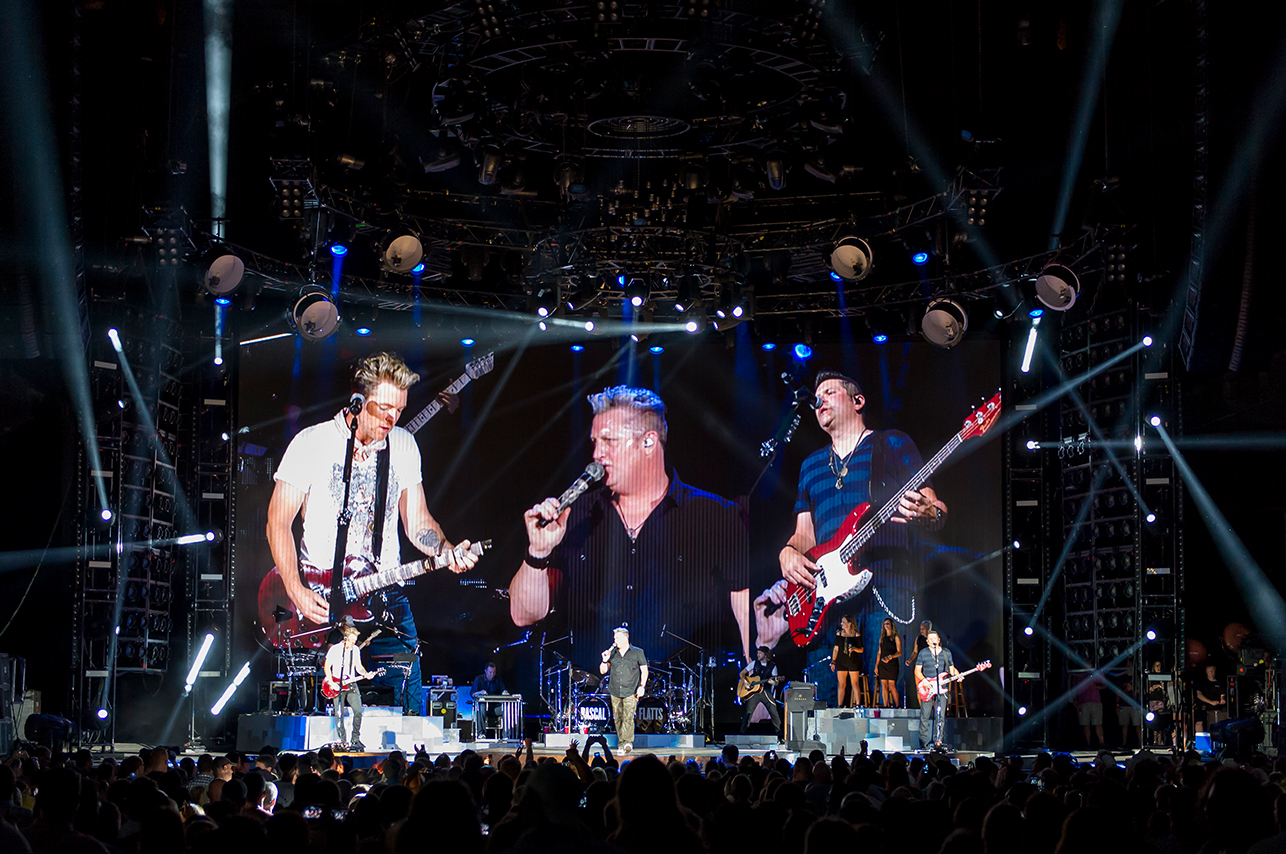
    FLAGSTAFF, AZ The 15-passenger van that Brothers Gow rolls with has logged a lot of miles of late, as the much-in-demand jam band has been playing to packed houses from San Diego to Seattle on its current “Bring The Heat” tour in support of its fourth studio album, Reflections. Fans aren’t flocking just to hear the quintet’s captivating blend of rock, funk, jazz and reggae, they’re coming to see it too, thanks to a quick moving light show that reflects the improvisational spirit of the music.


    Lighting is so much a part of the Brothers Gow experience that their website refers to their LD Matt Collier as the sixth member of the band. Collier, who traverses the country with the well-traveled band (it’s been averaging over 80 shows a year), shares the group’s passion for taking the audience’s experience to the next level. This commitment led him to expand his lighting rig for the current tour by adding Rogue R1 Spot LEDs from CHAUVET Professional.


    “I’ve been wanting to add Rogues to the rig for some time,” said Collier. “Their brightness and speed drew me to them, and they have a lot of special gobo features that I could use to create unique looks. This is important to us. We don’t want a Brothers Gow show to look like any other concert that you see at whatever club you find us at. That’s why we don’t rely on house lights for our rig.”


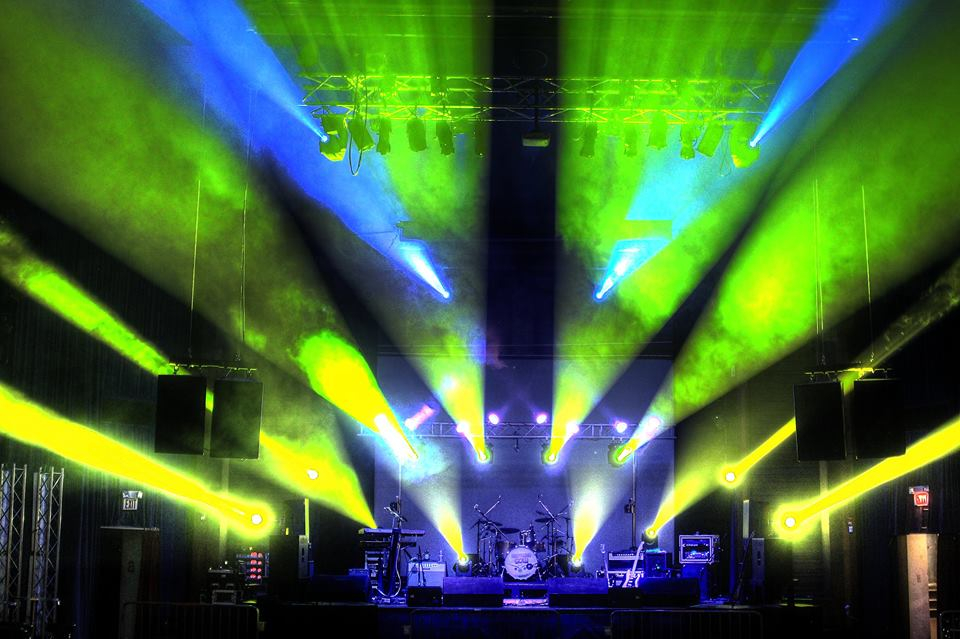
    Collier is using four Rogue R1 Spots on the “Bring The Heat” tour. He’s hanging the moving fixtures evenly spaced on 20’ upstage truss flown 15’ in the air by stands. “I make the Rogues the focal point of my rig because they are so bright and have very crisp, good looking gobos. The band covers a very wide range of musical styles and is very improvisational, so they can veer off in a lot of different directions. My Rogues are great for this environment, because they can keep up.

    Brothers Gow 4

    “The Rogue’s color wheel and gobo wheel are very fast; so is the pan/tilt movement, which is great for the intense high impact songs,” continued the LD. “But the fixture is also very smooth on slow pan/tilt movements for the softer songs. Touring a lot, we also play in a variety of places with different size stages. In the short time since I added them to our rig, the Rogues have been excellent in every kind of venue.”


    Joining the Rogues on the upstage truss are eight CHAUVET DJ SlimPAR 64 RGB LED color mixing fixtures. “I hang the Rogues from the truss and put the SlimPARs on top,” said Collier. “This creates some nice depth over the stage.”


    Above the upstage truss, Collier positions two CHAUVET Professional Q-Spot 560-LED moving fixtures. He also flies two additional Q-Spots on downstage truss. Collier uses the upstage Q-Spots to “fill some negative space up top,” while the two downstage units are earmarked for front lighting. “They give me a cool look when viewing the rig from the audience’s perspective,” said the LD.

    Brothers Gow

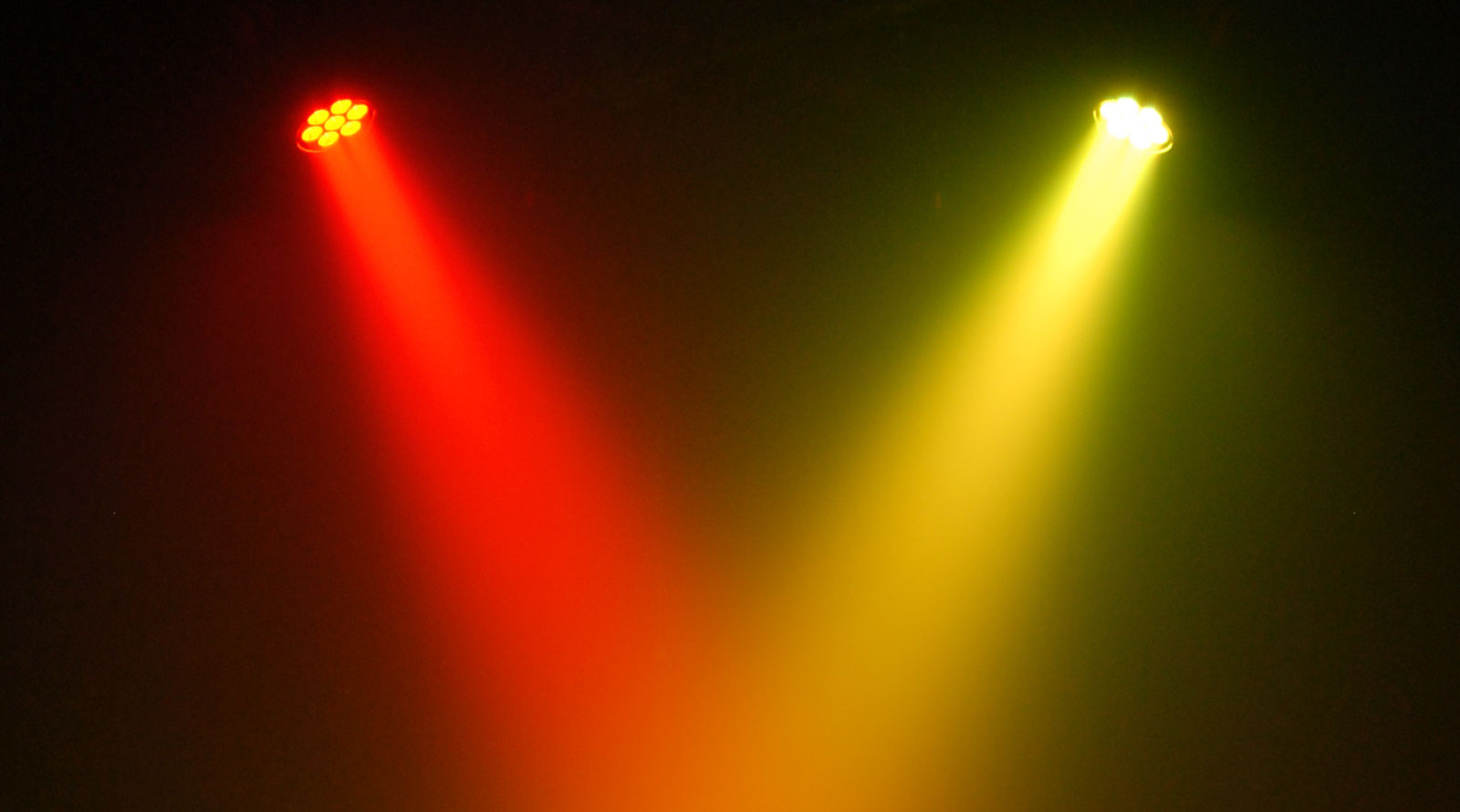
    Also contributing to the eye searing look on the downstage truss are eight additional SlimPAR 64s and four Intimidator Wash Zoom 350 IRCs. “I really enjoy using the Wash Zoom 350 as front lighting because it allows me a large range of colors, and with seven LED’s at 20W apiece, it’s a very bright wash light,” said Collier. “Plus the zoom function lets me position and cover large areas very easily. Gotta light the money, and this fixtures does that very well!”


    Rounding out Collier’s Brothers Gow rig are four CHAUVET Professional Q-Spot 260 LED moving fixtures positioned evenly apart on the drum riser and on cases that flank it on either side. The low perspective of these Q-Spots creates opportunities for Collier to mix their beams with those of the Rogues on the downstage truss to create a dynamic multi-dimensional look.

    Brothers Gow 2

    Outside his rig, Collier has positioned four Intimidator Beam LED 350 fixtures. This gives him a crisp border for his design. “Having these fixtures outside the rig kind of frames what is going on in the middle and directs attention to band,” he said. “Also the beams are very bright, so cutting through wash or spot lights is easily done and allows a wider array of design options. This is good for the creative flow.” And as anyone who has seen this jam band play knows, going with the creative flow is what the Brothers Gow experience is all about, whether it’s on a musical instrument or a console controlling an ever expanding and ever more versatile lighting rig.


    Monday Morning Zen

    Fireworks as seen from a drone.  You have got to check this out!

    [youtube_sc url=”https://www.youtube.com/watch?v=a9KZ3jgbbmI#action=share”]

    Emotion and Motivation for Lighting Design

    By Michael Graham

    Believe it or not, designing lighting to music is a lot like acting in a play. There has to be motivation relative to an emotion for action to take place. If you ever have a chance to speak with a stage actor, ask them if they memorize their lines or if they learn their lines, develop a character, and then, in working with the other actors in the play, create the motivation and emotional connection necessary to make the dialogue more natural. The better actors will tell you that they do they work a process like the one I described rather than just memorize lines. By working the process, the actor can convince the audience that they are that character and involve them in the show. Go watch Dustin Hoffman and John Malkovich in “Death of a Salesman” or Alec Baldwin in “Glengary Glenn Ross” and you will see exactly what I am talking about. These actors preformed these rolls flawlessly, in my opinion, because they not only understood their characters, but understood the motivation and emotion behind their actions.


    Creating cues and looks in lighting design is really no different. The lighting should reinforce the mood or action on the stage. This means that no cue should ever happen without the motivation for it to occur and it should help to evoke the emotion that the song is trying to create.   If you think about the character development process while you are listening to music, you will start to see the colors that the song should be, and the movements (or lack there of) that should accompany the music you are programming to. Take Marc Brickman’s interpretation of Pink Floyd’s “Shine on You Crazy Diamond” from the Pulse tour.Every cue and color makes sense. Not only did he know the music, but it was apparent that he was emotionally attached to it. He may not have had the same attachment as the band, but the design of the song was very personal, and to the audience, it draws them in past just the music.


    Not everyone gets to design music they can get deeply emotionally involved in. That is a fact in our industry. This is where the character development process can help you out. I cut my teeth running lights for cover acts on cruise ships. Trust me, I did not love all of the songs that I had to design for. I started out fighting the music and not getting any personal enjoyment out of most of the songs I was designing lights and it was apparent in how the shows looked. Eventually, I figured out that something had to change, and it was me. I had to work out a way to be able to listen to the music and find elements in every song to work cues into. This is where I can honestly say I started to enjoy styles of music past just rock. I found that getting emotionally involved got easier because I was making myself part of the process of character development in so as much as the lighting was a character in of itself. To me this is a big part of the difference between designing a show and just programming a show. You have to listen to the music and not just hear it.


    So, give it a try. Listen to the music you are being asked to program to and try to make it your own. Find your meaning and let the lighting design become a dialogue between the lights and the music.

    Emotion and Motivation for Lighting Design


    gal_colorado_1tri_tour_7_3

    Believe it or not, designing lighting to music is a lot like acting in a play. There has to be motivation relative to an emotion for action to take place. If you ever have a chance to speak with a stage actor, ask them if they memorize their lines or if they learn their lines, develop a character, and then, in working with the other actors in the play, create the motivation and emotional connection necessary to make the dialogue more natural. The better actors will tell you that they do they work a process like the one I described rather than just memorize lines. By working the process, the actor can convince the audience that they are that character and involve them in the show. Go watch Dustin Hoffman and John Malkovich in “Death of a Salesman” or Alec Baldwin in “Glengary Glenn Ross” and you will see exactly what I am talking about. These actors preformed these rolls flawlessly, in my opinion, because they not only understood their characters, but understood the motivation and emotion behind their actions.


    Creating cues and looks in lighting design is really no different. The lighting should reinforce the mood or action on the stage. This means that no cue should ever happen without the motivation for it to occur and it should help to evoke the emotion that the song is trying to create.   If you think about the character development process while you are listening to music, you will start to see the colors that the song should be, and the movements (or lack there of) that should accompany the music you are programming to. Take Marc Brickman’s interpretation of Pink Floyd’s “Shine on You Crazy Diamond” from the Pulse tour.Every cue and color makes sense. Not only did he know the music, but it was apparent that he was emotionally attached to it. He may not have had the same attachment as the band, but the design of the song was very personal, and to the audience, it draws them in past just the music.


    Not everyone gets to design music they can get deeply emotionally involved in. That is a fact in our industry. This is where the character development process can help you out. I cut my teeth running lights for cover acts on cruise ships. Trust me, I did not love all of the songs that I had to design for. I started out fighting the music and not getting any personal enjoyment out of most of the songs I was designing lights and it was apparent in how the shows looked. Eventually, I figured out that something had to change, and it was me. I had to work out a way to be able to listen to the music and find elements in every song to work cues into. This is where I can honestly say I started to enjoy styles of music past just rock. I found that getting emotionally involved got easier because I was making myself part of the process of character development in so as much as the lighting was a character in of itself. To me this is a big part of the difference between designing a show and just programming a show. You have to listen to the music and not just hear it.


    So, give it a try. Listen to the music you are being asked to program to and try to make it your own. Find your meaning and let the lighting design become a dialogue between the lights and the music.

    Rabbit Creek Church Embraces OVATION

    Rabbit-Creek-Church

    ANCHORAGE, AK – (For Immediate Release) – New opportunities often come when you are expecting something else. Such was the case with Rabbit Creek Community Church. A rapidly growing house of worship in the southern section of Anchorage, Rabbit Creek was looking to upgrade its audio system as part of an effort to enhance its increasingly popular video streamed services. With this in mind, its leaders called Stark Raving Solutions, a Kansas City firm well known for serving the audio, video, lighting and staging needs of churches.

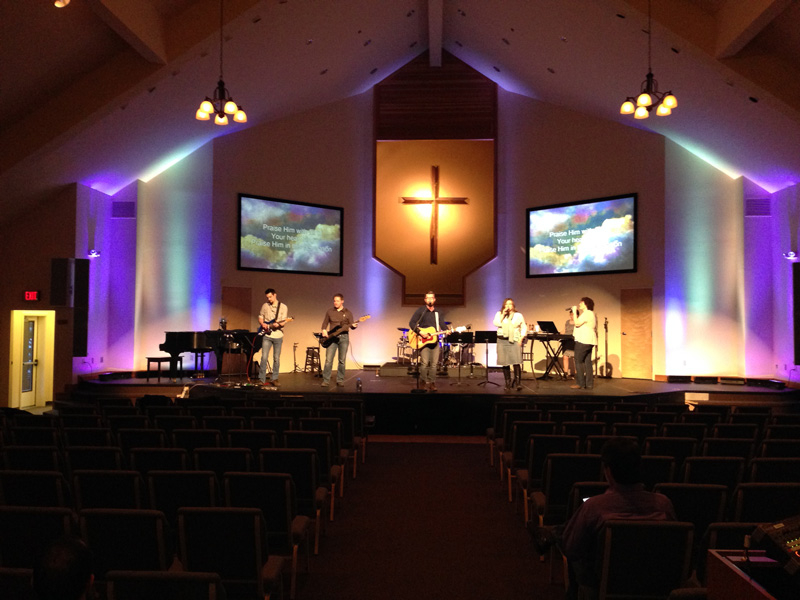
    As expected, the Stark Raving Solutions team provided Rabbit Creek with an audio system that enhanced the phonetics of its live and broadcast services. However, before the Stark Raving team packed and headed back to Kansas City, they suggested a small addition to the project that would have a big impact on the quality of the church’s services. Drawing on their experience lighting other houses of worship, they urged Rabbit Creek to add four Ovation E-190WW ellipsoidal fixtures from CHAUVET Professional to the church’s lighting rig.

    “The major part of the project was to install an audio system,” said Jess Stark, General Manager of Stark Raving Solutions. “Lighting was only a small part of the whole project. However, when we saw the stage, we felt that the Ovation fixtures could make a major contribution to enhance the look of services both live and on video. Light output from Ovation is better in our opinion than other LED and non-LED options for 575-watt fixtures. The graceful dimming curve is very useful during the transition into worship part of the sermon.

    “Since we were already engaged in the audio upgrade, we convinced the church to let us add some Ovation fixtures,” continued Stark. “It was easy for us to add the lighting upgrade and change their outdated control system while we were there, because the fixtures were in stock and could ship immediately. We didn’t need to make a second trip to Anchorage to install four fixtures”

    Rabbit Creek, which started out in 1985 as a five-member church that met in the pastor’s rented home and later rented in the local YMCA, before moving into its current spacious and attractive building, has always be receptive to new opportunities, whether they take the form of new ways to engage worshippers or an unforeseen need for an outreach program.

    Seeing an unexpected opportunity to enhance the visual quality of their video services, Rabbit Creek’s leaders agreed to have the four Ovation fixtures installed as front lights. Stark Raving Solutions installed the LED ellipsoidals in a front position on overhead truss about 10 feet to either side of center stage.

    “The throw distance from where we positioned the Ovation ellipsoidals is about 40 feet,” said Stephen Ellison, lighting specialist at Stark Raving Solutions. “Given the output of these fixtures, they have no problem covering that distance. In terms of coverage, color temperature and even flat light field, they are equal to or better than any incandescent fixture. Of course as LED fixtures they also offer the benefit of lower maintenance and utility costs.”

    In addition to providing superior lighting, the new LED fixtures offered Rabbit Creek Church clear cost saving advantages. The church saved in the installation process because the Ovation fixtures did not entail electrical contractor costs, since there was no need to change the existing electrical system other than adding outlets. Also, since the fixtures have wireless DMX control, there was no need to run DMX wire.

    Rabbit Creek Church is also saving money because the LEDs consume less electricity and generate less heat. In the long run, the church will also benefit from the longer lamp life of the LED fixtures. Since the Ovation fixtures at the church are installed high off the floor, changing lamps in a different type of fixture would have caused maintenance headaches.

    For their part, the church’s leaders and congregation could not be happier with the impact that the four Ovation ellipsoidals have had on the quality of their broadcast services. “The flat even light and color temperature really make a difference in the quality of the video productions,” said Ellison. “When you look at the stage lighting now and compare it to just a few years ago, it’s hard to believe that four fixtures could make such a big difference – but they do.”

    For more information, check out Stark Raving Solutions.

    # # #

    PVP X6IP at the GEICO 500!!

    Geico?  Awesome.  Geico 500 with the new PVP X6IP outdoor video panels from CHAUVET Professional?  MORE awesome!

    Geico500

    LINCOLN, AL – The folks at insurance giant GEICO know a thing or two about marketing; after all they made a lovable gecko the world’s most famous lizard! So as a major sponsor of one of America’s most popular sports, NASCAR auto racing, it was only natural that they would come up with ways to maximize their on-site exposure. This is exactly what they did during the GEICO 500 at the fabled Talladega Superspeedway, using a wall of CHAUVET Professional PVP X6IP outdoor-rated video panels from Dynamic Productions USA.

    Attracting over 80,000 spectators and millions more on television, the GEICO 500 is not only one of the most popular events on the NASCAR racing circuit; it’s also one of the most exciting. Located at a former Air Force base in northeast Alabama, “Dega,” as it is affectionately known to millions of race fans, is not only the longest NASCAR oval track, measuring 2.66 miles, it also has some of the steepest banking and widest lanes in racing — all of which makes for wild and unpredictable racing with 30 or 40 lead changes per race not uncommon. Outside the track itself, a New Orleans Mardi Gras style atmosphere prevails on the legendary Talladega Boulevard.

    Fans attending this type of event are seeking intensity, and the CHAUVET Professional PVP X6IP video wall did not disappoint at Talladega. Thanks to the panels’ illuminance of 4,500 NITS, the bold colors and video images they displayed stood out even in the light of a sunny Alabama day. “Everyone involved in this project was very happy with the looks we got from the panels,” said Brian Rosenblum of Dynamic Productions USA.

    The Talladega race was the second event on the GEICO NASCAR tour to call upon the intensely bright PVP X6IP to generate on-site excitement. Earlier, the panels were used effectively by GEICO at the Richmond International Speedway.

    Geico500_2

    Dynamic Productions has been providing gear for GEICO’s NASCAR Tour events for three years through its client RedPeg Marketing. In 2015 RedPeg decided to add an LED video wall to its on-site displays. This was part of RedPeg’s very successful efforts to activate GEICO’s NASCAR sponsorship by creating an interactive experience that engaged NASCAR fans’ passion for the sport. For example, at Talladega, driver Casey Mears displayed his #13 show car and played trivia contests and challenges with fans on the GEICO stage. There were also photo opportunities with GEICO’s racing fleet, and an all-new, interactive “Pit Stop Challenge.”

    Martin Codd, VP of Operations at RedPeg, noted; “This is the first experiential marketing activation in the USA to integrate the new Chauvet 6mm LED screen. We have tracked this technology for years and believe that the inflection point has been reached on both a cost and technology basis. As innovators within the experiential industry we are very happy with the partnership of Chauvet and Dynamic Productions; this will be the first of what we anticipate will be many programs where we will be able to showcase and stream content from multiple media sources onto LED screens.”

    The PVP X6IP was selected to be a part of this marketing project because of its IP65 rating, weatherproof SMD 2623 LEDs with a pixel pitch of 6.9 mm, 4,500 NIT brightness, and its 8% transparency blow-through design for outdoor applications. Sealable louvers provide the option of closing the panel to block back light when used indoors, a feature that Dynamic Productions appreciates when using the panels in other applications, according to Rosenblum.

    Dynamic Productions used 60 of the PVP X6IP panels, which measure 19.7 x 3.27 x 20.35 inches/500 x 83 x 517 mm, to create an impressive video wall. Controlled via an Edirol LVS-800 8-channel + 2x VGA Mixer, the outdoor rated panels were used to show videos of GEICO commercials, abstract patterns and IMAG images from the GEICO stage.

    In contrast to the actual race itself, which as usual was marked unexpected twists and turns (part of the excitement!), the panels performed flawlessly throughout the event, helping RedPeg drive the GEICO marketing message to NASCAR fans.

    ###

    For more information on Dynamic Productions visit: www.dynamicprodusa.com

    For more information on RedPeg visit: www.redpegmarketing.com