Blog Series: Lighting Education

    Mexico trip: TV Azteca

    Written by Mike Graham, product manager for CHAUVET Professional
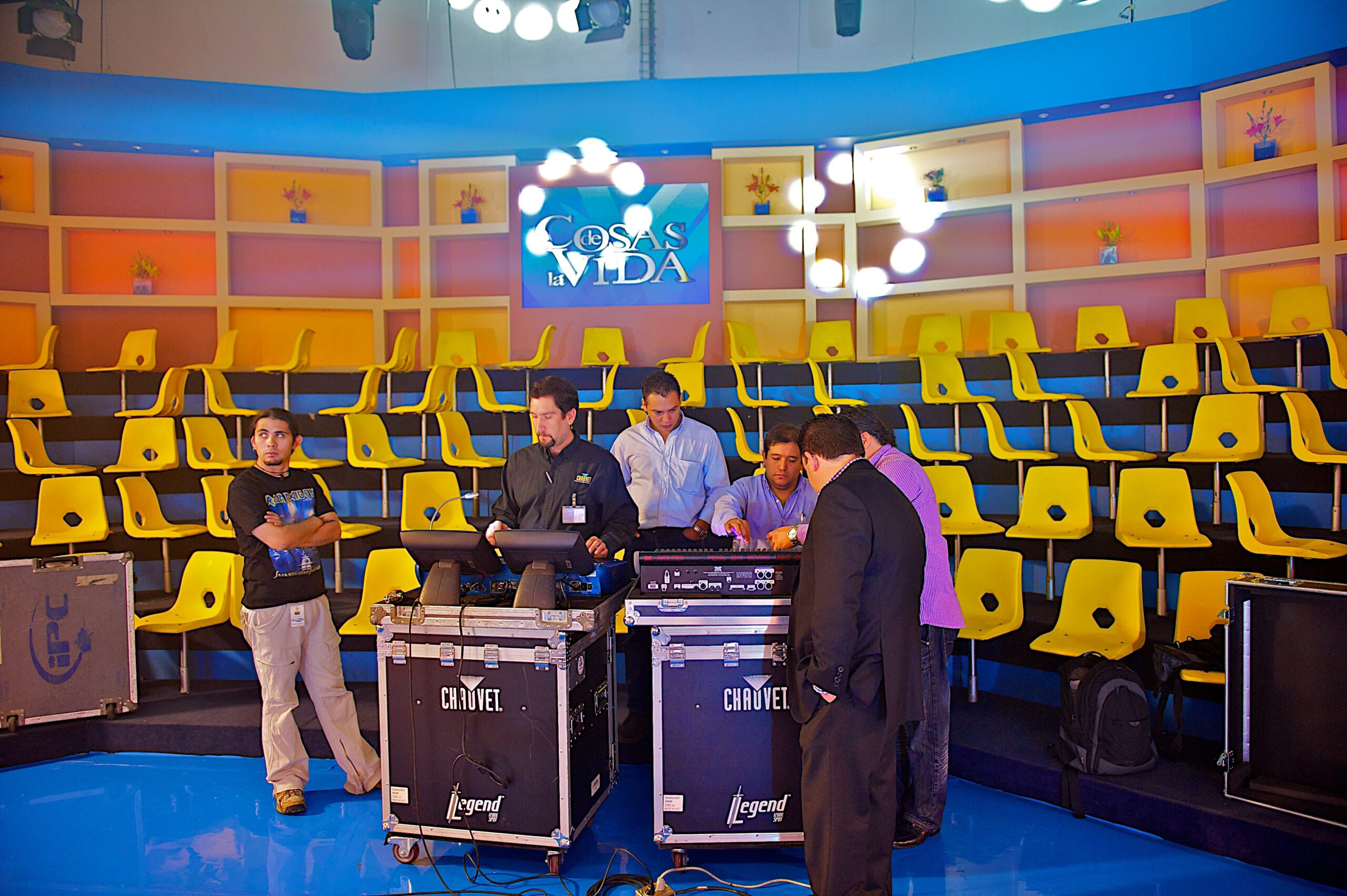
    I was in Mexico for the day to show our Legend Series to TV Azteca. I trained them on three fixtures from this series: Legend 1200E Wash, Legend 1200E Spot and Legend 300E Beam. Take a look at some of the behind-the-scenes shots Stéphane Gressier, global sales director for CHAUVET,  took below.

    Me between two Legend roadcases.

    On set.

    On set. (I’m at the end of the Legend line.)

    TV Azteca exterior shot.

    Tech Talk: The MVP System in a Nutshell

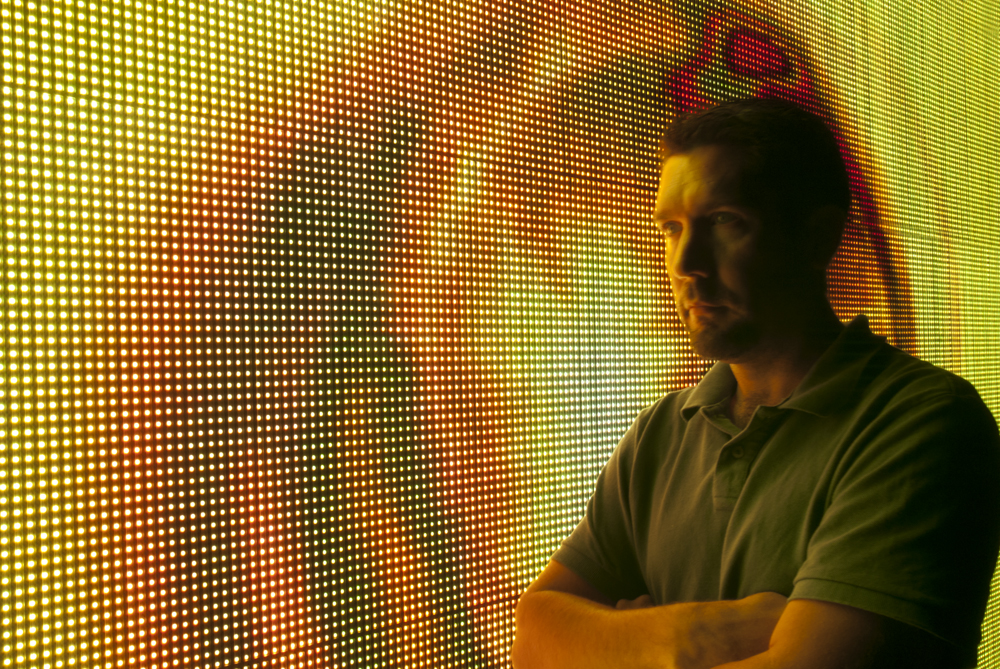
    Mike Graham looking pensive in front of MVP video panels

    Written by Mike Graham, product manager for CHAUVET Professional

    …And there was video, and it was good…

    CHAUVET has entered the video panel world with our release at InfoComm in Orlando this year. MVP Series of modular video panels has already started to buzz right out of the gate. (Honestly, we could not be any happier with the immediate response that we have gotten.) This month I thought I would break down some of the video jargon you will start to see in our literature as well as hear by our sales team.

    MVP installation and operation is actually easy

    Before we get into the video person to lighting person translation guide let me first say that MVP installation and operation is not scary at all. We have taken our time and have made sure to make this as easy as possible. If you ask the crew we worked with at InfoComm, they would pick the MVP panels over lights any day of the week and twice on Sunday. Also, they would rather hang them. This is because they are lightweight, the rigging hardware is easy to use and all of the cabling is done with Neutrik powerCON and etherCON connectors. How simple is that? No strange proprietary connections that you can’t find on the road, just easy to use connectors that are available at any boxed goods store in our fine industry.

    Four concepts of video you should definitely know

    So, let’s say you are new to the wonderful world of video and you want to sound like you know what you are talking about. There are four words and phrases that will go miles into making sure that you get the information you need, that will let the salesperson know that you mean business:

    1. SMD LED – Surface mount diode LEDs are used in the manufacture of the MVP panels. We use these because they are much smaller in size than other LED styles and take much less power to operate. They also have a very wide viewing angle and are very stable in their construction.

    2. Pixel pitch – Pixel pitch refers to the distance between LEDs. It is measured in millimeters. We measure from the edge of the LED because SMD LEDs come in several different sizes. If we measured from the center, it would be a mathematical mess. You might end up with two 18 mm pitch panels with completely different amounts of LEDs.

    3. Viewing Angle – Viewing angle is the area of which the panels can be seen from. This is really important to know when you are setting up your show and you want to make sure that the people sitting in the 400 section can not only see that there are video panels, but see what is on them. The MVP panels have a 140-degree viewing angle.

    4. NIT – NIT is a measurement to video people as LUX is for lighting people. It is defined as follows: the candela per square meter (cd/m2) is the SI unit (International System of Units) of luminance; nit is a deprecated non-SI name also used for this unit (1 nit = 1 cd/m2). The unit is based on the candela, the SI unit of luminous intensity; and the square metre, the SI unit of area. Nit measurement is done at the manufacturing plant and is not something that you can take your handy light meter out and measure. The higher the nit, the higher the maximum brightness of that source is.

    Getting signal to the panels is easy

    Another concern about the MVP system is how to get signal to the panels. Contrary to popular belief, there is no magic wand needed. We implement software that has been created specifically for CHAUVET to manage the signal distribution to the panels. In a basic setup, we send signal from the PC over USB to the MVP Signal Processor and then to the panels. (We will address advanced system setups in future tech tips. Stay tuned!) Once we have all of our wiring done, we configure the software and tell it where the panels are and what kind of layout we have. So for example, if I have six panels wide and five panels high, I create a grid in the hardware setup section of the software that has six panels wide by five panels wide. I then make sure that the software knows what kind of panels are out there, and then I send the configuration file to the panels. In a nutshell, it is as easy as that. All of the settings are done using one software program. There is even a playback section built into the software that is easily accessible and easy to use.

    CHAUVET will be requiring customers come to our worldwide headquarters to attend training on this system prior to using it. We want to make sure we can provide all the tools necessary to you so when you get back to your shop, installation, or wherever you intend to use the MVP system, you have a good handle on it.

    There you have it, the MVP system in a nutshell. For a lot more information, keep checking out our website as we are adding more and more details on this every day.

    If the shoe fits…

    Mike Graham, looking pensive in front of MVP video panels

    Written by Mike Graham, product manager for CHAUVET Professional

    When it comes to footwear, I am not a brand based person. I have been buying two pairs of value-oriented skateboard sneakers every six months for the past six years. I thought they were comfortable and had enough support for everything I do. This would include everything from working in the office to building trade show booths.

    About three months ago, my wife and I started to hit the gym. This meant going out and picking up some more sneakers. This time, we decided I better get something that was meant for working out. I was trying on different sneakers, my eyes were instantly opened, and more to the point, I realized I have been torturing my legs and back for the past six years.

    My new sneakers. And my tattoo.

    Long story short, I ended up getting a new pair of sneakers for work too. I got a pair of Nike LunarFly+2 sneakers. They are great for standing on concrete all day and more importantly for South Florida in the summertime, lightweight and breathable. Best of all, they were still under $90.00.

    There are a ton of different sneakers out there that are lightweight, breathable, and comfortable. I really suggest getting a pair—for the road, gym, trade show floor, and more.

    Oh yeah, there’s an app for that.  Apple App Store has an app that you can use to count your steps and keep track of you daily “workout” as you go along. Kind of cool.

    Tech Talk: Troubleshooting made easy.

    Mike Graham, looking pensive in front of MVP video panels

    Written by Mike Graham, product manager for CHAUVET Professional

    Everything breaks.
    As John Bender said in The Breakfast Club, “It’s an imperfect world, screws fall out all the time.” I can vouch for this. Not only am I a product manager for CHAUVET, but I have worked extensively in the field. The majority of my field experience was on the water—as in cruise ships. The great thing about working on those ships was learning self-reliance. We did not have a lot of support beyond our own brains and had to troubleshoot for ourselves.

    Searching the internet for answers had to be done from an internet café somewhere in Alaska, St. Thomas, Germany, or an even more exotic place like Miami. We had to be able to think on our feet and figure out stuff for ourselves. We had to take good notes so when we did finally get to a place where we could talk to someone from customer support we had all of the variables figured out. (We typically had only one shot per week to get one of these technical geniuses on the phone.) The funny thing is I can remember the names of every phone technician that helped me and I still run into many of them at trade shows. Some of them have become life-long friends.

    Break down the system.
    Troubleshooting is a critical skill we all need to have, not only in the field, but in the shop as well. The key to fast and easy troubleshooting is to break down the system to its simplest components to see what actually works. For example, if you are working on a moving light and it is not panning or tilting properly, swap the motor cables from the pan to tilt drivers and see if the problem stays with the pan. Or did it move to tilt? If it stayed with the pan, the motor is most likely the problem. If it moved to the tilt, you most likely have a driver problem. Figuring this out before you call the phone support guys will save both of you a ton of time. If it’s a color wheel, you can do the same kind of trick with the cables from the gobo wheel and vice versa. For CHAUVET Professional products, we use the same motor for both positions. It may have a different shaft length, but the motor is the same none the less. Simple things like this will save you a lot of headache.

    Back up a step.
    For a bigger system, it is the same principle: break it down to its basic components. Let’s say you have a club running three universes of DMX from ShowXpress. The last five fixtures on your third universe are not responding to DMX at all. First thing to do is eliminate every non-essential part of gear. Take the DMX cable from the output of universe three to the input of the first fixture that is not working properly. Now all five work, great! Let’s back up one fixture. Now you have six fixtures in line and everything is fine. Let’s back up one more step to the opto-splitter (you are using opto-splitters, right?).  Drop your DMX line from your controller right to the DMX input of the opto-splitter. If the problem comes back, you have a bad channel on the opto-splitter—problem solved. Swap it out.

    Change a cable.
    Let’s say we still have the same lights down. There are six lights on the line coming from the opto-splitter. Fixture one is working fine. The last five are not responding at all. You bypass the first light and find this fixes the problem. First change the cable between the first and second light. (After all, it would not be the first cable that died for no reason.) If this does not solve the problem, change the cable between the first fixture and the opto-splitter.

    The next step is realizing you have a fixture problem. Since most lights send DMX from fixture to fixture without buffering the signal, you most likely have a bad DMX socket. (At least this is where I would start the process.)

    Again, it’s all about breaking down the system to its simplest operation. When you call the technicians at a manufacturer, they are going to ask you if you have already done this. (If you have not, they are going to ask you to do so.)

    10 tips when calling for support.
    You are ready to pick up the phone and call technical support. Make sure you have the following at hand as it will help out the tech immensely:
    1. Serial number of the light in question.
    2. LOT number of the light in question if there is one
    3. What kind of controller are you using?
    4. How many are on the DMX chain?
    5. Are you using an opto-splitter?
    6. How many lights are plugged into one circuit?
    7. How many lights are daisy-chained for power to each other?
    8. What is the power level?  110, 208, or 220 volt?
    9. Is it clean power? Are you on a generator?
    10. How long has it been installed or in operation?

    All of these questions are important for the tech you’re calling (and for you) as it helps to narrow down the scope of the problem(s).  At the end of this process, I hope your problems are solved and that your show is running flawlessly.  If not, “feel free to call us back.”

    Tech Talk: How to keep up to date in a tech-savvy world

    Written by Mike Graham, product manager for CHAUVET Professional

    Mike Graham looking pensive in front of MVP video panels

    I had a meeting with an optics supplier today who was telling me he used to sell computer servers. He pointed out to me that he thought his old industry moved fast. When he got into the optics industry, and more specifically into LED optics, he really found out what fast was. The point? We all know when you buy a computer, it is already out of style and there is a newer, faster one out there. In the LED world, it is no different. It is hard to imagine, but we all know that the PAR can, beam projector, and ellipsoidal fixtures have continued to be produced with very little change over the past decades (with just a few exceptions).

    LED fixtures have changed drastically in a very short time, going from the tiny 5mm diodes to the high-powered LEDs we typically see today. While this is a good thing and keeps us all on our toes, we all must do our homework every day.

    CHAUVET launched the MiN Spot in 2007 and revolutionized the industry. Yes, it was a club light and not designed for touring, but it paved the road for things to come (such as our road-ready, LED-fitted COLORado series). Now we have the Q-Series, which has gone from an all-discharge series to an all-LED series in just under two years and continues to grow.

    We must keep up to date on new technology. For manufacturers, it is to stay ahead of development trends. For retail markets, it is to make sure they have the latest, newest gear. For rental houses, it must offer its clients the latest, newest gear with an eye on maintaining their return on investment. And for light users, make sure you have www.chauvetlighting.com set as your browser’s home page.
    Good luck, be safe and send us pictures from the road!

    Tech Talk: Four Ways to Keep Mud off Your Lights

    Written by Mike Graham, product manager for CHAUVET Professional

    Mike Graham looking pensive in front of MVP video panels

    Spring is in the air. Warm air is finally returning to the northlands and people are ready to start partying outside. Ah yes, outdoor festival season is upon us with all its glory. Mud, mud, and more mud. Cables running through mud, generators running “around” the kind of power you need, midday rain storms, wind, and my personal favorite, people throwing mud balls onstage. What are we to do to survive these rites of passage into summer? Here are four easy tips:

    1. Bag it! When you are hanging moving lights in areas that are prone to getting soaked by a passing shower, put a plastic bag over it. Pull the bags off before the show opens and you are good to go. While the show is running, as long as the lights are on, keep them on unless you are in the middle of a driving thunderstorm. In that case shut down and head for the bus.

    2. Shield it! If at all possible, shield the ground row. Keep the mud off of your strip lights. If you are using COLORado IP fixtures you are good to go. Just hose them off for the next show. If you are using COLORado Tour products, make sure that the powerCon connectors are covered if you are not using them. Also make sure that the DMX connectors are covered as well. If you are using the COLORado Batten 72 TOUR, make sure that the airflow to the fan is not obstructed.

    3. Meter it! Make sure the generator is actually working at the voltage you want it under the load you intend to use on your show. DO NOT USE home generators for powering your show. Those are fine for keeping your fridge and a few lights going at the house during a storm, but are not meant for running entertainment lighting.

    4. Check it! As in the weather before you load in. Every year we hear about someone who has set up their roof system only to have it blown down or hit by lightning. While sometimes this is completely unavoidable, the dangers can be kept to a minimum. Take every safety precaution before doing the load in. Keep an eye on the weather reports. There are a ton of websites and applications that can warn you of impending thunderstorms. If you see the sky clouding over and hear the thunder rolling in the distance, time to get off the rig.

    After your show is over and you are packing the truck, try to leave as much of the festival at the festival you can. It’s always a good idea to make sure to pack a bunch of towels so you can wipe down your cables and lights. This will save time at the shop and keep your truck cleaner. If your movers or other electronics did get soaked, make sure to get them dried out as quickly as possible. Nothing worse than putting an expensive wet moving head into a road case, storing it in the back of a hot truck, then opening it up a few days later and smelling the mold grow. Good luck, be safe and send us pictures from the road!

    So You Think You Can Light Dance?

    Mike Graham, looking pensive in front of MVP video panels

    Written by Mike Graham, product manager for CHAUVET Professional

    I will never admit to watching shows like Live to Dance, or Dancing with the Stars, or American Idol, but if I did, I could tell you the evolution of lighting on TV shows has been astounding. Since I come from a design background and can remember when people were afraid of moving lights, I can tell you it is really cool to see how the technology has finally been fully embraced. For those of us who are old enough to remember Star Search, Soul Train, or Dance Fever (It’s got a good beat and I can dance to it. I give it an eight.), you will remember it was all about a ton of PAR cans, pin spots, mirror balls, and haze.  Now look at where we are. LED video walls, huge moving light packages, LED wash lights all over the place, and fantastic applications. What an evolution in just over 30 years.

    NZ trip: Day 9, Wellington

    Written by Mike Graham, product manager for CHAUVET Professional

    After a long day of presentations and setting up, we are back the next day at Audio Progress tearing down. I finally have a chance to speak with Malcolm and learn what he likes about CHAUVET. He has invested heavily in the COLORado 2 and COLORado 6p. He says he is really happy with how they hold up, are consistent with the colors and run efficiently. He has gotten rid of all but about nine of his original PAR 64 units in favor of the COLORado fixtures. He is also big into using ShowXpress. They are using a Obey 70 combined with the ShowXpress so that they have fader control and makes it much more like a standard lighting desk. They were using another more expensive desk and were much happier to be using the ShowXpress with the Obey.  Allan Reiss (product manager for club/DJ line), that is a major win for you my friend.

    Now it’s back to the road. No way am I going back over that mountain though. I ignore the GPS girl and stay on the road by the ocean. The view is awesome and the weather is perfect. Sorry, no pics of that as I was driving. I get back to Wellington just in time for dinner. Perfect timing and the distance was almost the exact same as if I had done the mountain thing. GPS girl apparently has a wicked sense of humor.

    NZ trip: Day 8, Wellington – MDR dealer night

    Written by Mike Graham, product manager for CHAUVET Professional

    Get up early and drive to work. It’s almost like being at home, except I am driving on the other side of the road through some of the most dangerous roads on the North Island.  There is a safer way, but apparently the GPS I am using hates Americans enough to send me over the mountain instead of around it. All in all, the drive up the mountain was easy. Just a matter of staying in my lane and taking it easy. No problem until I started going down the mountain and all I could see was huge cliffs and water that seemed like a mile below. Needless to say, I was sweating bullets and could not wait to get down from there, but wanted to make sure it was by road, not by air.

    Brodie’s license plate. Yes, he can spell, but there is only space for 6 letters.

    Once I finally got to MDR, it was time to get to work and help finish up the dealer night preparations.

    The sign is self explanatory.

    The lighting rig consisted of the following: (2) LEGEND 300E Spot, (2) Q-Spot 160-LED, (2) COLORband TRI, (7) COLORado 2 IP, (4) COLORado 1-Tri TOUR, (4) COLORado 1 Tour, (1) COLORado 1 VW, (8) LED PARr 64 TRI, (1) Cirrus and (1) Eclipse. (The last three are members of our club/DJ line of fixtures.) There were also one each of the COLORdash Accent family members, an assortment of ILUMINARC products, as well as the popular club/DJ wash lights 4PLAY and 4BAR. It was all controlled by ShowXpress and an Obey 70.

    Controlled by ShowXpress and Obey 70

    The night was hosted by MDR and Audio Progress Ltd. We had a guest from Massey University, Professor of Sustainable Energy, Ralph Sims, who discussed the effects of CO2 emissions as they relate to global warming concerns. He described what can be done to help prevent further release of CO2 and how we can lower our carbon footprint by using more efficient methods of transportation, energy production in our everyday lifestyle. He touched on the lighting industry and offered comparisons between traditional incandescent lighting and compact fluorescent lighting (CFL).

    Prof. Simms speaks about green and sustainable energy.

    After his presentation, I was able to expand on his discussion by going into the energy savings of LED and also include the fact that LEDs are much more flexible and actually usable in the entertainment industry where CFL is not. I then touched on the fact that comparisons between LED and discharge lamps is difficult to do on paper and is something that has to be shown in person. The crowd was very receptive to this and I think Brodie is going to get swamped with demo requests.

    The presentation from offstage. We waited until it got dark to start going over the fixtures themselves.

    We took a short break between the technology portion and the fixture overview and then reviewed the entire professional catalogue fixture by fixture. After the presentation, both Brodie and I were mentally exhausted.

    Brodie then wanted to give me a ride around Palmerston North to show me the two outdoor installations he has worked on. There are more in the works, but for now there is the Clock Tower and Regent on Broadway Theater. The Clock Tower is lit with a combination of COLORado Batten 72 Tours and COLORado 6p units. The Regent Theater is uplit with COLORado 6p units only.

    The clock tower is lit with a combination of COLORado Batten 72 Tours and COLORado 6 IP units.

    The Regent on Broadway Theater is lit with COLORado 6 IP units only.

    NZ trip: Day 5, Auckland

    Written by Mike Graham, product manager for CHAUVET Professional

    Three thirty in the morning is early.  I don’t care what time zone you think your head is in, it’s early. We got to the airport and I dropped Annie and Connor off at the international terminal. I then went to the domestic terminal to catch my flight to Auckland. Did I mention that 3:30 am is early? Well so is every minute past that until you get back to sleep on the plane.

    Once I landed in Auckland, I hooked up with Brodie Noon. Brodie is the director of MDR, our distributor for CHAUVET in New Zealand and overall cool guy. We got a lift to our first meeting with Matt, one of Brodie’s sales guys. Our first meeting was with a company called Lamp Specialists, Ltd. The person we were to meet was Clifford Henshaw. Lamp Specialists is one of Brodie’s best customers and is also the Philips lamp distributor for NZ.  (Could you ask for a better combination?) Cliff gave me the lowdown on his vision of the future for CHAUVET in NZ. I must say that I was really happy with what he had to say as he was very receptive to the idea of working more closely with CHAUVET and the local production companies, as well as with the architectural market. Both of which he seems to be very aware of.  Cliff was also to be our driver and guide for the rest of the day.  I think he was driving the only Cadillac I have ever seen in NZ.

    Due to not having any spare time to do any sight seeing, here are two pics of Auckland from the back seat of a speeding car. The first is a photo of the harbor bridge. There is a massive New Zealand flag on the top of it.

    The second photo is of the downtown skyline of Auckland.

    We started out with a company called Spotlight. Ben and Alex were all set to see us and wanted to know from the start more about what we were doing with LEDs in the future.  As they already have COLORado 3p units in their inventory, I suggested looking at expanding their existing LED inventory and taking advantage of the power savings along with having the CHAUVET support. Since they do a lot of dry hire into schools and public events, I think that they thought that would be a good idea.

    Our second meeting was with an architectural company called LDP, Lighting Design Partnership-Visual Planners. They design projects all over the world and are working on some very cool ones in NZ. It makes it so easy when you walk into a presentation, especially with an architectural firm, and are totally prepared. We showed them what is new with ILUMINARC, sister company of CHAUVET which focuses on architectural interior and exterior lighting solutions, and I think they were quite impressed. Adriana, Domenico and John were a great audience and very friendly. Their big thing is reliability, which with the environmental stresses in NZ (the combination of having a high content of salt and sulfur in the air, cold winters, hot summers, and in many areas, high winds), rugged housings on our outdoor items is really important. I told them about our success with projects in Quebec City and Paris along with cruise ships. I think that they we impressed with our existing projects considering the fact that ILUMINARC is not even two years old yet.

    Our last meeting of the day was with a hire company called Oceania. These guys are one of the largest hire companies in NZ. They have a shop that reminded me of my last tour with Upstaging without all of the red trucks. They do everything from fabrication to rentals. Simon of Oceania was good enough to sit down with us and give us a look at some of the projects they are working on over the next few months. Looks like they will be very busy with the upcoming Rugby World Cup 2011. It seems that the entire country is all about rugby even more than normal. Because of the nature of the business in NZ, shipping is a major concern with hire companies. They need durable fixtures that can survive constant shipping from the North Island to the South and back again. I assured them that the CHAUVET COLORado series can cover that need.

    All in all, the meetings went better than expected. CHAUVET has a good name in NZ and the three of us–Brodie, Cliff, and I–felt we covered all of our bases and it was time for Brodie and I to get back to the airport. Matt came back to Cliff’s office to pick us up and take us to the airport, but not before a quick stop at a pub for a fish and chips meal along with a beer.