    Blog Series: Designer Profiles

    LD Profile: Rodney Daniel

    Six questions with Rodney Daniel, executive producer for Runway Images, Inc. of Atlanta, Ga. 

    1. How did you get into this field?
    After years of providing models for events and fashion shows, one time I was asked to actually produce a fashion show. After my first show I was hooked.

    2. What do you think is the next big thing in the lighting industry?
    Being able to run lighting from apps on our smartphones or iPads. Currently I use ShowXpress and the LIVE app on my smartphone.

    3. Do you have a favorite fixture (and why)?
    Yes any of the CHAUVET Q-Spot fixtures with gobo capabilities, along with real-time reaction from the board.

    4. What has been your favorite design/project?
    The annual Bauder Black Tie Fashion Event and various events for NBA ALL-Star Game weekend.

    5. What was the biggest unforeseen obstacle that you’ve faced in one of your designs, and how did you overcome it?
    Being told by a venue that we cannot use truss system or rigging for an event, and we had to place all lighting on staging and floor.

    6. Complete this thought: A show without light is like…
    …having a Rolls-Royce without gas!

    LD Profile: Rachel Miller

    Six questions with Rachel Miller, lighting designer at Kinetic Lighting company from Southern California. 

    1. How did you get into this field?
    I started in musical theatre my sophomore year of high school, and I didn’t get into the show “The Fantasticks.” I begrudgingly accepted the role of light board operator, which immediately translated into designer. I fell in love with it then and there on my Lep 624 console. Soon after, my high school opened the new theatre and I had real lekos and a bigger console to play on. I decided to go to Emerson College in Boston for lighting and began working at Kinetic Lighting as a summer internship when I was home. Fell in love with the ephemeral nature of event lighting, and after working for a few other companies in Boston and Los Angeles, got my degree and started full time at Kinetic Lighting.

    2. What do you think is the next big thing in the industry? 
    I think the next big thing is more of an improvement than something new. Once LED fixtures are fully able to replace conventionals [dimming curve, output, etc.] then we have something great and energy-efficient on our hands.

    3. Do you have a favorite fixture (and why)?
    The CHAUVET COLORado 1-Tri Tour has served me well on every single show I have specified it on. It can function as an uplight, a narrow beam or a wash light when I put a Source Four PAR lens in the gel slot. It is multifunctional and I’d be happy to see them on any show.

    4. What has been your favorite design/project?
    My favorite design was for the Drew Carey “Price is Right” wrap party in 2011. We worked with Inna at Poko Events and came up with a design to fit her Studio 54 theme. James Schipper and David Jacobi designed the intricate truss layout, which was all ground-supported circles broken into pieces to create a wave-like perimeter around the party. This gave me multiple structures to light off of, and since it was two stories tall with go-go dancer decks on top, I had tons of options. I researched Studio 54, called my dad to get the inside scoop from a New York attendee, and hit the drawing board. I used ColorBlaze fixtures vertically on the truss and had them do a section chase very similar to the cyc light chases at the club back in the day. I toned every piece of truss with COLORado 1-Tri Tour lights, giving me the ability to change the entire atmosphere with its saturated, punchy colors, and threw a mix of Mac 2000 and Mac 301 lights to do beams swooping across the party. It was a darker atmosphere, and the two-story truss and dancer platforms really alluded to what the club was like in the ‘60s.

    5. What was the biggest unforeseen obstacle that you have faced in one of your designs, and how did you overcome it?
    One of the bigger obstacles was walking into a ballroom with a full rig and light plot in hand, and being told the house manager gave us the wrong rig point drawing and all the points we thought we had were actually a different ballroom. We had a one-day install out of town and ended up having to ground support everything and make it work with what we could get our hands on. Lighting artwork in the center of that ballroom on flats was a challenge, but screwing in PAR 20s to the flats, using battery-powered photo lights and having just enough ambient light did the trick.

    6. Complete this thought: A show without light is like…
    …radio.

    Photo credits: 2me Studios 

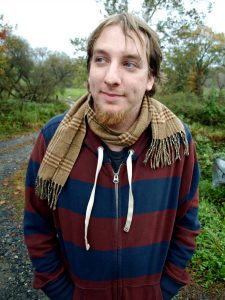
    LD Profile: Chris Allen

    Six questions with Chris Allen of Red Eye Audio and Lighting,

    1. How did you get into this field?
    I started in theater in high school, as an actor, and picked up some of the tech side just by being there. When a friend of mine and I started a local music event, we needed lights, so since I had the most experience out of the two of us, I was chosen. It turned out to be quite addicting, and here I am almost 10 years later, still at it.

    2. What do you think is the next big thing in the lighting industry?
    Projection has really taken off in the past few years. I remember doing my first show with projections a couple years ago, and going into it I thought it was very new and dynamic. Three years later, I’m still impressed with what tricks people are pulling with them.

    3. Do you have a favorite fixture (and why)?
    My SlimPAR 64 [wash lights] offer a ton of options and pack quite a punch. They’re small enough to fit almost anywhere, and they are useful in just about any situation.

    4. What has been your favorite design/project?
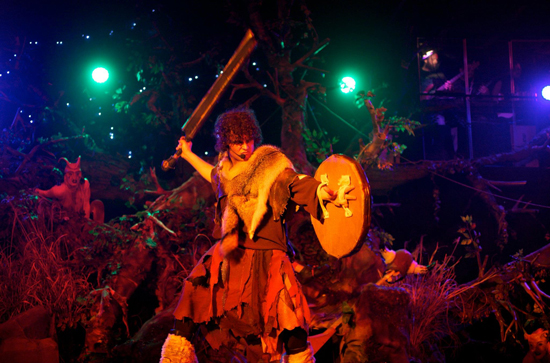
    My last project, designing the lights for “Valhella” with The Baltimore Rock Opera Society.  They were amazing people to work with, and they gave me a lot of room to do whatever I wanted. They dared me to dream big and I did. I kept getting compliments that it was the best lighting they’ve ever had. So having lots of creative freedom, a great crew to work along side, and tons of positive feedback made “Valhella” a once in a lifetime kind of show.

    5. What was the biggest unforeseen obstacle that you’ve faced in one of your designs, and how did you overcome it?
    For one show, I was unsure how to get all the different colors and looks that the director wanted onstage with a limited number of fixtures. Since the set was static and all the action took place in the same areas on stage and all that needed to change was the color, we rented color scrollers. I didn’t know we had the budget to rent them, but apparently we did. They were a bit of a hassle to get to work with the design exactly how I wanted, but in the end they saved the show.

    6. Complete this thought: A show without light is like…Dancing in the dark. Sure, the music is still great, but you can’t see the REAL action.

    Valhella image courtesy of Heather Keating

    LD Profile: Oscar Dominguez

    Six questions with Oscar Dominguez, venerable lighting designer with more than 20 years of experience and visionary behind Darkfire Lighting Design. Dominguez’ projects include many of TV’s top rated shows such as “The Voice,” “Lopez Tonight,” “The Bachelor,” “The Bachelorette,” “Wipeout,” “Shark Tank,” “America’s Next Top Model,” “Are You Smarter Than a 5th Grader,” “Fear Factor” and more.

    1. How did you get started?
    My father was a manager for a restaurant across the street from this little sound stage in Van Nuys, California, and he pleaded with them to take me in for a day, which they did. So, I started working and doing little things, like cleaning the stage and mopping the floors — I was 17. A day came when one of the electrics didn’t show up for the call at the studio.  I was told, “here’s a wrench, now go up the ladder and see what you can do.” I started working my way out, became the house gaffer and learned from the other lighting designers working there. I started very low.

    2. What do you think is the next big thing in the industry?
    We need to figure out how to come up with one mega diode, a magical diode that works more like a traditional light. For output, people mention the number of LEDs, but this means sacrificing the purity of the light. I think we should witness a different approach in the way LEDs are utilized in fixtures. A lot of lights are designed by engineers, but we should see engineers and LDs working together and create an LED that would perform flawlessly. The LED is useful for its velocity in color change, but needs to stop being a two-dimensional light and morph into a 3D LED, to emit a light the same way a conventional light does.

    3. Do you have a favorite fixture (and why)?
    My favorite light is probably the source four Leko. It is an incredibly flexible and versatile instrument. If I had to I could light an entire set with just that fixture. If we are talking about the CHAUVET lights I use, the COLORdash Batten Tri lights proved to be an incredibly reliable fixture and a useful tool. I hate to love it, but I do.

    4. What has been your favorite design/project?
    “The Voice” — one hundred percent. It is my favorite and most intense project, at the same time. I love lighting for music and this has allowed me to really experiment. NBC has been extremely supportive and let us go deep. There are high expectations, there is a lot of stress and zero room for failure. Creativity is very important – every week you have to come up with new stuff.

    5. What was the biggest unforeseen obstacle that you’ve faced in one of your designs, and how did you overcome it?
    I remember I worked on this award show, and I forgot to draw the audience lighting. Somehow it happened, but I learned from it and from then on I knew I had to double check on every step.

    6. Complete this thought: A show without light is like…
    … radio.

    LD Profile: Roberto Penso

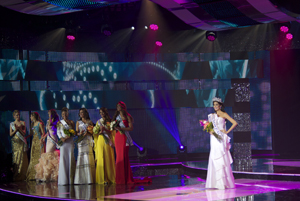
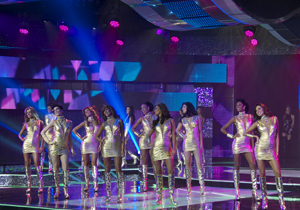
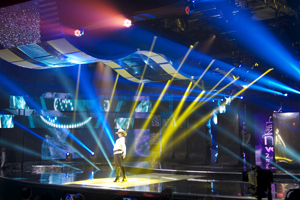
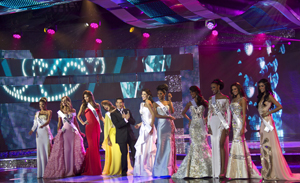
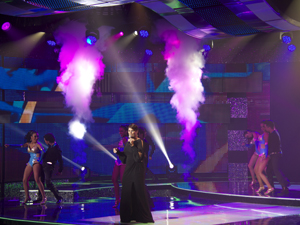
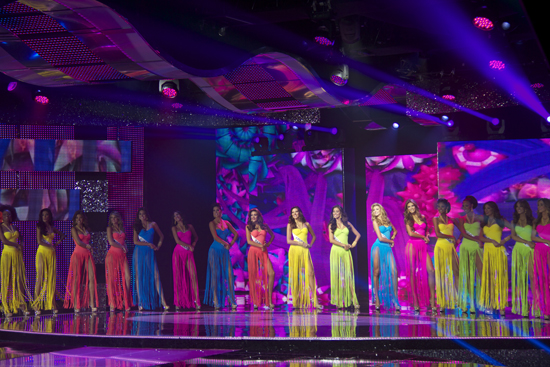
    Six questions with Venezuelan Lighting Designer Roberto Penso, the artist behind the Miss Venezuela pageants from 2007 until now. Penso has worked with various artists from Venezuela and other countries, including Franco De Vita, Carlos Vives, Ricardo Montaner and many others.

    1. How did you get into this field? 
    I started my career in lighting by doing laser shows about 27 years ago. One day the managers of a famous singer called me to do a laser show for a tour, and I agreed to it with the condition to add lights to the lasers. I had studied lighting for theater, but I knew that I had to study more and really get into the lighting design. Also, photography and film have always been two of my passions, and they just went hand in hand with lighting.
    2. What do you think is the next big thing in the lighting industry?
    Without a doubt, the biggest developments in the lighting industry in the past 30 years have included the incorporation of automated fixtures, of digital controllers and now of LED technology (lights and displays). More recently I have noticed a great development in the hydraulic systems: everything moves, everything changes, and a good example here is Madonna’s MDNA Tour. As a comment related to these advancements, it would bring me great joy to see more professionals in Latin America willing to learn more and educate themselves in lighting design and in the appropriate use of the new technologies. It concerns me to see that any person who can record a cue on a console calls himself/herself a designer. The best fixtures and consoles cannot compensate for the lack of education among lighting designers, programmers and operators. For example, one big error of beginners and of many experienced professionals is the desire to bring a great number of effects in front of the audience and to light all of the fixtures at the same time, without focusing on the stage and on the artists, which is our main goal. I have seen so many shows with the same effects and with just a few cues during the entire show, which gave the impression that the show was designed by the console and not by the lighting designer.
    Some lighting designers don’t understand that the show is for the entertainment of the audience; they are paying for the show, and our lighting is an extension of what happens on stage, of the music and of the artists that perform on stage. Unfortunately, they end up creating the lighting design for themselves, without taking into consideration the different angles, the atmosphere, the factor of surprise, timing, etc. Basically, they show you everything in the first 5 minutes. Each person in the audience wants to see an amazing show, no matter where they are seated. And the same happens with the audio and video elements. Speaking of technology, I would like to see better LED fixtures, but we need to learn how to use them. They are much more than lights with pretty colors: they consume very little, and last for a long time; it’s enough to light a person in the front with an LED light to realize there is still a long road to go. It seems like there isn’t enough creativity these days. Almost all TV shows have the same look and all the lights are on at the same time. Most rely too much on the console to do all the work.
    3. Do you have a favorite fixture (and why)?
    It depends on the role of the fixture, but my favorite one has always been the moving yoke from Vari-Lite VL5 (now VL-500), for its simplicity and unbeatable optical and color quality, next to the spot and profile fixtures VL-3015LT and Best Boy from PRG, which are my current favorites. I am a firm admirer of Jim Bornhorst, whose vision and talent inspired my career. I also enjoy each opportunity I have to work with the linear fixture from CHAUVET Professional COLORado Batten 72 Tour. Its amber LEDs allow me to add more saturation to my shows and offer a wide selection of colors and color temperature correction. Also, the Q-Wash 560-Z LED from CHAUVET Professional has proved indispensable in the Miss Venezuela pageant 2012, when I used 18 of them as washes. They performed incredibly well thanks to a great zoom and high index CRI, which allowed me an excellent color balance on a stage of low height and critical levels of color, where you have to light more ‘skin’ than anything else; but at the same time you need a stage rich in color and saturation because they record in high definition.
    4. What has been your favorite design/project?
    A classic is Pink Floyd’s “Pulse” and the tour of Genesis “Abacad,” where Vari-lite VL1 made its debut. I had the opportunity to go to one of its concert when they stopped in Philadelphia in 1981. But truly, I admire more the lighting designers than the actual shows: Marc Brickman, Peter Morse, Alan Owen, Patrick Woodrofe, Roy Bennett, Willie Williams and for TV, without a doubt Bob Dickingson, which are from the old school. Some of the artists I had the pleasure to collaborate with are Franco De Vita, Ricardo Montaner in particular, also many singers from Venezuela and Colombia and various from the United States. I have worked for 18 years with Ricardo, which I enjoyed very much, because his musical style allowed me to be more creative and theatrical. But Basically I have worked with all internationally acclaimed artists of Venezuela, also for a great number of festivals, concerts and special programs for DirecTV, HBO and other TV channels.
    5. What was the biggest unforeseen obstacle that you’ve faced in one of your designs, and how did you overcome it?
    My biggest challenge has always been to convince the ‘producers’ that ‘Good, beautiful and cheap’ does not exist! Quality comes with a price. Many times I preferred making less money and transferring the difference into better lighting. It’s just like an artist who has a vision for a piece of art but doesn’t have the necessary tools, nor enough paint! These artists sometimes eat only bread and drink water so they can paint. On the personal side, the most difficult has been to overcome the stress that comes with waking up in the middle of a flight or in a hotel room without knowing what you are doing there or where you are going. I think this is something that all of us suffer, having to spend more time making shows than living a ‘normal’ life.

    6. Complete this thought: A show without lights is like…
    …melted ice cream. It has no shape, it’s not refreshing, it doesn’t make you want for more. But, ironically, nothing is worse than a show with too many lights! In reality, if you have a good reason to light something, one single fixture is enough to give meaning to everything.
    LD Profile: Andrew Strain

    Six questions with Andrew Strain, lighting designer and owner of Blue Haze Entertainment, a full-service lighting design and production company in Huntington Beach, Calif.

    1. How did you get into this field?
    I have always wanted to work in the industry. I went to a performing arts high school and I attended the classes at the Academy for the Performing Arts in Huntington Beach. I did my first show when I was 15 — it was a chorus line, and I was the followspot operator. Among the types of designs I do are musical theatre projects, themed parks, architectural and special events.

    2. What do you think is the next big thing in the lighting industry?
    I think it would be a great thing if more people used ArtNET and Ethernet-based DMX distribution without a DMX cable. It is much faster and transfers more info. Also,  I would like to see an evolution of quad LED, more power-efficient LEDs and no more “skittles”-looking fixtures.

    3. Do you have a favorite fixture (and why)?
    I like the COLORado 1-Quad Tour from CHAUVET for its light ambers, light pinks, and its popularity for TV, film and special events.

    4. What has been your favorite design/project?
    We had this project at the Paramount Pictures studio lot, which turned out to be one of the few designs where we could show off all the colors in the fixtures. We used 58 COLORado 1-Tri Tour static wash lights and 40 COLORdash Batten Tri linear wash lights from CHAUVET Professional, at the opening of Technicolor at Paramount post-production sound facility at the Paramount Pictures studio lot. These are also flicker-free, so it worked out well with the camera.

    5. What was the biggest unforeseen obstacle that you’ve faced in one of your designs, and how did you overcome it?
    Unavailability. I needed this fixture for a project, but wasn’t available yet.

    6. Complete this thought: A show without light is like…
    … my motto: life is too short for boring lighting.

    Royal Shakespeare Company Lit by CHAUVET Professional

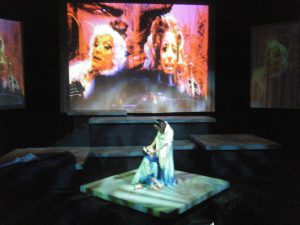
    Royal Shakespeare Company, located in Stratford-Upon-Avon, U.K., refurbished its auditorium of the Royal Shakespeare Theatre. Upon doing so, it incorporated 18 CHAUVET Professional COLORdash Accent wash lights, supplied by Stage Electrics.

    “Lighting Designer Rick Fisher incorporated [the fixtures] into his design for “Merchant of Venice”, [and] RSC Lighting purchased and fitted them during the production period,” said Simon Bayliss, assistant head of lighting, Royal Shakespeare Company.

    LD Profile: Alex Ares

    Six questions with Alex Ares, lighting designer for the TV show “Duets” on ABC channel, for the Country Music Awards, and programmer of our own CHAUVET Professional booth at InfoComm 2012 in Las Vegas.

    1. How did you get into this field?
    I got into the lighting industry about 14 years ago. I used to work in the Air Force as a graphic designer but I still needed a job so they hired me to do things around the stage at Golden Nugget in Las Vegas. One day they fired the lighting designer and they gave me 24 hours to figure it out — which I did.

    2. What do you think is the next big thing in the lighting industry?
    I think next big thing will have to do with LEDs. Soon they will be as bright as VL3500 Spot or Shogun. Also, we will probably see networking systems with Ethernet cables, using RDM.

    3. Do you have a favorite fixture (and why)?
    My favorite right now is Shogun. Legend 412 from CHAUVET is my second favorite one.

    4. What has been your favorite design/project?
    It was a band project for Stone Temple Pilots in South America. The music and the people were great, and the best part was I didn’t know what I was going myself into, but it all worked out in the end.

    5. What was the biggest unforeseen obstacle that you’ve faced in one of your designs, and how did you overcome it?
    The biggest challenge always is the time. You want to do more and usually there isn’t enough time. This teaches you how to accomplish a project and make the most out of your ideas, while trying not to overthink everything.

    6. Complete this thought: A show without light is like…
    … blah …

    LD Interview: Take 5 with Zach Matusow

    Lighting Designer for Foster the People Zach Matusow talks one-on-one with our own John Dunn, business development manager for the west coast of the U.S. We previously shared some behind-the-scenes photos of the in-progress interview and facility tour. While Matusow was at Chauvet HQ, our CHAUVET Professional product development team demonstrated select fixtures like Nexus 4×4, Legend 230SR Beam and more. The Foster tour featured 40 CHAUVET Professional fixtures, most notably CHAUVET Professional COLORado Batten 144 Tour. Read the full story here.

    LD Profile: Andres Chamorro

    Six questions with Colombian Lighting Designer Andres Chamorro, who designed the stage for “Colombia Tiene Talento” TV show (“Colombia Has Talent”).

    1. How did you get into this field? 
    Ever since I was very little I was fascinated by lights; I remember playing with colored bulbs in the house, trying color combinations. As far as getting into the industry, I actually started doing small concerts when I was about 20, and now I own Andres Chamorro Iluminacion, events and rental company in Bogota.

    2. What do you think is the next big thing in the lighting industry?
    I can definitely say that the LED technology is helping us a lot today. LEDs have brought us different usages, different effects—especially in the TV world. I like working with LED fixtures—in staging and video applications—because they offer good resolution, and low consumption of electricity.

    3. Do you have a favorite fixture (and why)?
    I like the Mac 101 and CHAUVET COLORado 1-Tri Tour for its output, zoom and intensity of light.

    4. What has been your favorite design/project?
    Throughout the years we have done so many shows, and I have enjoyed working on all of them. But from the most recent ones, I have to mention “Colombia Tiene Talento” TV reality show. I liked using the SparkliteLED from CHAUVET to create an effect of deep sky, which came out very elegant.

    5. What was the biggest unforeseen obstacle that you’ve faced in one of your designs, and how did you overcome it?
    One challenge for us has been making clients understand that our top products —such as CHAUVET lights—will perform well and are reliable in any type of application, as opposed to lower-priced fixtures that don’t offer the same quality and assurance of functionality.

    6. Complete this thought: A show without light is …
    … without color, emotion or life.