    Blog Series: Designer Profiles

    LD Profile: Rodger Pugh

    Six questions with Rodger Pugh, owner of Secret Agent Productions in Scottsdale, Arizona.

    1. How did you get into this field?
    While I was a performer in the late 90s around the southwest Michigan local music scene, I had a friend who had just bought new “scanners,” which were the coolest light I had seen at the time. This friend taught me how to put it all together and how to run the console. I nagged my roommate who was working for a stagehand company for a job, got it, and a few hundred gigs later, a major move: he I am. Those first scanners opened the door to a career that I’m proud and honored to have.

    2. What do you think is the next big thing in the lighting industry?
    I’d like to see where LED technologies are heading. As pixel mapping, video and lighting controls merge and become more user friendly, I see more dynamic light shows and designs that move visually not physically. Plus, an obvious shift toward green productions should encourage LED tech growth.

    3. Do you have a favorite fixture (and why)?
    That’s a hard call. Out of LED lights, it’s the COLORado Batten 72 Tour. I personally road tested these; they are tough and have a great output. I also like the Vari-Lite VL2000 Spot moving light and the MAC 2000 family. I have grown to like the CHAUVET Intimidator family of LED moving heads – small but will surprise you.

    4. What has been your favorite design/project?
    Honestly, I have enjoyed any of the concert or touring acts that I’ve designed or worked with – yes all of them. Music and lights work like peanut butter and jelly: they are good by themselves, but are even better when combined. As long as I get to design for music acts, I’ll be a happy man. Willie Nelson was pretty cool though!

    5. What was the biggest unforeseen obstacle that you’ve faced in one of your designs, and how did you overcome it?
    Every design or show will have unforeseen obstacles. In fact, there’s a saying, “it’s not a gig till something goes wrong.” Recently it’s been software-related obstacles from my rendering software. It’s hard for me to gauge what challenge was the “biggest,” but with a good support crew almost all obstacles can be overcome.

    6. Complete this thought: A show without light is like …
    … paying for a high-definition DVD then watching it on an old black-and-white 19-inch CRT TV.

    LD Interview: Take 5 with Scott Chmielewski, pt. 1

    Our own Jamey Brock, national sales manager for CHAUVET Professional,  interviews Scott Chmielewski president of Digital Media Designs. The firm has worked on a variety of projects including the 2008 Summer Olympics in Beijing, venues in Las Vegas, awards shows, live concerts like Winter Music Conference 2012, as well as our own award-winning booth at LDI 2011.

    Here is part one of two:

    LD Profile: David Ayala

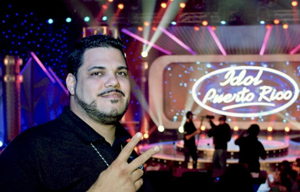
    Six questions with David Ayala, lighting designer, director and programmer for grand-scale TV shows and concerts in various countries, with almost two decades of experience in the lighting industry.
     

    1. How did you get into this field?
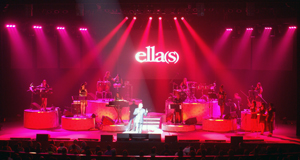
    I have started working in the lighting industry about 18 years ago, in my native country of Venezuela. I have always been influenced and surrounded by music. Back in the day, some friends and I set up a mobile DJ company, that people used to call ‘minitecas.’ We did musical animation with sound and lighting for weddings, quinceañeras and various events. Later on I transitioned to the lighting industry when I started programming and installing lights in discos in Caracas and other cities in Venezuela. I was passionate about my job, so the public and customers started noticing my work. One day a big lighting company invited me to work for them. I took advantage of this opportunity and worked on growing professionally and prepared myself to face a complex industry that also brought plenty of satisfactions to me. While being involved in a lot of big events, shows, conferences and other activities, from 2003 to 2005 I have worked in collaboration with the department of lighting for the TV station Venevision, designing, programming and operating automatic lighting for Miss Venezuela, a popular show in the entire world. In 2005 I started designing the lighting for the tours of Olga Tañón—famous singer of merengue from Puerto Rico—and this is how I pretty much started my international career.  While traveling with different artists, in 2007 I was invited to Puerto Rico to be part of the lighting crew for the TV show “Objetivo Fama” (“Goal: Fame”). I worked for this show for three seasons as lighting and video servers programmer, and when the seasons were over I established myself in Puerto Rico, where I live now with my family. The same year, in 2007, I had my big chance, when I was called to be the lighting designer for the Latin Grammy Awards in Las Vegas. Since then until 2010 I was part of the crew for UNIVISION Network, which did shows like Premio Lo Nuestro, Premios Juventud and Latin Grammy Awards among others. In various occasions I have worked with famous lighting designer Carlos Colina.
    2. What do you think is the next big thing in the lighting industry?
    I have been witnessing for some years now the fusion of lighting and video, and I think this merger is still evolving. Each year we will see something new and we will have better designs, where the lights, video and other visual elements combine in harmony. I am very satisfied with this shift, and with the fact that the industry is seeing a change from big crews to smaller ones, but with great potential. The development of LED lights is also something worth noting, and the overall goal of achieving more power while thinking ‘green.’ Imagine that now we have the power of a 1,500-watt light from LED lights, with brighter and sharper colors.
    3. Do you have a favorite fixture (and why)?
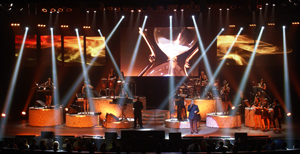
    I love the Q-Wash 560Z-LED from CHAUVET. I am very impressed with its colors, its zoom and low power consumption. I was convinced of its performance during the concert of Gilberto Santa Rosa at the Center for Bellas Artes in Puerto Rico, when I used other CHAUVET lights, such as Q-Wash 260-LED, COLORado 3p IP, and COLORado Batten 72 Tour fixtures, all provided by rental company Musique Xpress Lighting, which has supported my projects a lot.
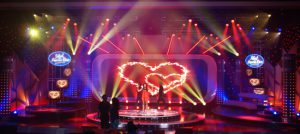
    4. What has been your favorite design/project?
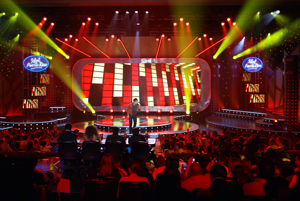
    Working for Puerto Rico Idol has been a tremendous experience for me. For this show I have worked from the very beginning, since it was just in the concept stages. I was the designer and director of lighting and I have also programmed the lights with the video crew. I used as base for my design 10 SparkliteLED Drape backdrops from CHAUVET. With these drapes I have managed to build my background and the most important layer of my design for the television set. The drapes were my base for color and furthermore, they played an important role in the scenography. Currently, I am very excited because we have confirmed a second season for Puerto Rico Idol and I know I can count again on the SparkliteLED Drape, and on other CHAUVET products. I have also had the opportunity to work on big tours of big budgets, like the tour of Natalia Jimenez, Daddy Yankee, and the one of reggaeton singers Wisin and Yandel. I have also enjoyed working as lighting director for the TV recording of Yanni’s new DVD, which took place at El Castillo San Felipe del Morro in Puerto Rico. For this project I have used other CHAUVET lights, like COLORado 1 IP, COLORado Range IP, COLORado Ridge IP and COLORado 3p IP, all from rental company Musique Xpress Lighting.
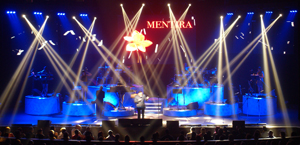
    5. What was the biggest unforeseen obstacle that you’ve faced in one of your designs, and how did you overcome it?
    In this industry, you always have obstacles to overcome. Unfortunately, one of the biggest obstacles is the ‘human’ one, because there will always be a struggle with the competition. I have managed to overcome these types of obstacles through my work, heritage, proving myself and showing my potential. Some technical obstacles are accidents, which can occur when you less expect it. Also, in this industry the time factor is also an obstacle that we always have to take into account. A perfect show is the one that has been rehearsed lot, that the staff has put a lot of time into and has been allowed certain freedom while working on it.

    6. Complete this thought: A show without light is like…
    …a forest without the moon.

    LD Profile: Walter Aleman

    Six questions with Walter Aleman, lighting designer for Off the Hookah chain of Mediterranean-style restaurant/lounges in South Florida.

    1. How did you get into this field?
    I was introduced to lighting by visiting one of my best friends Mike Littlefield (DJ SWERVE r.i.p.) that was DJing the grand opening of the new Seminole Hard Rock Hotel & Casino in Hollywood, Fla., about eight years ago. Since I was always good with computers in college, he suggested that I play with the lighting computer and see if I could control them. Mike Corby, who currently works with CHAUVET, helped me learn all the functions and all the technical aspects of how lighting works and how to run the programming. From there I went on and did my own research and found that lighting was my new niche. I learned more and more from some of the top lighting engineers in South Florida, and I am very thankful for having Mr. Corby, Jorge Lobo, Rolando Aspuro, JP Sanchez and Luis Goenaga by my side when it comes to lighting.

    2. What do you think is the next big thing in the lighting industry?
    LEDs have come so far – there will always be a need for lighting no matter where you are on this planet. There’s going to be a time real soon that we will no longer need light bulbs – from large casinos, hotels and high-rises to nightclubs and special events. Sorry Mr. Edison, there is always going to be a need for beautiful lighting!

    3. Do you have a favorite fixture (and why)?
    My favorite fixture is definitely Q-Spot 260-LED. This fixture has a 60-watt white LED, which is the equivalent of a 250-watt light bulb that will last about 50,000 hours. That’s pretty much saying I can leave it on and running for five years without it going out on me. It moves quickly, smoothly and is very silent. Q-Spot 260-LED has what you need for endless color and great texture combinations, as well.

    4. What has been your favorite design/project?
    So far Off the Hookah in Bayside Miami has been my favorite project. Because of its design and interior lighting, the whole location was a great experience for me. [Click here for Off the Hookah story]

    5. What was the biggest unforeseen obstacle that you’ve faced in one of your designs, and how did you overcome it?
    One of the biggest unforeseen problems I had was when we had a big show to do, and it started to rain and the water began leaking through the roof of this venue and unfortunately damaged one of my CHAUVET COLORstrip linear wash light and the DMX signal throughout all my lights. Luckily I went one-by-one until I found out where the problem was; took out both DMX cables from the broken fixture and made a new line by soldering them. I regained my signal and show – thank God.

    6. Complete this thought: A show without light is like…
    …the Earth without the Sun. Dark, dull and boring! Plus no vitamin D.


    LD Profile: Paul Efron

    Six questions with Paul Efron. Owner and lighting designer of Seeing Eye Lighting Design.

    1. How did you get into this field?
    My dancer girlfriend asked me to run a spot for a show she was in. No seriously, I started acting in community theatre back in high school while living overseas, and then took an interest in technical theatre.
    I started working as an IA stagehand while attending college, and then went to work for FM Productions in San Francisco as a production electrician. Then I worked under several lighting designers doing corporate theatre in between working as an scenic automation motion control technician on several major rock & roll tours during the 80’s and mid 90’s. I founded Seeing Eye Lighting design in 1992.

    2. What do you think is the next big thing in the lighting industry?
    Quality and powerful LED spill-controllable lighting fixtures capable of delivering video broadcast acceptable color temperature (or LED spotlights with shutters). Real warm tungsten-like household LED bulbs that will revolutionize household lighting worldwide.

    3. Do you have a favorite fixture?
    Several. CHAUVET SlimPAR 38, of course. The full line of Chroma-Q Color Force LED fixtures. Martin Mac 101- 301, and now Aura, LED moving head family. Vari-Lite 3500 spot. Martin’s MAC 2000 wash XB series. [Edit: Perhaps CHAUVET COLORado 1-Tri Tour has made this list after Dreamforce event.]

    4. What has been your favorite design/project?
    Most recently, Apple Retails Sales meeting at the Chicago Theatre.

    5. What was the biggest unforeseen obstacle that you’ve faced in one of your designs, and how did you overcome it?
    Time, space, content and talent changes. Many of the clients I work with depend on keeping their launches and new products under wraps, which often includes not disclosing what their product is, or will look like or how it will be revealed until I get on-site. Many of these events also include surprise celebrity guest appearances that we are often not told about until right before the event. Added to these unforeseen challenges, come the others like limited trim heights and sets that tend to try to exceed them. These are some of my biggest challenges.

    One of Efron’s hand -picked crews.

    My most useful tool to help with this and compressed load in time—aside from hand picking the best crews available—is to use pre-visualization services like those provided by Prelite. Prelite provides systems that can be used on-site prior to or during load in that can model both scenic and lighting rigs into a virtual environment that the LD and programmers can then use to focus, isolate airspace challenges and preprogram much of the show before the actual rig is ever fired up.

    6. Complete this thought: A show without light is like…Is like a planet without water.


    LD Profile: Bob L.

    Six questions with Bob L.
    Lighting designer, playwright and director. He started experimenting with lighting when he wrote Visions, a theatrical drama, in 1991.

    1. How did you get into this field?
    While traveling on the road of life, I encountered some bumps in the road. I decided to join a small community theater and took part in their script writing workshops. While I was there, I wrote the script for Visions and tried to present it. I was told it was too real and too harsh. I decided to produce it myself with the aid of friends and churches who donated space. Now, I operate Visions Lighting and Sound and provide lighting and equipment for weddings, bar and bat mitzvahs, corporate events and any other special event.

    2. What do you think is the next big thing in the lighting industry?
    I feel that the next big thing in the lighting industry is video lighting projection.

    3. Do you have a favorite fixture?
    I like the CHAUVET COLORsplash 200B wash lights because they have a wide angle and provide great uplighting. Also, electrical juice can be an issue in some locations and these fixtures work great with the Satellite D-Fi.

    4. What has been your favorite design/project?
    My favorite lighting project was for the Halloween Fest event that takes place at the Pleasantdale Chateau in West Orange, N.J.

    5. What was the biggest unforeseen obstacle that you’ve faced in one of your designs, and how did you overcome it?
    It’s challenging to try and depict a spiritual awakening scene in a play. We ended up using a tremendous amount of lighting as the actors ‘froze” in the light to capture the moment.

    6. Complete this thought: A show without light is like…
    A show without lights is like a shadow in the dark.

    LD Profile: Cody Stoltz

    Six questions with Cody Stoltz. The New Orleans-based lighting designer’s goal is to step in the shoes of famous LDs like Nook Schoenfeld, Bryan Hartley or Howard Ungerleider.

    1. How did you get into this field?
    I’ve always been fascinated by lights, even since I was a baby. One time I was with my family at a four-star restaurant and we had been waiting to be served for a while, so I looked at my dad – I was 3 or 4 – and said, “Let’s go to Rally’s, at least they have the pretty lights there.” Once I turned 6 or 7 I started buying the cheap Wal-Mart novelty lights and did little light shows in my room. For like three years, since I was 8 I designed the color scheme for the float den for the Krewe of Saturn in New Orleans. The Pink Floyd videos from the Pulse Tour really spoke to me, and while going to my first indoor concert for Eric Clapton, I was around 10, and seeing the Trans-Siberian Orchestra, I knew that’s what I wanted to do. So, I started researching and saving my pennies and bought eight PAR 38 lights and a console in one package, plus 16 CHAUVET PAR 38, 10 LED Pinspot fixtures, a CHAUVET Arena Hazer and a Followspot 1200, plus four Diversitronics DMX 3000 linear strobes. I also got three smaller fader consoles, a MQ PC Wing, two MQ PC Extra Wing controllers, a MQ PC Maxi Wing, and a two-universe Widget from ChamSyS. In 2007 Rush came into town on the Snakes & Arrows Tour, and my stepfather – who’s a rigger– and my mom–who handles audio– were both working on the show. My stepfather met LD Howard Ungerleider and told him about me buying my own lighting package, so Ungerleider suggested I talk to High End Systems about training me on the hog. From there on I started working for RZI Lighting, where I have learned most of what I know.

    2. What do you think is the next big thing in the lighting industry?
    LEDs are the big thing right now, but there’s still a lot of improvement that I’m waiting to see, like LED spot profiles. The GLP Impression Spot One is a really great light, almost as bright as a MAC 700. However, I don’t think it would hold up in an arena or stadium environment. So definitely waiting to see some 1500-watt equivalent LED profiles. I still think that the plasma lamp technology has a lot of potential too; it just doesn’t seem to be picking up that much attraction yet. I think we will see more lights like the CHAUVET Legend 412 with the LEDs controllable in quadrants. Also, we will probably see more shows where the light will be pixel-mapped with the video, which will be pretty cool.

    3. Do you have a favorite fixture (and why)?
    I think the CHAUVET COLORado 1-Tri Tour lights are great! Moving-head wise probably the GLP Impression Spot One or the Clay Paky Sharpy depending on the use. Also, I like the Pixelsmart LED PAR from PixelLine.

    4. What has been your favorite design/project?
    A favorite project I’ve worked on/designed was a fundraiser for the Big Buddy Program at the LSU basketball arena for Stage Right Productions. Originally I was supposed to just program the console and someone else to call the looks for me. But when I got there I started building my pallets on the console and they liked it, and the next thing I knew I was lighting all 25-30 pieces in the show! Granted I didn’t design the rig, the rest was my concept.

    5. What was the biggest unforeseen obstacle that you’ve faced in one of your designs, and how did you overcome it?
    A week and a half before Mardi Gras last year I came down with severe bronchitis and I had scheduled five nights of raves back-to-back in three different venues. While hardly able to breathe, I honored my schedule and did my job. Also, while working on my first arena show for Lil Wayne, we ran into some issues. The company I work for, RZI Lighting, got the call for the show only two days in advance; they needed 60-70 moving lights, five trusses, moles and strobes. We had everything in our shop plus some already pulled for a massive convention center show, which also just so happened to be pretty close to what we needed. So we all tried to get this show flipped to go to Lil Wayne, and we managed to do that after a very long two days. At 6 a.m. we arrive at the arena and from there till about 6 p.m. it was nonstop. The lighting designer didn’t show up for the three opening acts. Freaking out, the production manager begged us to try and get something on. When we got to the front of house no one in the crew knew anything about a grandMA, except for me. And I just barely knew enough to navigate through the windows and bring fixtures up. I ended up designed the lighting for them, the one look for three bands. It wasn’t pretty when the LD finally came and I could hear him from 30 feet away during the show screaming about why “his” lights were on…

    6. Complete this thought: A show without light is like…
    …Boring? A waste of time? I might as well just sit at home listening to music…

    Q-Wash 260-LED Lights Jimmy Eat World

    Added to the rig, designed by Lighting Designer Gigi Pedron, on the last few stops of Jimmy Eat World‘s recent tour were 24 CHAUVET Professional Q-Wash 260-LED moving heads. Dwight Slamp, business development manager for production / contractor for CHAUVET, caught one of the shows in California and brought back these great shots of the moving aerial wash lights in action.

    Is There A Show Without Lights?

    The lighting world is so poetic and inspiring we wanted to give you a quick reinforcement of that. Read the answers half dozen LDs gave when asked how they see a show without lights. Their comments were extracted from our LD profile series posted throughout the year.

    A show without lights is like…

    1. … the world without the Sun: dead, desolate, cold, unbearable; without growth and understanding.
    We totally agree with Xavier Pierce, lighting designer and owner of Xavier Pierce Design in New York. People breathe light, just like they breathe air – can’t live without!

    2. … an iPod without headphones.
    That sounds like a paradox! There is no point in having an iPod, if there are no headphones, right? So simple, yet so suggestive, coming from Eduardo “Wady” Rodriguez, lighting designer well known throughout Latin America with more than 20 years experience in the industry.

    3. … a cup of tea and no biscuits!
    Has this made you think of 5 o’clock tea? For musician Paul Wyse, of U.K., this is serious business. One simply cannot offer a British person tea and no biscuits!

    4. … a snail without a shell… SLIMY!!
    This sounds like a mutilated snail! Just like a show would be without lighting. Great analogy given by Thomas Aratanha Fonseca, lighting designer and account manager for Kor Media & Lighting in Miami.

    5. … a show without lights is like a ski slope without snow. Lighting sets the mood for the entire show, and without light, nobody would be able to see it. When I run a light show, I like to set the mood and tell a story with the fixtures. No comment! Inspiring thoughts from Paul McElroy, lighting/audio/video technician for Caven Enterprises, Inc. in Dallas.

    6. … just another day listening to the radio.
    The Radio Ga Ga ages are long gone, and the 21st century is all about lights. But not just any lights: LEDs! Camron Ware, founder of Visual Worshiper, VJ, light and projection designer, definitely keeps up with his time.

    7. …nothing, can’t see them, can’t see facial expressions, can’t see anything, a show doesn’t work without lighting. It’s like watching a shadow move around.
    What Austin Grundberg of Illinois describes sounds really sad! We don’t associate the sun and its light with happiness for nothing. Light means life and joy!

    8. … And CHAUVET says…a show without lights is like…a show without an LD! Lacks creativity and that touch of genius. Thank you to all LDs out there for making lights speak.

    This is a show with lights!

    LD Profile: Austin Grundberg

    Six questions with Austin Grundberg
    At just 14 years of age, Grundberg has already started his own lighting company, AGLite Inc.His future goal is “to do concerts and touring.”

    1. How did you get into this field?
    I have always been fascinated with fire trucks and their lights. When I finally saw my first concert, I still could not stop looking at the lights. I then looked into lighting fixtures and it became more interesting. Finally, when I turned 14 I decided I wanted to start a lighting company.

    2. What do you think is the next big thing in the lighting industry?
    Personally I think its LEDs. But, I also think there should be a line of high end but less expensive moving heads and other fixtures. This is especially important to me due to not having much money. Also, having a real controller, one with a display, maybe a trackball/joystick, faders, and momentary buttons, that’s also affordable.

    3. Do you have a favorite fixture (and why)?
    Yes, COLORpalette. I like it because it’s bright and very versatile. But my next buy is probably a COLORrail IRC IPbecause of its versatility and I can use it outdoors.

    “A shot with all my equipment on,” said Grundberg

    4. What has been your favorite design/project?
    My favorite design project would have to be the Oak Grove School Variety Show, probably because it was my first Independent show.

    5. What was the biggest unforeseen obstacle that you’ve faced in one of your designs, and how did you overcome it?
    My biggest obstacle was trying to do the Variety Show without enough equipment. It was my first show and I had to rent equipment and use the school’s equipment. Its hard getting enough equipment when your only 14. Fortunately, I got it done with the help of the sound tech, who gave me a couple of lighting shops around my area.

    6. Complete this thought: A show without light is like…nothing, can’t see them, can’t see facial expressions, can’t see anything, a show doesn’t work without lighting. It’s like watching a shadow move around.