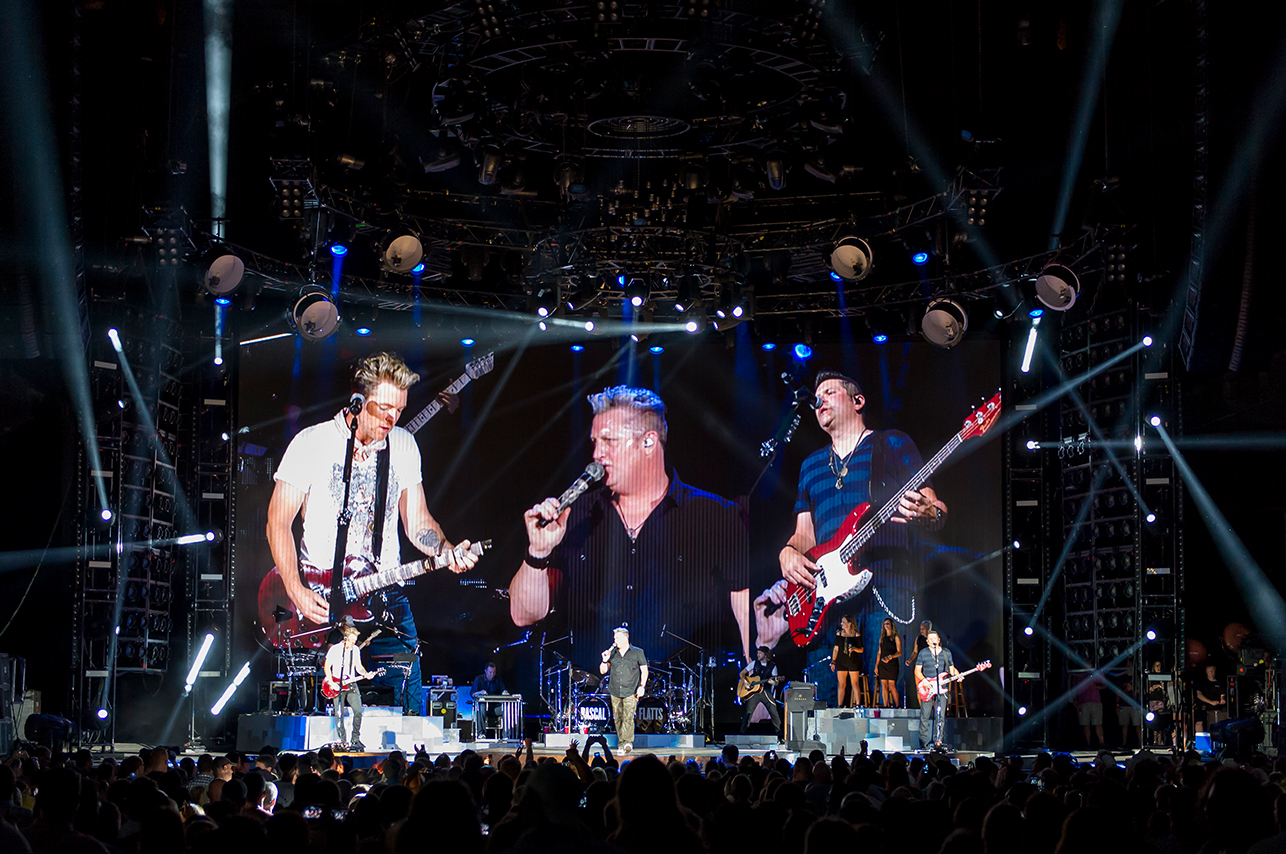
NASHVILLE– LD Drew Gnagey of Magneto Live Design called on the Rogue RH1 Hybrid from CHAUVET Professional to fill a variety of roles in the Rascal Flatts RIOT! Tour. Gnagey is using the moving fixtures in a variety of situations, counting on them to perform as a beam type effect that can punch through its surroundings; as a wash for softer moments; and as a dynamite hybrid when bright and sharp morphing looks are needed.
A key part of Gnagey’s production design is to wrap the lighting rig around the band. This forms a closer connection between the music and the lightshow. However, it also makes it critical to have a lighting fixtures that can change looks quickly and cover a range of moods.
The tower Rogues have also played a key role in helping Gnagey adapt his lighting to the widely varied venues on the RIOT! Tour, which will notch stops at everything from a cruise ship and the Indianapolis Motor Speedway to State Fairs and giant amphitheaters before its conclusion. “Having to deal with a number of types of venues on this tour, we’ve had to make the rig very flexible,” he said. “By using the Rogues on towers, we’re able to scale the rig based on the trim height of the day.”
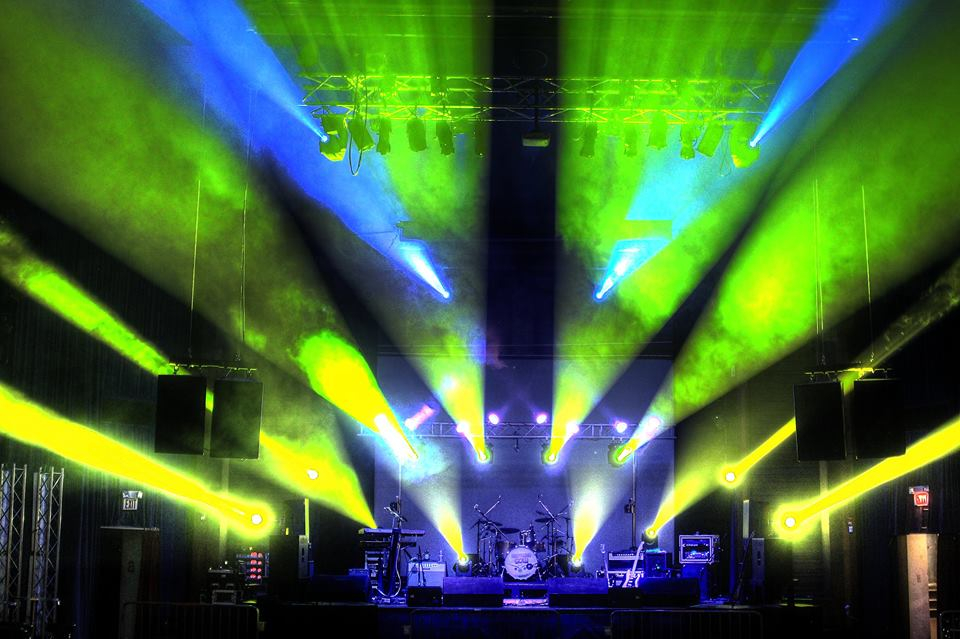
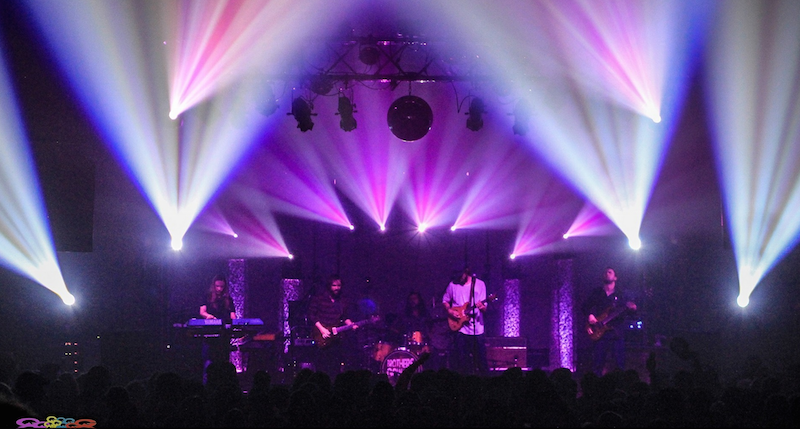
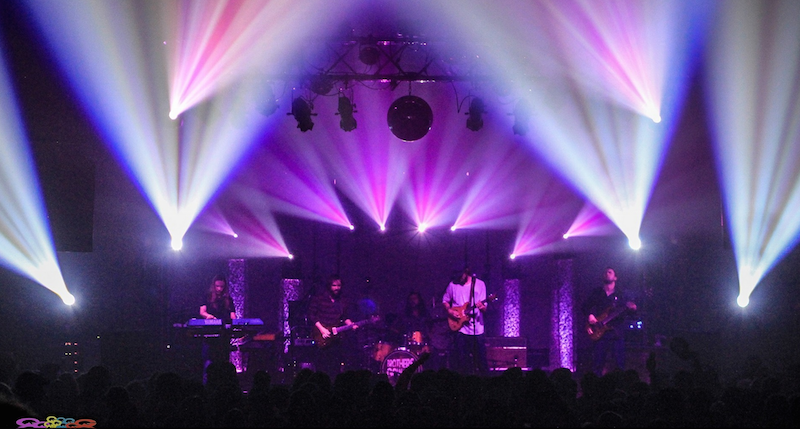
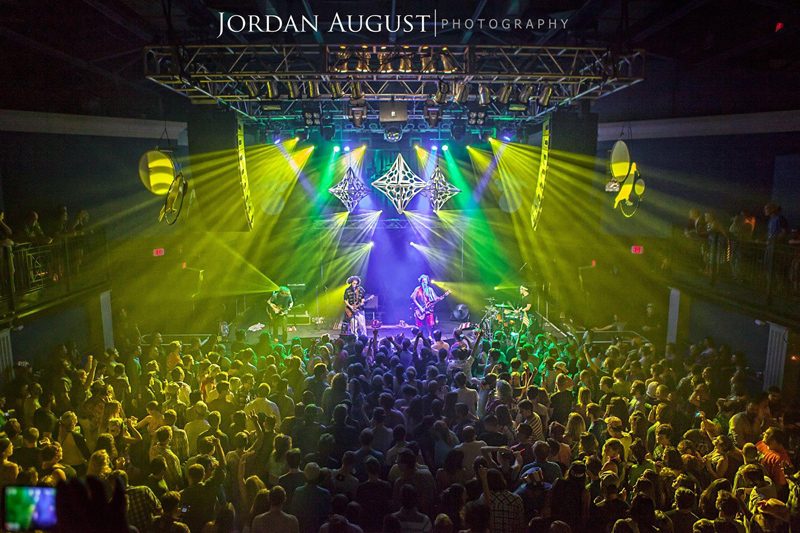
FLAGSTAFF, AZ The 15-passenger van that Brothers Gow rolls with has logged a lot of miles of late, as the much-in-demand jam band has been playing to packed houses from San Diego to Seattle on its current “Bring The Heat” tour in support of its fourth studio album, Reflections. Fans aren’t flocking just to hear the quintet’s captivating blend of rock, funk, jazz and reggae, they’re coming to see it too, thanks to a quick moving light show that reflects the improvisational spirit of the music.
Lighting is so much a part of the Brothers Gow experience that their website refers to their LD Matt Collier as the sixth member of the band. Collier, who traverses the country with the well-traveled band (it’s been averaging over 80 shows a year), shares the group’s passion for taking the audience’s experience to the next level. This commitment led him to expand his lighting rig for the current tour by adding Rogue R1 Spot LEDs from CHAUVET Professional.
“I’ve been wanting to add Rogues to the rig for some time,” said Collier. “Their brightness and speed drew me to them, and they have a lot of special gobo features that I could use to create unique looks. This is important to us. We don’t want a Brothers Gow show to look like any other concert that you see at whatever club you find us at. That’s why we don’t rely on house lights for our rig.”
Collier is using four Rogue R1 Spots on the “Bring The Heat” tour. He’s hanging the moving fixtures evenly spaced on 20’ upstage truss flown 15’ in the air by stands. “I make the Rogues the focal point of my rig because they are so bright and have very crisp, good looking gobos. The band covers a very wide range of musical styles and is very improvisational, so they can veer off in a lot of different directions. My Rogues are great for this environment, because they can keep up.
“The Rogue’s color wheel and gobo wheel are very fast; so is the pan/tilt movement, which is great for the intense high impact songs,” continued the LD. “But the fixture is also very smooth on slow pan/tilt movements for the softer songs. Touring a lot, we also play in a variety of places with different size stages. In the short time since I added them to our rig, the Rogues have been excellent in every kind of venue.”
Joining the Rogues on the upstage truss are eight CHAUVET DJ SlimPAR 64 RGB LED color mixing fixtures. “I hang the Rogues from the truss and put the SlimPARs on top,” said Collier. “This creates some nice depth over the stage.”
Above the upstage truss, Collier positions two CHAUVET Professional Q-Spot 560-LED moving fixtures. He also flies two additional Q-Spots on downstage truss. Collier uses the upstage Q-Spots to “fill some negative space up top,” while the two downstage units are earmarked for front lighting. “They give me a cool look when viewing the rig from the audience’s perspective,” said the LD.
Also contributing to the eye searing look on the downstage truss are eight additional SlimPAR 64s and four Intimidator Wash Zoom 350 IRCs. “I really enjoy using the Wash Zoom 350 as front lighting because it allows me a large range of colors, and with seven LED’s at 20W apiece, it’s a very bright wash light,” said Collier. “Plus the zoom function lets me position and cover large areas very easily. Gotta light the money, and this fixtures does that very well!”
Rounding out Collier’s Brothers Gow rig are four CHAUVET Professional Q-Spot 260 LED moving fixtures positioned evenly apart on the drum riser and on cases that flank it on either side. The low perspective of these Q-Spots creates opportunities for Collier to mix their beams with those of the Rogues on the downstage truss to create a dynamic multi-dimensional look.
Outside his rig, Collier has positioned four Intimidator Beam LED 350 fixtures. This gives him a crisp border for his design. “Having these fixtures outside the rig kind of frames what is going on in the middle and directs attention to band,” he said. “Also the beams are very bright, so cutting through wash or spot lights is easily done and allows a wider array of design options. This is good for the creative flow.” And as anyone who has seen this jam band play knows, going with the creative flow is what the Brothers Gow experience is all about, whether it’s on a musical instrument or a console controlling an ever expanding and ever more versatile lighting rig.
Unbelievably awesome!!! Bill Kreutzmann of the Grateful Dead is out on tour with LD Manny Newman — Billy and the Kids is rocking and rolling with the ROGUE R1 Spot from CHAUVET Professional! Check it out!
WASHINGTON DC – Legendary drummer, Bill Kreutzmann knows a thing or two about helping friends. A founding member of the Grateful Dead along with Jerry Garcia, Phil Lesh, Bob Weir and Ron “Pigpen” McKernan, Kreutzmann made rock history when he invited fellow percussionist Mickey Hart to join the band. This made the Dead one of the first and only rock groups to have two drummers. The amazing synchronicity between this pair of percussionists helped forge a new sound and earned them the nickname “the Rhythm Devils.”
Given his penchant for friendship, Kreutzmann (who played in all 2,300 Grateful Dead performances during the group’s lifespan) could undoubtedly appreciate the bond between lighting designer Manny Newman and his friend Ronny RedRocks. This is especially true since that friendship resulted in a collection of Rogue R1 Spot fixtures from CHAUVET Professional adding an eye-popping visual element to his performance with his new band, Billy and the Kids.
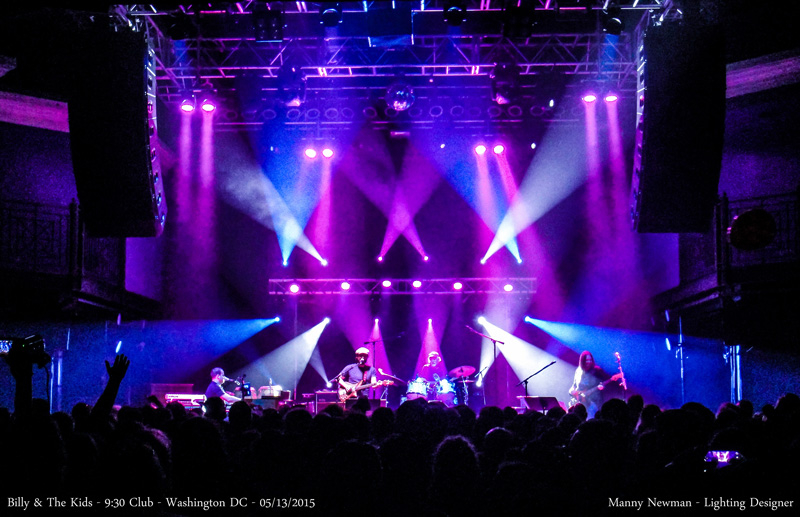
Manny Newman was the lighting designer for Billy and the Kids’ performance at the iconic 9:30 Club in Washington DC. He called on the Rogue R1 Spots to add a critical element to his design after his friend RedRocks made arrangements for eight of the units to be shipped to the famous venue for the Billy and the Kids show.
“My friend Ronny RedRocks, who is the lighting designer for Pigeons Playing Ping Pong, got me these fixtures – and he was my lighting tech for Billy and The Kids at the 9:30 Club,” said Manny, an up-and-coming New York LD who’s designed for Electron and Conspirator.
Once Manny had the Rogues in his rig for Kreutzmann, he certainly knew how to utilize them to stunning effect. “The super-fast iris on the Rogues allowed me to do some cool FX and wipes,” he said. “What was also cool was that some of the R1 gobos helped me achieve some matching looks with the moving fixtures already on the venue’s rig.”
The LD mounted six of the Rogues on the bottom of the upstage crank truss. He then positioned the two remaining Rogues on top of the truss, along with four Intimidator Spot LED 350 moving fixtures from CHAUVET Professional’s sister company CHAUVET DJ. The intense output of the Intimidator fixtures and crisp gobos worked with the Rogues to create unique audience-engaging looks.
Another CHAUVET DJ product used was the Intimidator Spot LED 250 moving head. Manny, who controlled his rig using a grandMA2 on PC console, positioned six of these Intimidators on top of upstage cases to sidelight the performers and cover a large area of the audience. Also colorizing the stage were 14 SlimPAR 56 RGB units from CHAUVET DJ. The LD used eight of these par-style fixtures mounted on stands as side washes, and positioned six more on crank truss to serve as back washes. For audience blinders, he used the CHAUVET DJ Mega Strobe FX12 LED strobe lights.
“We were all extremely happy with how this show turned out,” said Manny. “I have always used Chauvet – the fixtures are very reliable. They’re very affordable, but at the same time their brightness and quality stands up to big house light rigs. The experience of working with the Rogue R1 Spots was something special; it really gave me a lot of great options as a designer. I owe my friend Ronny RedRocks one for getting me in touch with these lights.”
Lighting Designer Susan Rose talks Dolly Parton, rocking and rolling, and using CHAUVET Professional to bring some punch to an already stellar show! Check it out!
PIGEON FORGE, TN – Country legend Dolly Parton may have become one of the world’s most widely recognized superstars, but through it all the Locust Ridge, Tennessee native has remained steadfastly true to her Smokey Mountain roots. Parton’s down home devotion was on full display at her recently concluded My People musical, which celebrates her brother Randy, sister Cassie and other family members who inspired her celebrated career.
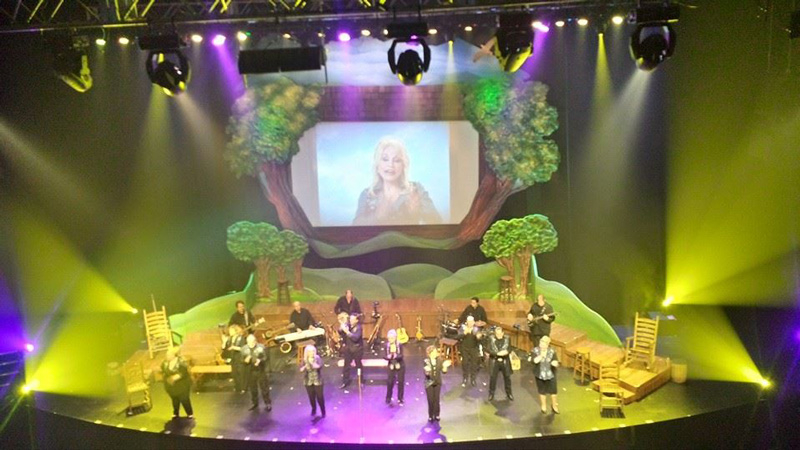
As deeply rooted in family tradition as she is, however, Parton is a consummate entertainer who understands that even an old-time country show needs to make a bold theatrical statement to reach today’s audiences. This is why the director of My People called on lighting designer Susan Rose to add an extra visual dimension to the show’s stage. Rose drew on the power of two stalwart LED moving fixtures from Chauvet to accomplish this task despite the challenges presented by a small stage at Parton’s namesake Dollywood Theme Park.
“The director wanted to punch up the stage lighting for this show and give it a more theatrical touring kind of look that was less soft than what you normally see at this venue,” she said. “I was excited to do this with a lot of aerials and beams, but space was a factor given the size of the stage. I turned to Chauvet for LED fixtures that could give me this excitement without taking up a lot of space or drawing a lot of power.”
Rose chose the Q-Spot 560-LED moving yoke wash from CHAUVET Professional and the Intimidator Beam LED 350 from CHAUVET DJ to accomplish this goal. She flew four of the Q-Spot fixtures on overhead truss and arranged four Intimidator Beam effects on the floor, two on each side of the stage.
With their razor focus, 3-facet prism and richly saturated colors, the Q-Spot LED-560s helped Rose achieve what she calls “a big look on a small stage.” The fast-moving Intimidator Beam LED 350 complemented the overhead wash fixtures by shooting brilliant and intense beams up from the floor, thanks to its high output LED engine, advanced optics and sharp 4° beam angle.
“Shooting the stage beams in the air really worked very well to give the show a more dynamic look,” said Rose. “Everyone was very pleased with the production value of the lighting.”
Also adding to the production value was Rose’s well-known skill on a lighting console. Designing and programming on a Hog 3, she created about 180 cues for the show, all of which had to be precisely done to coordinate the lighting with the appearance of Dolly Parton on the video screen.
“Dolly interacted with the live cast through the video,” said Rose. “This meant the cueing had to be right on target. It was a fun show to do and a fun show to watch — and the dynamic excitement we got from our relatively small lighting rig played a big part in making this all happen.”
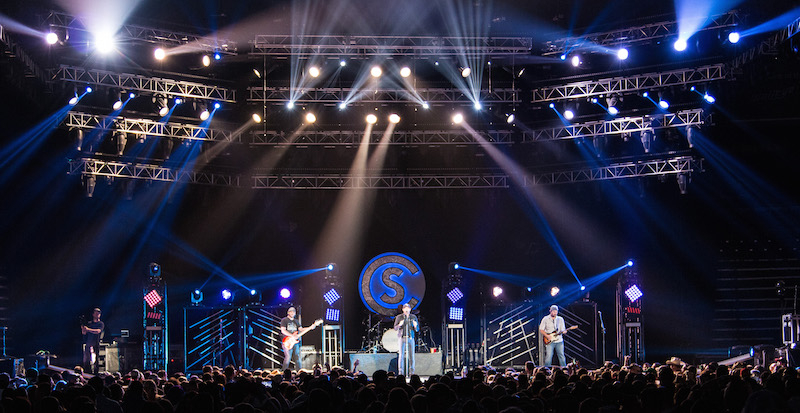
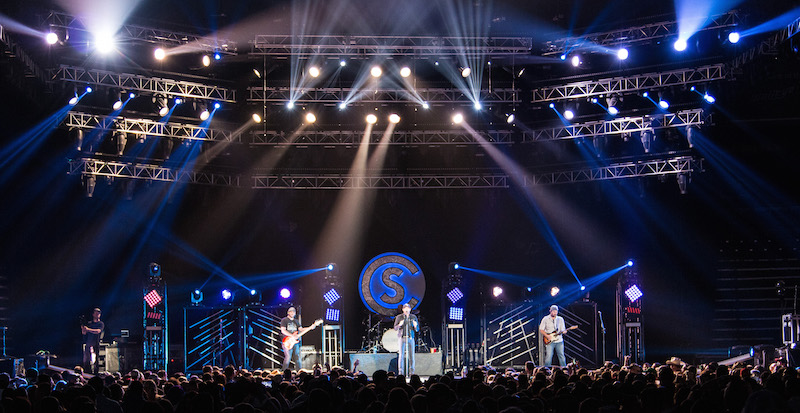
NASHVILLE – Like many fans, lighting designer Justin Kitchenman of FadeUp Design Group and the team at Elite Multimedia were impressed with rising country music artist Cole Swindell when he opened for superstar Luke Bryan last year. They were in a good position to appreciate this emerging talent, since Kitchenman was the LD on the tour and Elite provided its lighting and video package. So when Swindell announced his current Ain’t Worth The Whisky tour, they were eager to put together a lighting package, which is precisely what they wound up doing in colorful fashion with some help from 44 ÉPIX Strip 2.0 units from CHAUVET Professional.
Motionless in White was looking for a hardcore lighting edge to accentuate their shows even further than their Horror Rock monikers have pushed them. Freddy Thompson of JDI Productions reached into the Legend case to create a bold, dark, and moody atmosphere for the rockers. Check it out!
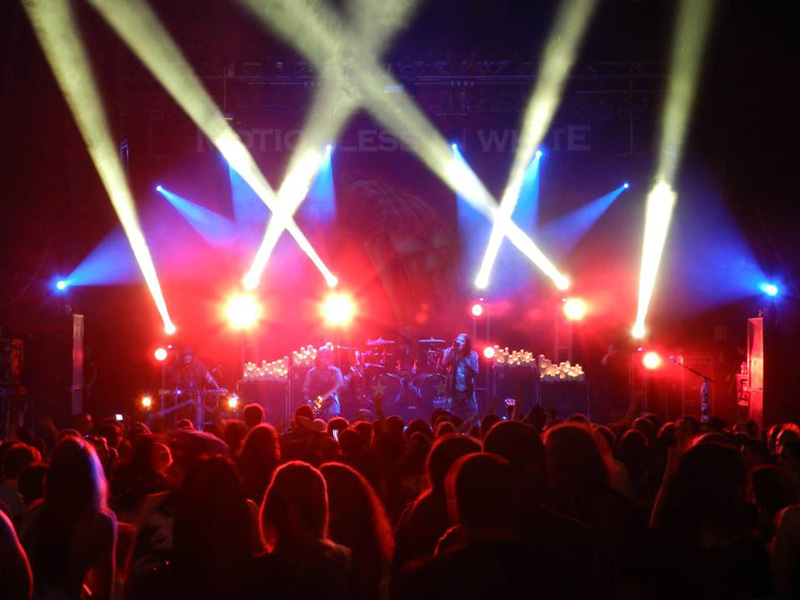
WORCESTER, MA– (For Immediate Release) – A Motionless in White concert is not for anyone expecting a predictable metalcore experience. Sometimes described as “horror metal,” the iconic group never fails to surprise and unsettle audiences by pulling unexpected tricks out of its musical bag, whether it’s a shattering blast beat that bursts out of nowhere in the middle of a verse or a haunting keyboard effect that leaves audiences looking over their shoulders. The band’s headline performance at the New England Metal and Hardcore Festival was no exception, arousing the crowd with its unexpected twists and turns.
Keeping pace with the music was an intense and sometimes darkly theatrical lightshow by lighting designer Freddy Thompson of JDI Productions that featured a collection of Legend moving fixtures and Vesuvio RGBA foggers from CHAUVET Professional. Thompson used six Legend 230SR Beams and eight Legend 412 moving washes positioned on truss towers, as well as two Vesuvio RGBA foggers on a rig that also included blinders, strobes and hazers to capture the penetrating mood of Motionless in White’s music in light.
“I was going for was a darker theatrical look which I felt would complement the band’s persona,” said the LD. “I used very, very minimal lighting from the house rig at the Palladium, which helped the Legend’s beams stand out even more. By layering the stage with the rich colors of the Legend 412 wash fixtures, I could capture the moment during every song on the band’s set list (which began with Death March and ended with Devil’s Night).”
Thompson was careful to coordinate the colors of the two Legend fixtures in his rig. “At critical points we wanted to bathe the stage in color,” he said. “At those points, I would use brighter colors in the beam fixtures to ensure that they cut through the rich color wash of the Legend 412 units.
“The Vesuvios were critical to creating the theatrical atmosphere on stage,” continued the LD. “We used them to send up colorful columns of fog (the Vesuvio RGBA shoots light through fog). Aside from adding extra drama to the stage, the fog also worked well to highlight gobos, rotating prisms and fast random strobes.”
Thompson positioned the Vesuvio foggers on the downstage center edge, leaving enough room for an ego riser to be placed in between the units. “We arranged the Vesuvios this way so the artist could stand between the units while they shot colorful fog upwards,” said the LD. “It was all very dramatic.”
The Legend fixtures were arranged on four 8’ and two 5’ truss towers. Thompson spaced the taller towers evenly between the drum riser and guitar cabinets. He positioned the shorter towers stage left and stage right. Each tower had a Legend 230SR Beam on top. The taller center truss towers had two Legend 412 fixtures, while the smaller side towers had only one 412 unit.
“Having the beams mounted on top of the towers helped create a great position for these fixtures to be focused almost anywhere desired, whether it was on the audience or a point on stage,” said Thompson. “The 412s were mounted on the face of the truss towers to help create an eye candy effect for the set. I knew these Chauvet fixtures would be a good choice for this design because the units have proven their road worthiness time and time again. With such a short time frame loading in at the beginning of a three-day music festival, I needed fixtures I could trust would get the job done with no issues.
“A big challenge with a project at the end of a three-day festival is that there isn’t a lot of onsite programming time available,” continued the LD. “Thanks to Josh Korel, the band’s production manager sending me a complete set list, I was able to complete most of my programming in our visual studio at JDI Productions using Light Converse. By the time the rig was set up at the beginning of the festival’s third day, I had just enough time to update my position, focus my gobos and start the show.”
Start the show is exactly what Thompson did and with flying colors, not to mention a fistful of dramatic effects. The end result was a lightshow that was as intense, original, evocative and multi-layered as the music of one of the metal genre’s most complex bands.
Up and coming LD Matt Collier from Arizona-based jam band Brothers Gow is in the blog today, talking about light, inspiration, and rock and roll with our Customer Engagement and Education Manager, Jim Hutchison. Check it out!
Jim: Tell me about Matt Collier the lighting designer. How’d you get started with Brothers Gow, and how has the journey taken you?
Matt Collier: Well, Brothers Gow was founded in 2007 in Flagstaff, AZ and I started out helping them on shows more for the free drink tab than anything else haha. But honestly, they started the band in September of that year right after the college school year started. In the beginning I just took pictures and helped load in and out. After we got to the point of having too many sound channels to run from stage, I learned the basics of sound, which spurred my interest in working in live music production.
Thats right about when I saw Phish live for the first time and Chris Kuroda’s show blew me away. I’ll never forget my first show at the Gorge in ’09, and after that I’ve been all about lighting. The feeling that I got when a deep blue would wash over me when they went into a slow section or the beautiful scenes he created that seemed to match the music and intensity of the show perfectly. Those feelings were really my inspiration to be a Lighting Designer. I wanted to be the one to bridge that gap between performer and audience member and put my artistic spin on how I hear music.
Lighting has become my life and I love it. Being able to run lights for my band Brothers Gow every show still is just as fun as it was in 2009. In addition to BG, I’ve also got to run lights for some of my favorite acts, like Karl Denson’s Tiny Universe, Galactic, Particle, Greyboy All-Stars and Nahko and Medicine for the People. Lighting just suits me I think because I’m very much a hard working, logical based guy (which is good for troubleshooting and rigging/staging) but I also have a creative mind from my photography background. All in all, the journey has been great so far.
What has pushed you to develop new looks while lighting Brothers Gow? Where do you draw your artistic inspiration?
Being creative in this business is critical to push yourself to become a better LD. In my opinion, finding new looks is important especially when working a lot of shows like I do with Brothers Gow. Switching it up and keeping your design fresh also allows you to see your rig from a different perspective and discover cool new ideas. I watch a lot of lighting videos from many different artists and genre’s, but my influences are Chris Kuroda, Saxton Waller, Luke Stratton and Jefferson Waful. All of those guys run lights for bands that are similar to Brothers Gow so seeing how they interact with the changes in the music inspire some looks or chases I use. Lots of tempo changes, deep grooves and intense climactic moments so being quick on the music changes is crucial.
I like to pull design ideas from all over the place but mostly its cool architecture or art. Im very big on symmetry as are most designers but I just like how it looks when you have everything set perfectly and all the scenes move together fluidly. Its seems to be more organized than an asymmetrical look and I’m more of an organized person I guess. I’ve become a better designer trying to emulate the looks and programming that Phish and Umphrey’s [McGee] have for their live shows. Not trying to copy or steal what they do, but rather teach myself how to create looks like the professionals and run a show like a professional. They must be doing something right if they’re in that FOH position.
What control surface do you use? When you started out with the band, what was your controller then?
I currently use the Martin M-PC for my controller. I love it and don’t plan on switching anytime soon. I’m pretty inexperienced in running anything other than M-PC so I can’t gauge how much I like other control platforms. Martin M-PC does everything I need as of right now and I’m planning on going up to LA on our time off this summer to take a course and further my programming knowledge. Originally, we started with 6 scanners and a Chauvet Obey-50 DMX512 controller so we have come a long way since then but I’ve stuck with our Chauvet roots cause they continue to evolve and push the limits, just like my lighting and the band.
Can you tell me a bit about how the energy of the crowd impacts your show, be it positively or negatively? What’s the crowd vibe do for you as an LD?
Being the LD in a packed room is unlike anything I can describe, and definitely takes the show to another level. The trick is still having that same energy when the show isnt very busy. Putting forth the effort to still run a good show is important even if there isnt a full house because the bands feeds off your energy and lighting and the people in the house still deserve the best show possible for coming out to see the show. If the show isnt too busy I like to try out new FX and color schemes too… but NOTHING compares to a hot sweaty packed house of dancing fools!!
What’s the next technological tool you want to incorporate into the Brothers Gow lighting rig?
Martin just recently release a touch console called the M-Touch that is very affordable at under $1000 dollars. Right now I run my show with a mouse and external monitor so it would be nice to upgrade to a small console but in all reality, Im sure I will be buying more Chauvet Rogue R1’s next. Just ran my first couple shows with them and am very, very stoked on how well they perform.
Check out this second set video from Brothers Gow’s set at the Orpheum Theatre in Flagstaff, AZ:
For more on Matt Collier and Brothers Gow, check out:
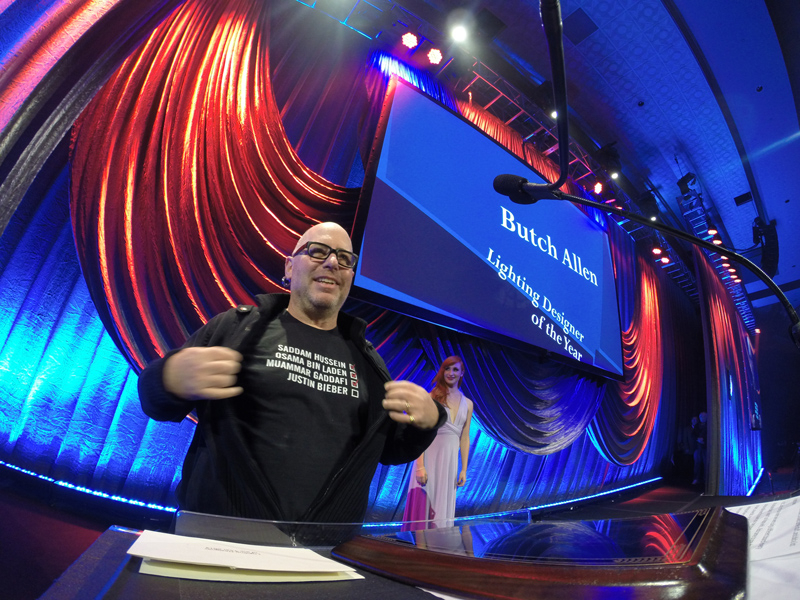
To know Butch Allen is to love Butch Allen, and beyond that, there isn’t much that’s left out of his May 2015 Lighting Insights interview! Check it out!
Taking FLIGHT! Eight ROGUE R1 Spot fixtures help Aaron Kovelman make awesome music with Pigeons Playing Ping Pong — check it out!!
BALTIMORE, MD – Back in the 1950s, noted psychologist BF Skinner grabbed headlines by using controversial behavioral modification techniques to teach pigeons to play ping pong. Today Pigeons Playing Ping Pong is making waves again, not with psychology, but with psychedelic riffs along with some funky rock and extended jams that are attracting an ever-expanding flock, as their fans like to call themselves, to this up-and-coming band.
Lighting designer Aaron Kovelman (aka Ronny RedRocks) is having fun keeping pace with Pigeons Playing Ping Pong’s improvisational performances with the help of eight Rogue R1 Spot fixtures from CHAUVET Professional.
Kovelman worked with 4Wall Entertainment Lighting to include the powerful LED spots on his client’s national tour for reasons both practical and passionate. “For sure, there are a lot of things about the Rogues to like, and 4Wall helped connect me to them,” said the LD. “Scott Church runs an awesome operation at 4Wall’s DC location, and he’s been really great at connecting me to fixtures that fit my vision and fall within my budget. I decided to use the R1s for Pigeons’ tour for many reasons. For one thing, I like that they are lightweight, because it makes setup and breakdown easier on tour.
“The Rogues are also easy to place in various positions and orientations as a result of their light weight,” continued Kovelman. “This is important because the band plays on stages that differ widely in size. You can wind up rigging them differently just about every night. Sometime they will be hung from truss, on cases on the floor, mounted on top of vertical truss towers. My ideal setup is four flown high and four low to get a full-depth look.”
It is the performance of the Rogue R1 Spot, however, that trumps the fixture’s practical benefits for Kovelman. “Practicality aside, this one powerful light,” he says. “At 140 watts it will be able to hold up to some of the larger size/lamp fixtures that we encounter on big festival rigs. The two gobo wheels are exciting for me, as they have many looks to choose from. I was limited to one wheel fixtures and varying types of fixtures before, so I was unable to get clean gobo looks. Also, being able to have a motorized focus between the two allows for some cool psychedelic morphing.”
Keeping pace with the free-flowing jangle-tinged flight that is Pigeons Playing Ping Pong music presents a wonderfully unpredictable challenge for any LD. It’s one that Kovelman, who uses a grandMA2 and Luke Stratton APC Midi setup, meets with enthusiasm. “Lighting Pigeons is in many ways unique and very gratifying,” he said. “Keeping the band illuminated with a good wash is super important with Pigeons, because they are extremely theatrical, and are almost always doing something visually that shouldn’t be missed.
“This has been a fun challenge; it makes me hold back a little on going crazy with my lights, and keeps my show more focused on the music,” continued Kovelman. “However, due to the nature of Pigeons’ psychedelic-funk, there are large improvisation sections that really allow me to dig deep, and open up as a lighting designer. These long jams are the moments where I am really not only trying to build individual looks, but going through all my special chases, effects, and fun stuff. I definitely like to be more aggressive visually in these sections.”
Although the inspiration of these aggressive looks comes from his own creative sources, Kovelman praises tools like the Rogue R1 Spot fixture for helping him express this vision. “As a designer, I start with a direction in mind,” he said. “I’m grateful that the R1s can help me achieve this direction because of their fast pan/tilt speed, ultra-crisp beams, and smooth gobos. They’re versatile fixtures that can do many things. Plus, for anyone interested in creating some cool psychedelic looks, they’re spot on. ”
# # #
For more information on 4Wall Entertainment visit www.4wall.com